
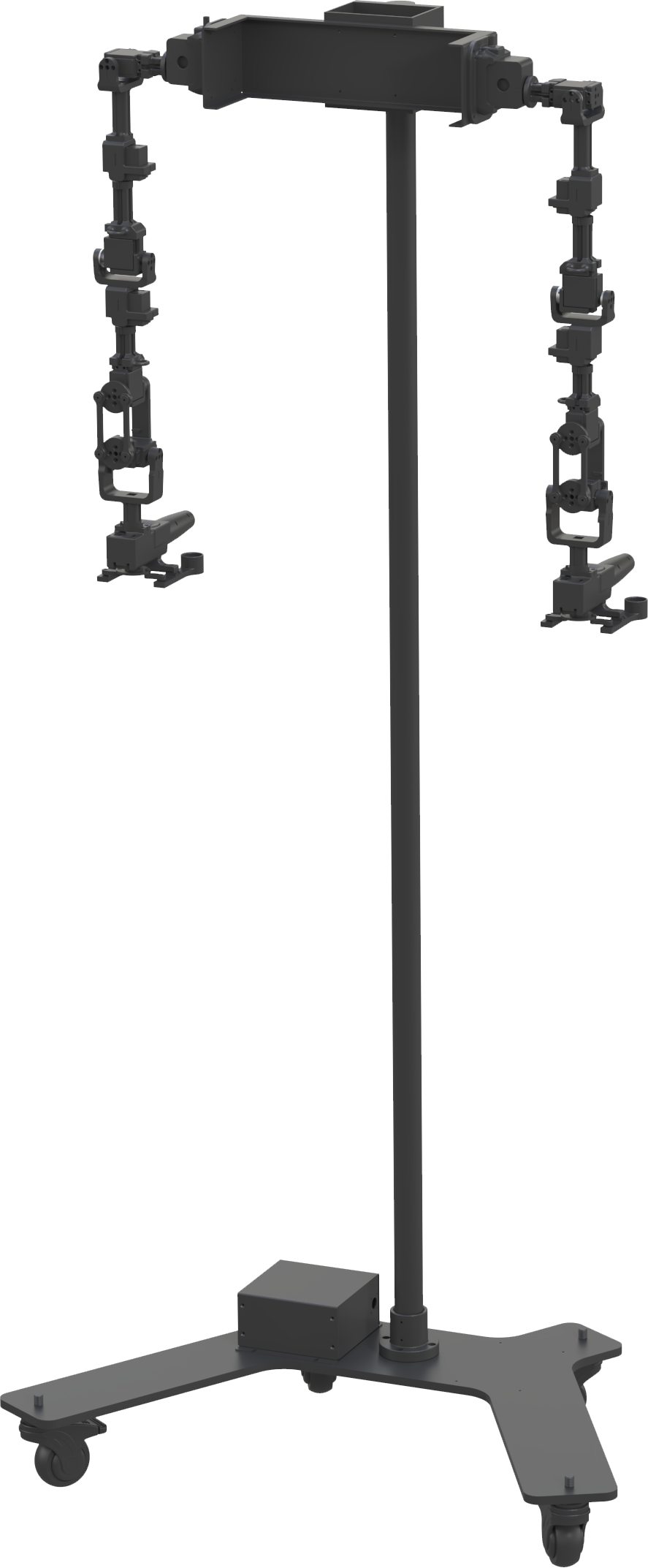
A trainable sample aligns at least four things: time, observation, action, and body identifier. The isomorphic teleoperation kit provides the body and part of the action carrier among them. Angular resolution: first two columns ±0.003°, local column 0.088°. Motors: first two columns integrated joints, local column bus servos. Communication: first two columns RJ45, local column RJ45 / 10-pin aviation connector. Which channel the observation comes from is governed by this sentence. Video without timestamps is just a recording.
Data Recording
Action fields are established separately from degrees of freedom, chassis, and end effector. All three columns have 7 degrees of freedom; do not merge them into one device. The column names are GLN-RX75, GLN-RX71, and local isomorphic kit. Maximum operating speed: first two columns 30 RPM, local column 110 RPM. All three columns list zero-force gravity compensation for towing force. Zero-force gravity compensation is not force feedback. The fixture in the local column is a rail-type finger-ring fixture used to hold the main arm; it is not the RMG22-65 from the remote end. The remote-end gripper is ordered separately. Quantities not present in these three sentences must not be written into the data dictionary as already collected. If gripper opening and closing uses the RMG22-65, the opening and closing follows the 2-second specification on the gripper page, not one dimension of the body's degrees of freedom, unless the recording scheme explicitly encodes it as one dimension and clearly states the unit.
A human's head-mounted device and gloves can operate in parallel, but cannot be labeled with the motion labels of this machine body. Cross-embodiment transfer is a research topic, not a feature already completed on this page. Works such as Open X-Embodiment require the embodiment to be explicitly labeled, which precisely shows that sensors from different pages cannot be merged into one robot.
The quality note states: the action space of this sample equals the written configuration for this order, not the union of all options on the isomorphic teleoperation kit product page. Options that were not purchased are not in the sample.
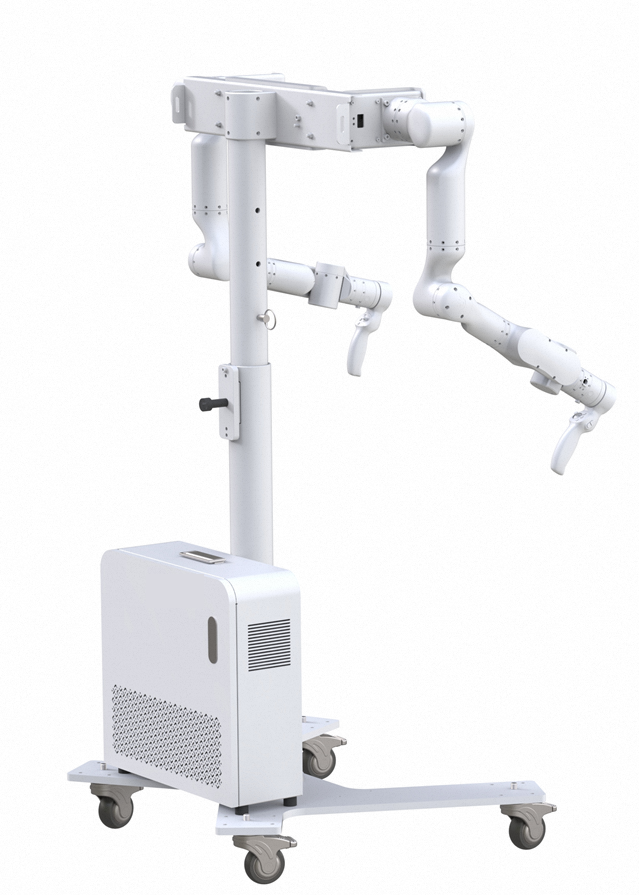
How to Use This Page in This Version
The data dictionary starts with four columns: time, observation, action, and platform. The platform column records the isomorphic teleoperation kit and the configuration sheet number for this session; do not write "teleoperation platform." The number of channels in the observation column comes from: angular resolution: the first two columns ±0.003°, the local column 0.088°. Motors: the first two columns integrated joints, the local column bus servos. Communication: the first two columns RJ45, the local column RJ45 / 10-pin aviation connector. The joints in the action column come from: all three columns have 7 degrees of freedom, but they must not be merged into a single unit on that basis. The column names are GLN-RX75, GLN-RX71, and local isomorphic kit. The chassis comes from: maximum operating speed: the first two columns 30 RPM, the local column 110 RPM. The drag force row for all three columns states zero-force drag. Zero-force drag is not force feedback. The end effector comes from: the fixture in the local column is a rail-type ring fixture used to grip the master arm, not the slave-side RMG22-65. The slave-side gripper is ordered separately. For any of the four columns not present on the page, the dictionary writes "not collected," not a default value.
File naming should include date, robot unit, and configuration sheet number. Do not use non-traceable terms like "final version" or "new data." If the end effector or kit column changes on the same day, the configuration sheet number must change; otherwise, samples from two different action spaces will end up in the same folder.
Human-side devices go in a separate directory. Head-mounted video, glove posture, and robot joint data must not be merged into a single training file when they are not aligned. Merging is a subsequent step, contingent on the synchronization scheme having been specified. This page does not promise merging as a factory function.
The quality note written for human readers repeats the boundaries: if an optional camera was not purchased, it does not appear in the observation column; if a recommended gripper was not specified, it does not appear in the action column; the success rate in the paper is not a label for this batch of data. /product-teleop-kit.html is the basis for the platform column.
Line-by-Line Verification
Degrees of freedom. All three columns have 7 degrees of freedom, but they must not be merged into a single unit on that basis. The column names are GLN-RX75, GLN-RX71, and local isomorphic kit. This row only states the number and locations of joints that have already been made public. It does not evaluate intelligence, and it does not automatically include the waist, legs, neck, or whole-machine total that are not named on the page. When writing into the action vector, only body parts present in this row get channels; body parts not present remain blank. Do not write blanks as 0, because 0 would be treated by training scripts as a real angle. Do not fill in the degrees-of-freedom integer from another device after this row to make the numbers add up. If the master-slave joint order is not given on the page, mark it as pending written configuration confirmation; do not number it yourself. The joint set in the action column equals this row, no more and no less. The action vector creates channels only for the body parts named in this row; unnamed body parts remain blank and are not filled with 0.
Payload and mass. Master arm self-weight: GLN-RX75 is 7.8 kg, GLN-RX71 is 3.8 kg, local isomorphic kit approximately 1.5 kg (including fixture). Self-weight is not the slave-side rated payload. The numbers in this row must be read with their subject: rated, self-weight, whole-machine mass, envelope, friction, or gripping force. Different subjects cannot be merged into a single number, nor can conversions not given on the page be performed. If field objects are heavier, that cannot be used to revise the specification in reverse; a larger specification also does not prove that every grasping method reaches that limit. Tool mass is undetermined; do not write the arm's rated value as the graspable object mass. The acceptance table retains the original units. If the mass label uses "rated," it must state that this is the specification upper limit, not the object weight of each sample. During acceptance, read the subject first and then the number; if the subjects do not match, split into two rows.
Dimensions and scale. Operating radius: 709 mm, 474 mm, 599 mm. This is the master arm scale, not the outline of the slave-side body. This row is an outline or structural dimension, used to check doors, elevators, tabletops, or transport; it is not operating height, nor is it arm reach. Do not add it to the vertical range. If the diagram shows protrusions, antennas, or human standing positions not in this row, note separately that they are not part of the specification. If weight appears in an adjacent row, do not write it into the dimension sentence. Outline does not enter the action vector. Doors, elevators, and transport are checked only against the outline; do not treat this row as operating height.
Operating range. Configuration: the first two columns are humanoid configurations, the local column is the same-side arm. Gripping: the first two columns are handles, the local column is a rail-type ring fixture. This line describes the range that a hand or lift can reach; the definition must follow the original sentence: vertical working range, arm span, motion radius, or stroke — these cannot be added together or renamed. If "excluding end effector" is written, it must remain in the figure caption. If the original text does not specify units, retain the "units not specified" note; do not delete it for tidiness. The working range can be written into task metadata, not into joint angles. The figure caption retains the range definition from the original sentence, as well as terms such as "excluding end effector" or "units not specified".
Motion. Maximum operating speed: 30 RPM for the first two columns, 110 RPM for the local column. Traction force is listed as zero-force dragging across all three columns. Zero-force dragging is not force feedback. This row describes how the ground or main arm moves. Four-wheel drive, differential drive, in-place rotation radius, and rotational speed are terms for different mechanisms and cannot be substituted for one another. Published speed is a capability, not a recommended teaching speed; teaching can be slower, but the slower speed is recorded under experimental conditions and is not written back into the specification. Do not borrow slope-climbing or positioning data from other pages for pages that do not list them. Whether a chassis channel exists is determined by whether this row describes movement. Teaching speed can be lower, but the lower speed is recorded under operating conditions and does not alter the published capability in this row.
Power supply. Operating voltage: the first two columns DC24V, the local column DC12V. Power: ≤200 W, ≤100 W, rated 84 W. The specification table has no battery row, so do not write endurance. This row retains only the electrical terms that appear on the page: voltage, capacity, endurance, charging, current, or power. If there is no "hours," write that endurance is not given; do not fill in hours from a neighboring page. Do not rename charging time as endurance. Rated and maximum must be in separate columns. Approximate values retain "approximately." Do not sum the ampere-hours of multiple devices and claim them as one device's battery. The battery row does not produce sensor timestamps. Hours, charging, or current that do not appear remain not given; do not copy them in from a neighboring page.
Perception and computing. Angular resolution: ±0.003° for the first two columns, 0.088° for the local column. Motors: integrated joints for the first two columns, bus servos for the local column. Communication: RJ45 for the first two columns, RJ45 / 10-pin aviation connector for the local column. This row inventories the items already specified in sensors, computing, or communication, and preserves the terms standard, included, optional, and optional-order. An optional item that is not checked does not count. When the cover conflicts with the list, cite the list, but do not pretend the cover statement does not exist. Headsets and gloves do not enter this row. Processors, hard drive capacity, or camera channel counts that are not written out must not be drawn into the system diagram. The topics in the observation column are consistent with the channel counts in this row. Optional sensors that were not purchased do not enter this data dictionary.
End effector. The fixture listed in the local column is a rail-type ring fixture, used to hold the main arm; it is not the RMG22-65 end-effector. The end-effector gripper is ordered separately. This row indicates at which end the contact or gripping occurs. Quick-change, compatible, and recommended are not models included in the box. The ring fixture on the main arm is not the end-effector gripper. Force, stroke, and payload remain as stated in their respective rows and are not merged into a single system-level metric merely because they are installed on a given platform. For flange and protocol mappings that have not been specified, write "to be confirmed" rather than "plug-and-play." The end-effector status only enters the action column once the model is determined. "Supports" or "compatible" without a specified model cannot be treated as delivered.
Boundary. Force feedback is listed as supported only for GLN-RX75 and GLN-RX71. The local isomorphic kit is listed as not supported. The primary arm models are RX75, RX71, and YDS-DAP-75/65/RX75S respectively. This row is a boundary deliberately separated on the page: another model, another column, another product page, or an interface that still requires project confirmation after modularization. The boundary is not a defect note; it prevents verbally buying two pages as one. When writing a proposal, copy the boundary into "Not included in this order." If a device not included is added later, open a new configuration sheet; do not go back and change the platform name in old samples. Devices not included must not appear in the platform identifier. Devices within the boundary must be ordered separately; old samples must not be renamed to claim they already include it.
Configuration column. The contract must specify column names. Purchasing the robotic platform does not by default include the kit. For remote operation, look at the first two columns; for local data capture, look at the third column; in either case, order by cell. This line distinguishes standard, recommended, and optional. Unchecked recommended and optional items will not be delivered. If the standard row and the parameter-table row are inconsistent, keep both rows and use "locked for this order" to indicate which one is actually delivered, rather than blacking out one row in the order without signing off. Prices and lead times are not written into this line's restatement. The configuration-sheet number on the sample must explain whether recommended items are checked. Unchecked recommended and optional items must be written as not delivered on the order.
Excerptable. Copy the attachment column by column; do not merge. Example: GLN-RX75, force feedback supported, 709 mm, 7.8 kg, handle, ±0.003°, 30 RPM, integrated joint, RJ45, DC24V, ≤200 W. This is the type of line that can be pasted into an attachment: with a subject, with units, and traceable back to the original sentence on the product page. When pasting, preserve words like "approximately," "excluding," "not specified," "optional," and "recommended." Do not convert and keep only the result. If the same number has different meanings on two pages, write it as two rows in the attachment. Do not mix test protocols into spec excerpts. Data descriptions should cite the original attachment sentence, not write a separate set of numbers. When pasting into the attachment, paste words like "approximately," "excluding," and "optional" along with the numbers.
Do not write. Do not write "one teleoperation kit, approximately 5 kg, with force feedback." Do not merge 30 RPM and 110 RPM into a single speed, and do not merge DC24V and DC12V into a single voltage. This line is a negative statement for editorial review. It does not describe what the equipment can do; it only prevents hours, degrees of freedom, payload subjects, or cover slogans from adjacent pages from being written in. If the negative statement is matched, revert to the original product page sentence and do not interpret it as "close enough." Success rates from external papers and total hours not publicly disclosed on this site must likewise not be written in. If a number from a negative statement appears in the dictionary, treat it as mixed writing. If manuscript retrieval matches a negative statement, revert to the original product page sentence.
| Projects | Public-Facing Positioning of This Page |
|---|---|
| Degrees of Freedom | All three columns have 7 degrees of freedom, but this does not mean they can be merged into a single unit. The column names are GLN-RX75, GLN-RX71, and local isomorphic kit. |
| Load and Mass | Main arm self-weight: GLN-RX75 is 7.8 kg, GLN-RX71 is 3.8 kg, the local isomorphic kit is approximately 1.5 kg (including the fixture). Self-weight is not the rated payload at the end-effector. |
| Form Factor and Scale | Working radius: 709 mm, 474 mm, 599 mm. These are the dimensions of the main arm, not the outline of the end unit. |
| Operating Range | Configuration: the first two columns are anthropomorphic configurations; the local column is the same as the follower arm. Gripping: the first two columns use handles; the local column uses a rail-mounted finger-ring fixture. |
| Motion | Maximum operating speed: the first two columns are 30 RPM, the local column is 110 RPM. All three columns list zero-force gravity compensation. Zero-force gravity compensation is not force feedback. |
| Power | Operating voltage: the first two columns are DC24V, the local column is DC12V. Power: ≤200 W, ≤100 W, rated 84 W. The specification table has no battery row, so do not state battery life. |
| Perception & Compute | Angular resolution: the first two columns are ±0.003°, the local column is 0.088°. Motor: the first two columns use integrated joints, the local column uses bus servos. Communication: the first two columns use RJ45, the local column uses RJ45 / 10-pin aviation connector. |
| End Effector | The fixture in the local column is a rail-type ring fixture used to hold the main arm; it is not the RMG22-65 end-effector. The end-effector gripper is ordered separately. |
| Boundary | Force feedback is listed as supported only for GLN-RX75 and GLN-RX71. The local isomorphic kit is listed as not supported. The main arm models are RX75, RX71, and YDS-DAP-75/65/RX75S. |
| Configuration Panel | The contract must specify column names. Purchasing the platform does not include the kit by default. For remote operation, refer to the first two columns; for local data capture, refer to the third column; in either case, order by the individual cell. |
| Excerptable | Transcribe the attachments column by column; do not merge. Example: GLN-RX75, force feedback supported, 709 mm, 7.8 kg, handle, ±0.003°, 30 RPM, integrated joint, RJ45, DC24V, ≤200 W. |
| Do not write | Do not write "one teleoperation kit, approximately 5 kg, with force feedback." Do not write 30 RPM and 110 RPM as a single speed, and do not write DC24V and DC12V as a single voltage. |
Relationship to Public Methods and Adjacent Pages
The embodiment is an actuator, not a dataset. Running the machine once does not automatically produce trainable action labels. A trainable demonstration must at least be alignable on: time, observation (which camera stream, resolution, frame rate), action (which of the joints, gripper, chassis), and the identifier of that specific physical unit. If any one is missing, the file is merely a log, not an imitation learning sample.
A person wearing E6 or E2 walking around produces the human's head pose and hand data, not the motion of a robot end effector. The public documentation for E2 does not include on-board SLAM; poses are reconstructed offline. A 4 Hz preview is not training footage. E6 training should read the 60 Hz raw stream, not the 10 Hz preview. The G7 and G2-L gloves record the hand, not the joints of this rig. These devices can be used simultaneously, but the files serve different roles.
The "success rate" in strategy papers is computed on the authors' own tasks and data. Writing ALOHA or Diffusion Policy results as "achievable with this embodiment" mistakes method literature for an acceptance report.
This article lists: the fields that must appear on the recording sheet if this embodiment is used for demonstration, and which adjacent products' data cannot impersonate its motions.
Before handing off to a colleague
During data dictionary review, ask four questions for each column: where does the time come from, how many observation streams are there, what action channels exist, and which configuration sheet does the rig belong to. If any column's answer is "approximately," the dictionary is returned. Human-side directories and rig directories are stored separately. When the configuration sheet number changes, new samples must not be written into the old directory. The last sentence of the quality note is repeated: optional items not purchased are not in the samples, and the paper's success rate is not a label. The dictionary version is submitted together with the product page verification date. In directory permissions, unsynchronized and signed-configuration data are placed under two separate root directories. The training account has read-only access to signed configurations by default. The root directory name for human-side data contains "human"; the rig directory name contains the rig and configuration sheet number. Directories without numbering are cleaned up weekly and not transferred into the training set. The required fields in the quality note template are: time, number of observation streams, action channels, and rig number — the form cannot be saved if these are left blank. The save button does not offer "fill in later."
First, if the four columns cannot be answered, return the dictionary.
Second, the human side and the robot side get separate root directories.
Third, whenever the configuration number changes, switch directories.
Fourth, directories without numbering do not enter the training set.
Fifth, required fields cannot be left blank when saving.
Sixth, a paper's success rate is not a label.
Continue Reading
- 01 Task Boundaries
- 02 Specification Standards
- 03 Degrees of Freedom
- 04 Payload & Self-Weight
- 05 Workspace
- 06 Locomotion Method
- 07 Perception and Computing
- 08 Power Specifications
- 09 Data Recording
- 10 Time Alignment
- 11 End-Effector Boundaries
- 12 Site Constraints
- 13 Configuration Sheet
- 14 Three-Way Comparison
- 15 Literature References
- 16 Master-Slave Workstation
- 17 Acceptable Deliverable Statements
- 18 Prohibited Conflations
- 19 On-Site Deployment
- 20 Evaluation Path
Back to Product Center View this product page
This article was written on October 3, 2026, for selection and specification verification purposes. Device parameters are subject to the product page tables and do not constitute a supply commitment. External papers only illustrate how problems are framed in the industry; their success rates and data scales belong to the original authors' experiments and are not TOBI's measured results. Phone: +86 137 5502 0164.