
The teleoperation system currently sells remote operation with a human in the loop, and the real-robot recordings that result from it. The solution also describes two later phases: routine subtasks handled by the robot with human intervention only when necessary, and autonomous operation over a broader scope. These two later phases are evolutionary directions. Quotations and acceptance criteria should not describe them as already-included features.
Phase one is the current delivery
Phase one is called full teleoperation. The operator is online, actions are driven by the human in real time, and the on-site robot executes them. The value of this phase has two layers: one is that remote work can be completed without the person entering the workstation; the other is that every real operation can leave behind video, state, and instructions for future model use. Both layers depend on the robotic platform, kit, and platform described in the previous articles; if any one is missing, phase one is incomplete.
Phase 1 does not promise that the robot can already complete a task on its own. The acceptance criteria are: the task can be received, the master arm can be mapped to the slave arm, the agreed video can be returned, recordings can be replayed, and data can be written to disk when the data-acquisition workflow is required. It is not "unattended operation for several hours." Battery life of approximately 6 hours is only listed on the folding page, and those 6 hours cannot be interpreted as unattended autonomous operation.
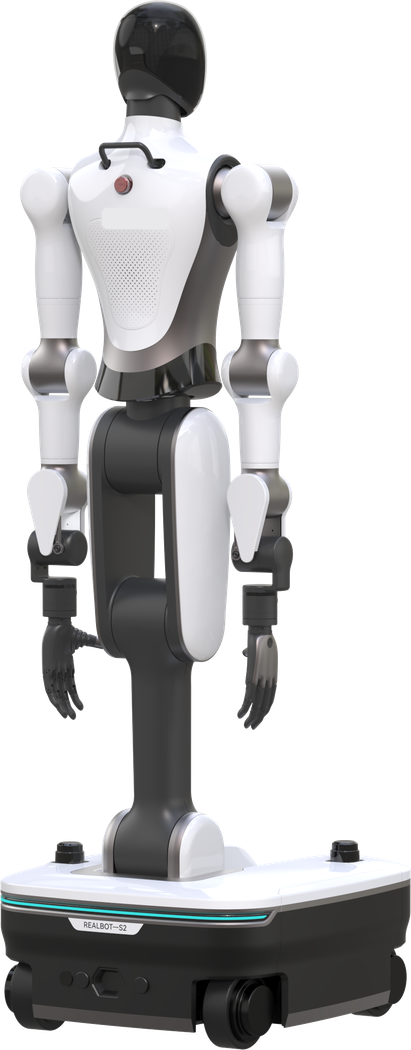
Do not write Phase 2 and Phase 3 into the acceptance criteria for now
Phase two is called collaborative autonomy. The plan means: once teleoperation data has accumulated to a certain level, the robot handles routine subtasks, and humans intervene in exceptional or boundary cases. Phase three is called scaled autonomy, meaning autonomous operation across more scenarios with human supervision as needed. Both phases use conditional phrasing such as "relying on continuously accumulated data" and "through continuous capture and iteration." Until these conditions have been validated on a specific project, they are not a supply list.
The site's consistent position is that information at the R&D stage does not constitute a performance or supply commitment. Therefore, news can introduce this pathway to help customers understand why recordings and data acquisition need to be done thoroughly now; it cannot state "purchasing this system confers autonomous operation." Success rates from external papers likewise cannot be used as evidence for Phase 2.
Where to start the evaluation
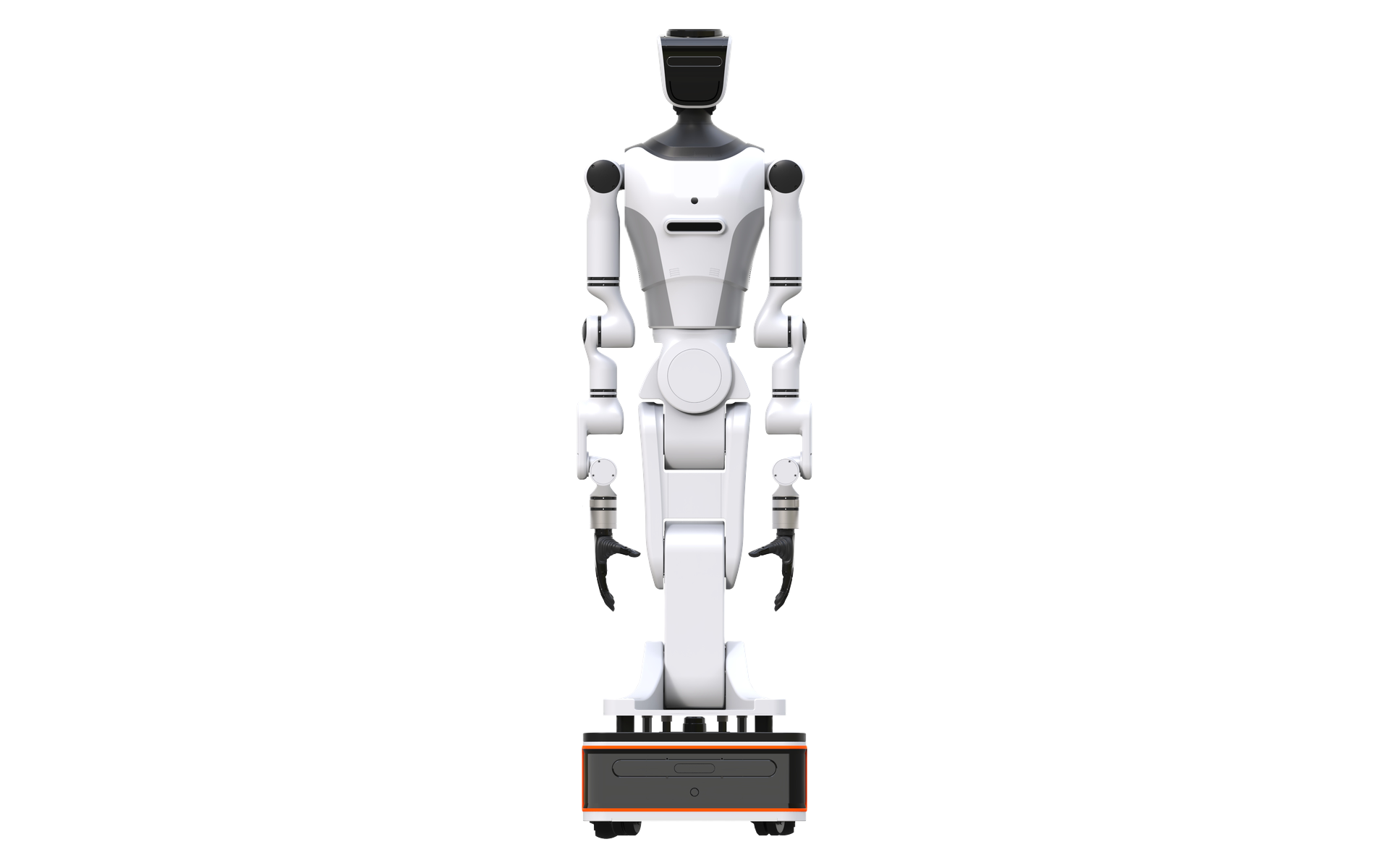
First inFolding, Lift, Wheeled HumanoidLock in one model and copy only that page's table. Then inKit three columnsLock one column, specifying clearly whether force feedback is present and the voltage. Then confirm which blocks the software delivery includes among the client, device management, data capture, and dashboard. Whether the end effector is listed on a separate line inside the box. Only then schedule the integration step among the seven steps. Phone +86 137 5502 0164.
This is written to consolidate the October 2026 build plan into official capabilities that TOBI can be accountable for: selection, combination, delivery of one human-in-the-loop teleoperation system per the product page, and complete retention of recordings for subsequent data use. Autonomous operation stays on the roadmap, not in the current acceptance terms.
Continue Reading
- Break Teleoperation into Three Parts: Robot Body, Kit, and Software Platform
- Order the three robot bodies separately: folding, lift, and wheeled humanoid
- Kits Sold by Column: Force Feedback in the First Two Columns, None in the Local Column
- Seven Steps to Deploy a Workstation: Display, Power, Network, and Integration Testing
- A Day in the Loop: Task Dispatch, Teleoperation, Storage, and Acceptance
Device page:Folded Arms, Lifting Dual-Arm RMC-AIDAL, Wheeled Humanoid, Isomorphic teleoperation kit, Two-finger gripper RMG22-65. The main entry point isProducts.
This article was written on October 4, 2026, based on that month's teleoperation system build plan, and published after being rewritten according to the parameter tables on the in-site product pages. Figures that conflict with the product pages do not enter external messaging. The software platform is described according to the delivery scope of the plan, not written as a TOBI manufacturing claim, nor rewritten as another company's brand. Phase 2 and Phase 3 are evolutionary directions and do not constitute a commitment to already-delivered autonomous operation. Phone: +86 137 5502 0164.