
Lead-in.Most glove procurement failures are not due to insufficiently high parameters, but because the sentences in the contract and the specification sheet are not the same language. This article writes the G7 and G2-L evaluation form as a checklist usable by buyers, sales, and algorithm engineers alike. The date is October 2, 2026, and the numbers come only from the on-site specification sheets and product pages.
The first block of the evaluation form: task, not budget
Write the task sentence first. If you need fingertip positions in space, serving pointing, pinching, and grasping, and the workstation can evaluate magnetic fields and wired topology, choose G7 as the primary device. If you need wireless mobility, multi-round hand poses, and lower wearing burden, choose G2-L as the primary device. If you need pressure, slip, or force feedback, neither is the primary device — haptics goes on its own line. If you need out-of-the-box control of a specific dexterous hand model, neither is a factory-closed loop — mapping goes on its own line. If the task sentence is wrong, the subsequent battery life and sampling rate will be applied to the wrong acceptance criteria.
Public work in 2026 provides the external rationale for this form. T-Rex binds tactile teleoperation to dexterous hands; RealDexUMI turns the glove into an isomorphic command device for the hand; TactiDex and DexViTac put contact into benchmarks; domestic manufacturers released tactile data-capture gloves in August and September in succession. Buyers will therefore come to TOBI with these terms in hand. The evaluation form's answer should be routing, not checking off every term as "supported."
Second block of the evaluation form: copyable specifications
| Projects | G7 copyable | G2-L copyable |
|---|---|---|
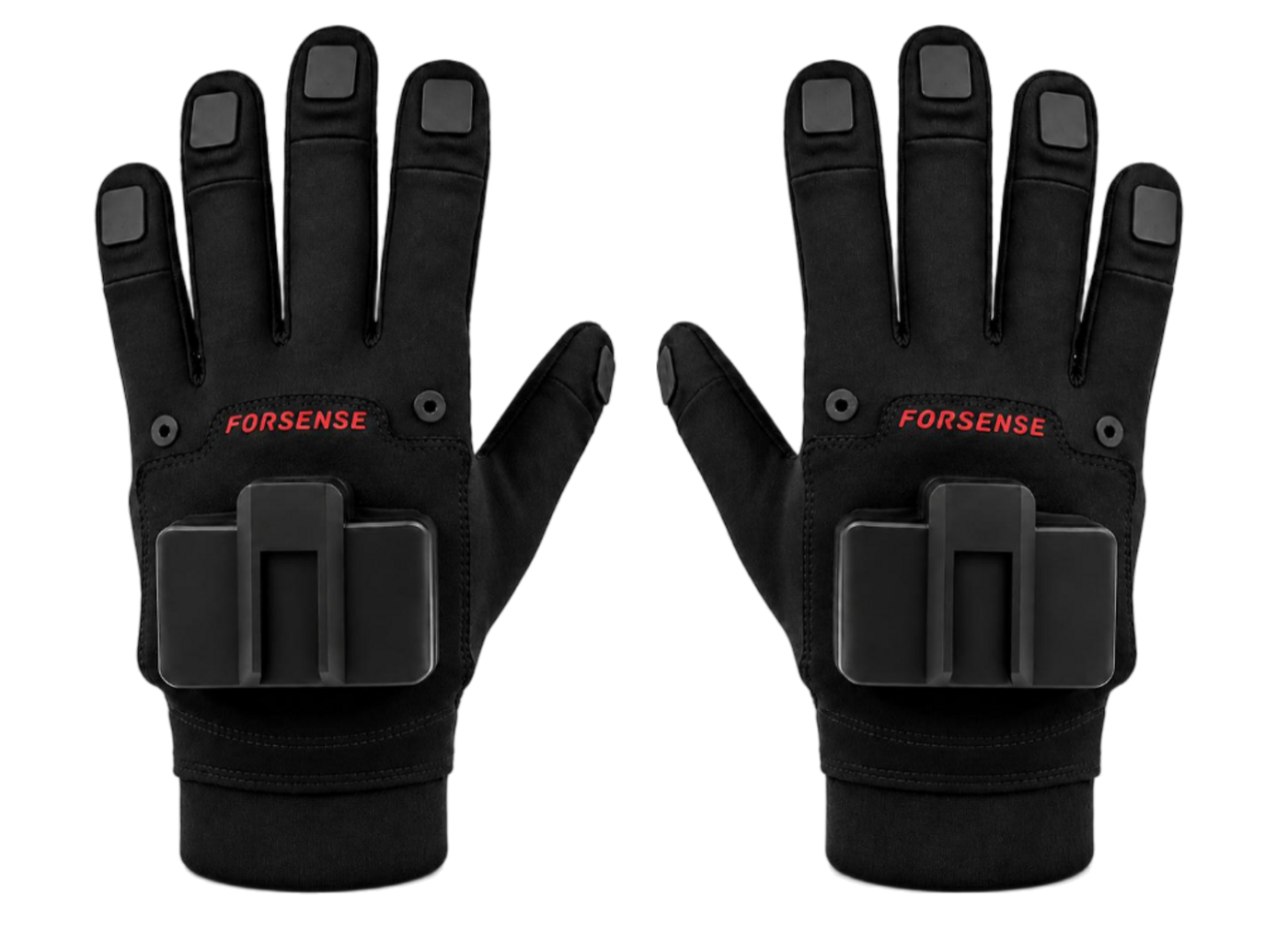
| Principle | Fingertip EMF+IMU, back-of-hand IMU, Hub aggregation | 1+8 IMU + wrist IMU |
| Frequency | Sensor sampling 120 Hz | Data transmission 50 Hz |
| Latency | End-to-end: wired <20 ms>, wireless <30 ms> | Signal latency ≤20 ms |
| Range | Gyroscope ±4000 dps, accelerometer ±8 g | Same as left |
| Spatial | Position 2 mm, orientation 3 deg | Does not state millimeter-level absolute position |
| Connect | CANFD or UART; wireless module optional, 10 m | Bluetooth 5.1, up to 15 meters |
| Power | Hub USB-C, 4.6–5.5 V; wireless option battery life >3.5 h | Battery life 7 hours, charging 3.5 hours, USB-C |
| Weight and Sizing | 115 g ± 5 g; M / L / XL, standard configuration L | 90 ± 5 g;M / L / XL |
| Software | As specified in the current integration documentation | SDK: C++, Python |
Preserve the subject when transcribing. Do not merge the two columns into a sentence like "latency under 20 ms, sampling 120 Hz" that is wrong for both models. Wireless latency under 30 ms only holds when the G7 is configured with wireless. The G2-L's 40 minutes with no noticeable drift and four-point calibration under 40 seconds can be written in the "manufacturer experience description" column with a note of "on-site spot check," but should not be written into the "guarantee."
Third section of the evaluation form: explicit exclusions
Use negative phrasing to avoid procurement or legal reviewers missing qualifying adjectives. This order does not include tactile arrays, contact force, or force feedback. It does not include mapping, controllers, or safety certifications for a specified brand of dexterous hand. It does not include hardware-level time synchronization with E6 or E2; if joint capture is required, a separate alignment verification must be attached. Do not describe G7's 2 mm as robot end-effector accuracy. Do not describe G2-L's 7 hours as calibration-free. Do not treat third-party robots shown in demo videos as a compatibility list. The product page is already worded this way; the contract appendix must remain consistent, otherwise the trust built through content marketing will be undermined by your own quotation during legal review.
Quantity, Sizing, and Delivery Scope
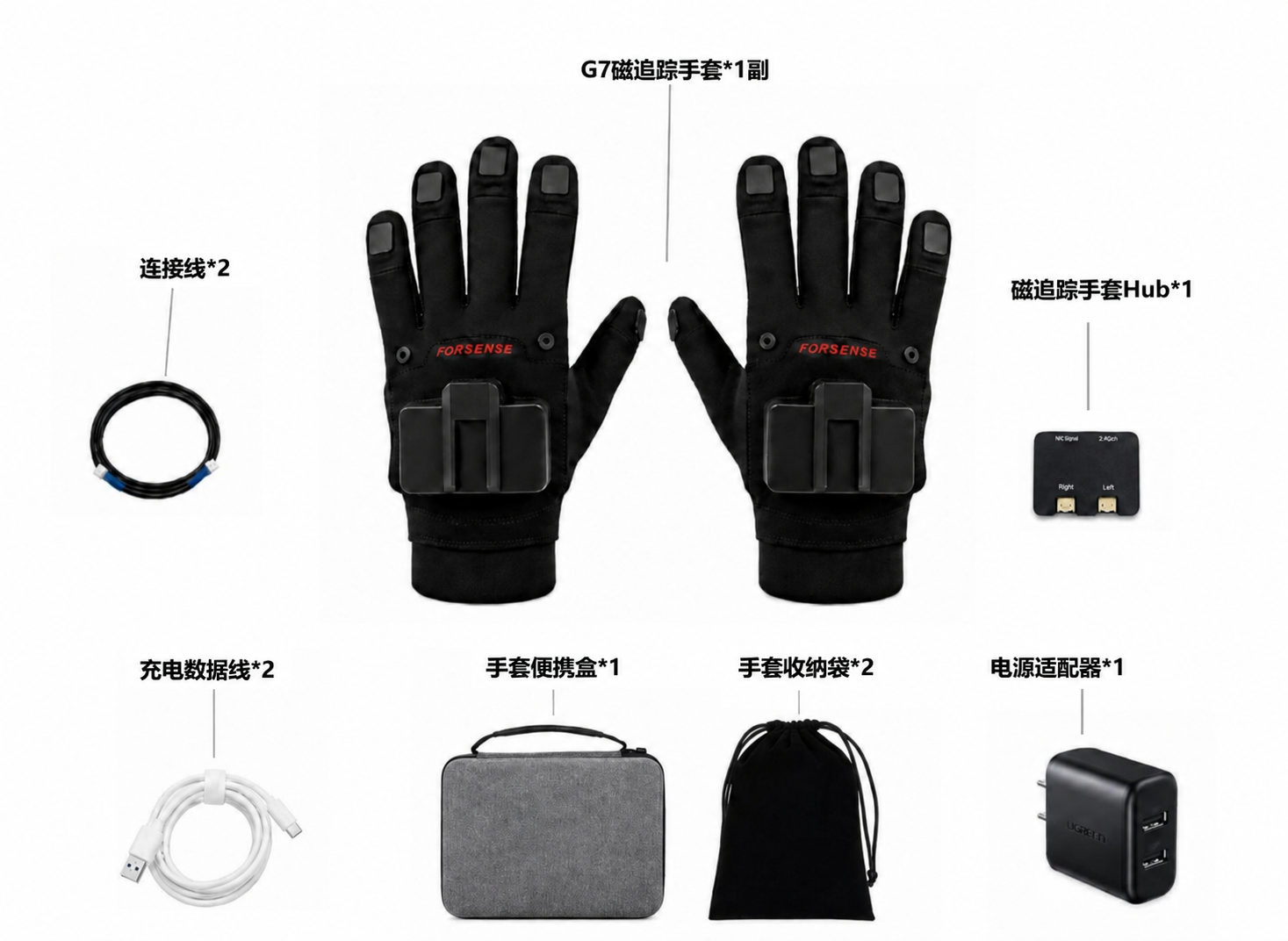
Estimate quantity by left and right hands, not by "people." One bimanual operator counts as two units, plus spare sizes. G7 also requires a Hub, connection cables, data cables, and a power adapter; these are included in the standard configuration list, but for multi-station setups you must ask whether the Hub is shared — do not assume. Use the hand length and palm circumference from the specification sheet for sizing, not clothing sizes. Standard configuration L only indicates the default shipping size; it does not mean all data collectors wear L. When selecting the wireless option, write battery life greater than 3.5 hours, 10 meters, and module weight of 65 grams into that line item. G2-L's 3.5-hour charging time per shift must be scheduled alongside its 7-hour battery life, otherwise "battery life does not match" will arise in the first week of the pilot.
The delivery scope is quoted in three line items: equipment, alignment verification for the joint head-mounted system, and robot mapping with software. All three can be purchased, or only the first line item. If only the first is purchased, the customer receives verifiable hand-motion equipment, not a trained policy. This expectation must be stated in the first paragraph of the quotation notes, not hidden in an appendix. Prices vary with configuration, quantity, and services; delivery lead time, loaner units, and warranty are subject to written confirmation before ordering. The response expectation stated on the product page is a reply with an evaluation framework within approximately one business day — not an immediate commitment to inventory availability.
Small Closed Loop: Buy Verification First, Then Scale
For the first order, we recommend covering a single workstation or three collectors over a period of days rather than a full quarter. Acceptance should check six things: whether the size can be worn for the full planned duration, whether the light signals or Bluetooth are correctly logged by the operator, whether the frequency meets 120 Hz or 50 Hz, whether the fields include left/right hand and timestamp, whether failed segments are retained, and whether the internal team can still restate "no haptics, no plug-and-play." If all six pass, scale up using the same specification. If any one fails, revise the protocol or change the model first. This small closed loop is a customer-acquisition design in product operations: the content page states the standards upfront, so the trial does not turn into free scope creep.
When scaling, keep the firmware and size versions unchanged, or record any changes in the data batch metadata. Otherwise, spatial points at 120 Hz from one batch and outputs from a different firmware in the next batch will be treated as the same distribution. Research customers should in particular include the specification sheet link and verification date in supplementary materials. Commercial customers should place the same link in the acceptance appendix. Use TOBI's on-site documentation links to avoid the contract losing its basis if an external documentation site is redesigned.
Who Fills Out This Form
The algorithm lead fills in observation types and label sources. The robotics engineer fills in the target hand's degrees of freedom, joint limits, and protocol; if no model has been selected, write "TBD." The field lead fills in wired or wireless, magnetic environment, Bluetooth obstruction, and shift schedule. Procurement fills in quantity, size distribution, and whether the three quotation line items are itemized separately. Legal only verifies that the negative phrasing is still present. All five parties using the same form is more effective than each reading seven promotional pieces separately and then holding a meeting. The purpose of the seven promotional pieces is to ensure these five parties share the same vocabulary before the meeting: end-to-end, signal latency, the subject of 2 mm, the subject of 7 hours, and tactile sensing is not included in the order.
After completing the form, the entry point is still the product page — do not treat the long-form content as an order. For G7, proceed via Product Pageand Specification sheet. For G2-L, proceed via Product Pageand Specification sheet. If a head-mounted system is needed, enter E6 or E2 from Productsand read the joint capture article. Include the task description, form, and gaps in your email. TOBI responds according to the form, not according to "we want to do embodied AI."
Three questions to ask vendors in October 2026
First, is the spec sheet hosted on your own domain, or does one click take you off the official site? TOBI's answer for both of these gloves is full-text on-site. Second, can the definitions of latency and sampling be found verbatim in the spec sheet? Only if they can be found may they be written into the tender. Third, are tactile sensing and robotic arm compatibility included by default or priced separately? Suppliers who require default inclusion are not quoting on the same basis as TOBI and should be compared separately, rather than declaring one cheaper or more expensive by putting total prices in the same table. These three questions can filter out vague proposals and also explain why product content must be longer than advertising: it is long so that the evaluation sheet can be short.
If all three questions already have answers, procurement can stop at the equipment line item and leave the scientific questions to the pilot data. This is the action TOBI hopes this set of promotional pieces ultimately drives.
Five writing patterns that internal review can veto
First, writing G7 and G2-L as the same accuracy class. Second, writing 2 mm into robot acceptance criteria. Third, writing wireless latency under 30 ms into a configuration without the wireless module. Fourth, writing the paper's success rate, 100 hours, or 2,400 data segments as the deliverable volume after purchasing TOBI equipment. Fifth, using "force-controlled teaching" as an equipment feature in a contract that excludes tactile sensing. If any one of these five phrasings appears, the review should return it for revision rather than proceeding to a quote request with it. The content team, sales, and procurement share these five vetoes so that the product center's messaging is not re-exaggerated in external materials. This is also the operational reason for writing the promotional pieces long in October 2026: long-form content provides veto sentences; short ads only provide adjectives.
What a recommended quotation should look like
The first line is equipment configuration: model, left/right hand quantities, size distribution, whether G7 includes the wireless module and forearm module, and the number of G2-L charging accessories. The second line is explicit exclusions: tactile sensing, specified robot adaptation, camera hardware synchronization, and end-effector accuracy commitments. The third line is optional services: person-days for alignment verification, person-days for mapping development, and a half-day training session. The fourth line is pilot acceptance: whether the six items pass, and the shutdown conditions if they do not. The fifth line is commercial terms: delivery lead time, loaner units, and warranty, all marked "subject to written confirmation before ordering." A quotation with all five lines looks more like an industrial product than a single total price and is more likely to pass the customer's internal procurement committee.
Committees typically do not read seven long-form articles. They read the exclusion line of the quotation. Therefore, the sentences in the exclusion line must be consistent with the product page; they cannot be changed back to "force control is supported" at the quotation stage to close the deal. The cost of a dispute after signing is higher than the cost of losing one ambiguous project. In the 2026 market, there are many competitors offering ambiguous projects; suppliers with clear boundaries are actually scarce. TOBI uses product content to articulate this scarcity — it is both customer acquisition and filtering.
Verification Sequence on the Day of Delivery
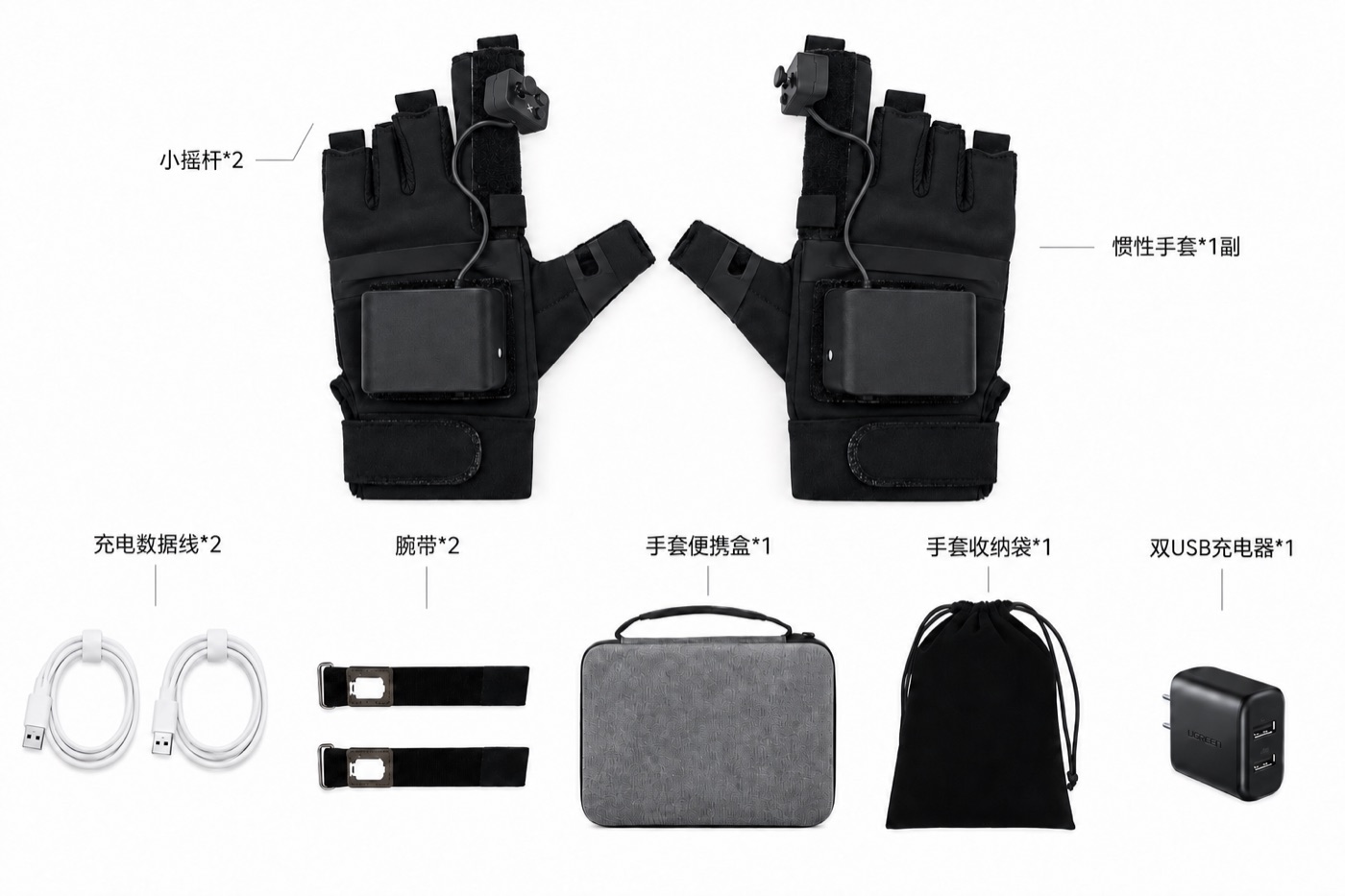
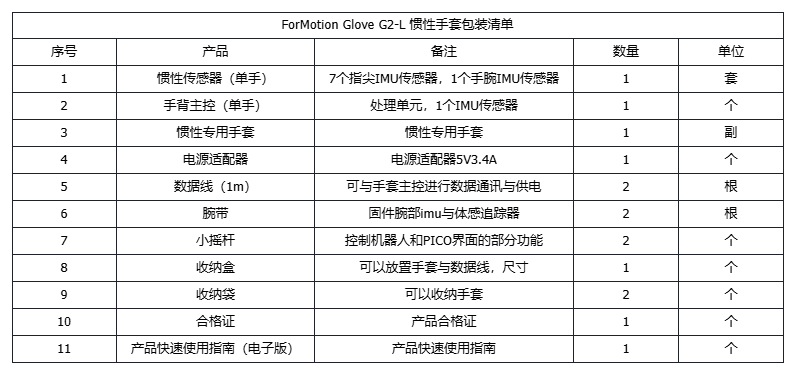
Check the packing list first, then power on, then record data, and only then connect the robot. For G7, verify the eleven standard items and the actual optional configuration. For G2-L, verify against the packing list. After powering on, check whether the G7 light pattern has exited initialization, or whether the G2-L has entered a recordable state via four-point calibration. Record only a one-minute empty capture to check the frequency and left/right hands. Only when the empty capture shows no issues is the engineer permitted to begin mapping. Writing this sequence into the unboxing card can reduce misdiagnoses such as "the robot didn't move, so the glove must be defective." The unboxing card can be printed by the customer; TOBI only needs to attach the key points in the evaluation response.
If the unboxing reveals a size mismatch, stop first — do not let the data collector force-fit the glove and produce a batch of unusable data. Size is part of the specification, not an after-sales emotional issue. While waiting for a size exchange, other acceptance items can proceed in parallel, such as host software and start-marker drills. Turning waiting into preparation keeps the pilot calendar from being completely disrupted by a single size error. If procurement ordered based on hand length statistics rather than head count at the time of ordering, this risk is significantly reduced. This is why the evaluation form requires a hand length distribution, not just "ten people."
When to Switch to a Different Model Instead of Paying More
In the pilot, if a task is proven to require fingertip spatial points and you purchased the G2-L, the correct action is to re-evaluate the G7 rather than buy more G2-L units. Conversely, if the G7's cable harness makes ambulatory tasks impossible, the correct action is to re-evaluate the G2-L or keep the G7 only at a fixed workstation. If neither can provide contact force, the correct action is to stop adding budget to gloves and look for a tactile solution. Switching selections is not a sales failure. If the article makes customers afraid to switch, they will keep spending on the wrong device and ultimately attribute the blame to the brand. Framing a switch as a normal evaluation outcome is the closing of this pitch set.
When switching models, do not discard the data already collected. G2-L's pose sequences can still be retained as inertial observations of the same task, but they cannot masquerade as spatial points. G7's spatial points likewise cannot be downsampled and passed off as covering all scenarios including Bluetooth walking. Retaining, labeling, and storing separately is more consistent with data governance than deleting the database and starting over. The shutdown conditions in the procurement contract should permit this kind of model switch and specify how already-delivered hardware is settled. Writing this at the evaluation stage is cheaper than writing it at the dispute stage.
Final Read-Aloud Before Signing
Recommend reading the exclusions aloud at the contract signing meeting: no tactile sensing, no plug-and-play for a specified robot, no treating 2 millimeters as end-effector accuracy, no treating 7 hours as calibration-free, and no treating simultaneous power-on as hardware synchronization. A customer who still nods after all five sentences are read is a qualified customer. If someone hesitates at any one sentence, return to the evaluation stage rather than trading a discount for silence. A discount cannot resolve conflicting sentences at acceptance. Reading aloud may look ceremonial, but it actually places the veto sentences from the long document at the one moment when all decision-makers are present.
After the read-aloud, confirm the pilot calendar and shutdown conditions. The first week on the calendar only verifies the equipment and fields; the second week decides whether to proceed with mapping based on the results. The shutdown conditions allow switching to a different glove model. Both parties record these statements in the meeting minutes, with the minutes referencing the product page and specification sheet links. At this point, the task of the seven promotional pieces is complete: they do not replace the contract, but ensure the contract is written correctly the first time.
Three materials recommended to attach to the evaluation response
The first is a link to the product page corresponding to the task. The second is a link to the on-site specification sheet, precise to the G7 or G2-L specification anchor. The third is the exclusion list of this evaluation sheet, rewritten in the customer's own task phrasing rather than just pasting a generic disclaimer. All three materials are on tobi.cn, so forwarding them will not jump to an external documentation site. If the customer also wants a head-mounted device, the fourth item adds the E6 or E2 product page and repeats "different clocks." Keep the reply within one screen; leave long-form content for them to open themselves. A one-screen reply plus three links is what this outreach set expects sales to actually send out.
If the customer replies with "let's see the price first," still attach all three materials. Explain that the price varies with left/right hand quantity, optional configuration, and whether services are included — do not give a number detached from the configuration. A number detached from the configuration will backfire on the exclusions. Insisting on configuration before price is consistent with the product page structure and also reduces ineffective price haggling.
The attachment order for signing minutes is also fixed: product page, specification sheet, exclusions, pilot calendar. If any one is missing, the minutes are not issued. After issuance, changes go through written channels, not supplementary group-chat messages.
The final sentence of price communication should be fixed as: a formal quotation will be provided after the configuration, exclusions, and pilot calendar are confirmed. The five-line structure of the formal quotation is not merged into a single number due to customer urgency. A single number will prompt legal review to ask what it includes; if the explanation hastily adds tactile sensing or synchronization, it will conflict with the product page. It is better to take one extra business day than to leave a conflicting sentence in the chat log. A conflicting sentence is more likely to become a reason for deductions during the acceptance month than a delayed quotation.
Before sending the meeting minutes, sales and the solutions engineer each read the exclusion line once. If the sentences they read differ, revise the minutes based on the product page and specification sheet — not the chat log.
Continue Reading & Next Steps
- Selection: how G7 and G2-L divide the work
- G7: fingertip spatial position and teleoperation
- G2-L: long-duration wireless hand demonstration
- Data: from glove to trainable samples
- Combination: Glove + E6 / E2 Head-Mounted
- Applications: labs, production lines and research
- Procurement: evaluation form and scope
Back to Product Center View G7 View G2-L G7 specification sheet G2-L specification sheet
This article was written on October 2, 2026, for selection and content acquisition purposes. Device parameters are subject to the on-site specification sheets and product pages and do not constitute a supply commitment. External papers and public reports only illustrate industry context; their success rates and dataset sizes belong to the original authors' experiments, not TOBI's measured results.