
Lead-in.What dexterous-hand teleoperation requires is not a visually appealing gesture animation, but the position and orientation of the operator's fingers in space, along with a separately confirmed mapping between these quantities and the joints of the robotic hand. The Formotion Glove G7 is placed at TOBIProductsit takes on the first half: a magnetic-inertial fusion glove manufactured by Forsense, with specifications stating fingertip spatial tracking. Mapping, controllers, and specific robot models are not included by default.
What the device actually consists of
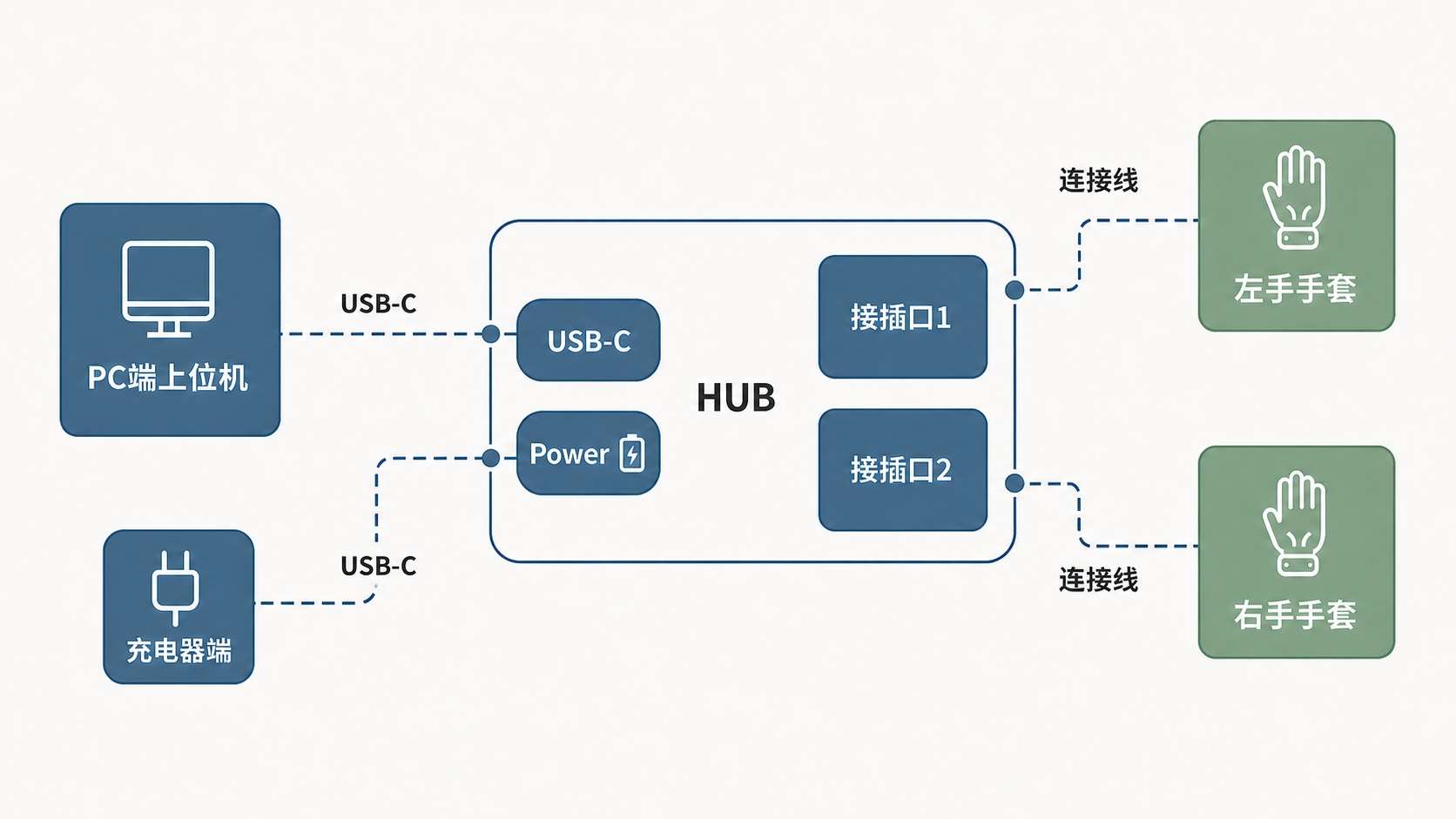
According to the on-site specification sheet, the standard single-hand configuration is one sensor set: 5 fingertip magnetic-inertial hybrid modules (EMF plus IMU), and 1 IMU on the back of the hand. The back-of-hand main controller is the processing unit and includes 1 IMU. The glove body is the magnetic-tracking G7 dedicated glove. Left and right hands converge through the magnetic-tracking G7-Hub, which simultaneously handles power supply, communication convergence, and two-hand synchronization. The connection cable (1 m) links the main controller and the Hub, and the data cable (1 m) handles communication and power. The storage case, certificate of conformity, electronic quick-start guide, 5 V 3.4 A power adapter, and storage bag are all in the standard checklist. Optional items are listed separately: wireless module, forearm module with straps and cable harness, TTL-to-USB-C module, and wireless receiver.
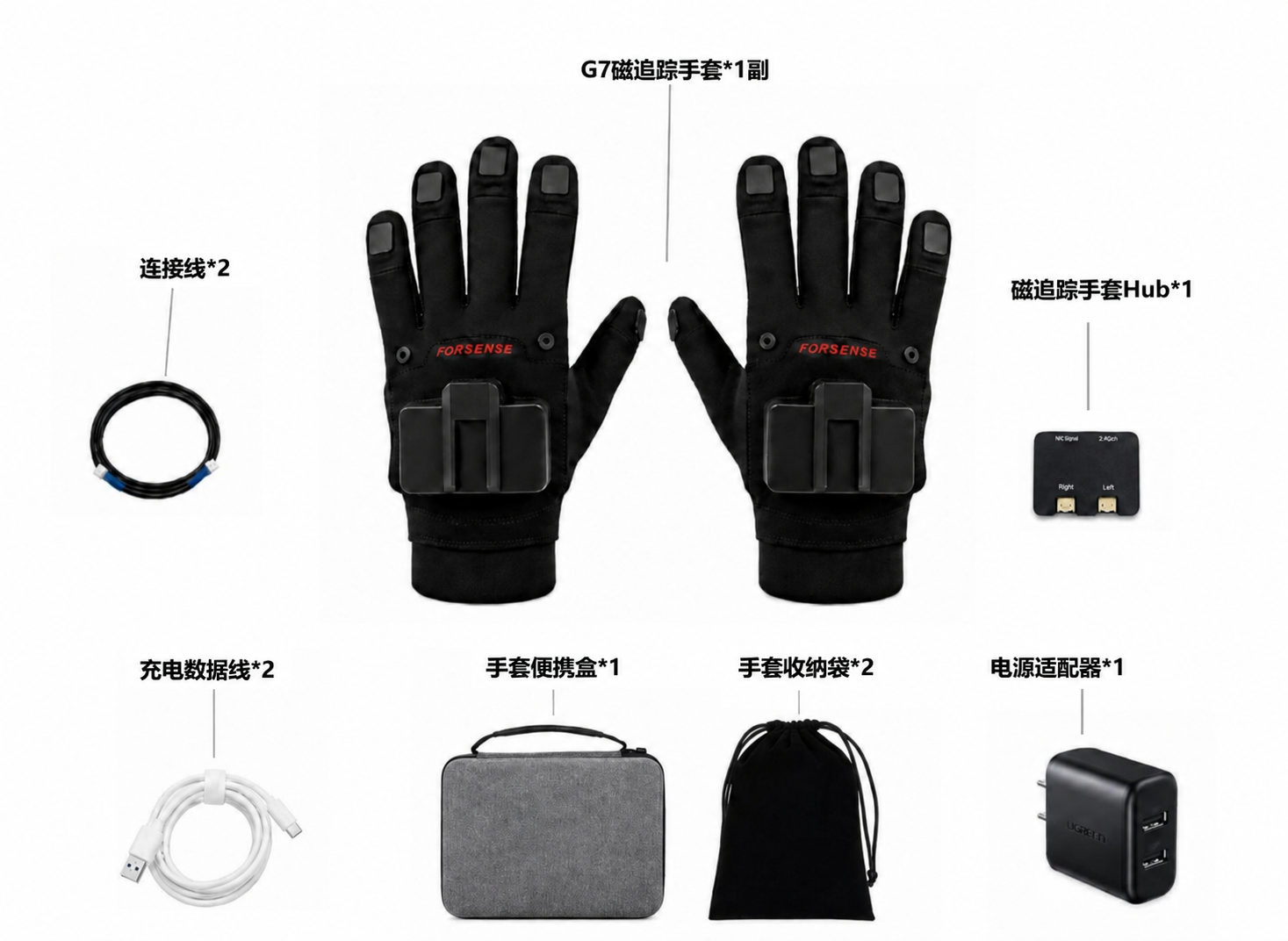
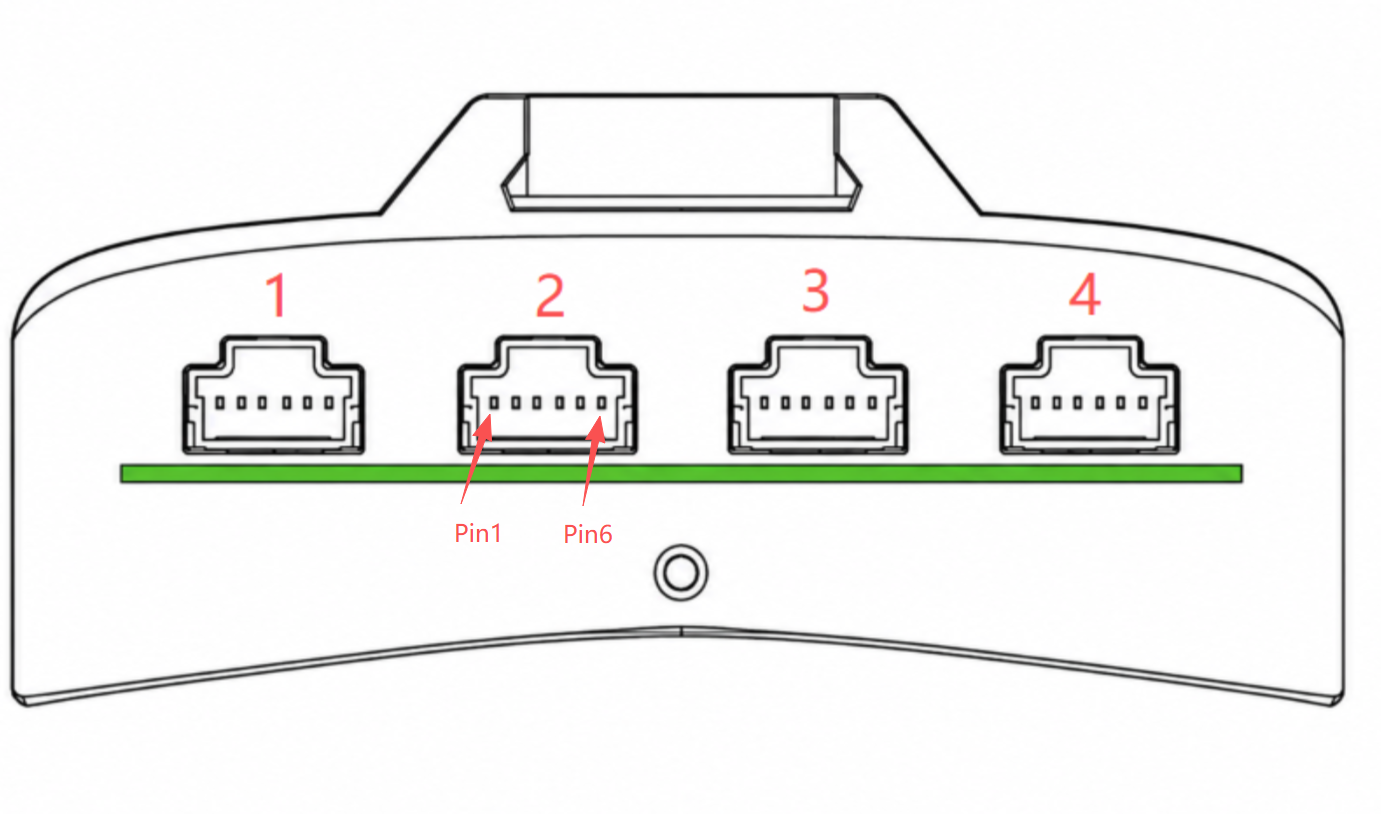
This structure determines the deployment picture. The center of a wired solution is the Hub — it does not end with plugging a USB cable into the glove itself. The left and right gloves first return to the Hub, and the Hub then draws power via USB-C. Voltage range 4.6 to 5.5 V, current specification 300 mA. Wired communication is CANFD or UART, and UART can be converted to 485, 232, 422, or USB. In the pinouts for interfaces 1 through 4, GPIO1 and GPIO2 are functionally reserved; pin definitions follow the diagram in the specification sheet: CAN uses CAN_L / CAN_H, and the three UART channels are TX/RX respectively. Before writing "we have a serial port" into a tender attachment, you should first openthe on-site specification sheetto verify which channel it is.
Why is fingertip spatial position an input to teleoperation rather than the robot's action
In pointing, pinching, and grasping, decisions often depend on the relative position between fingertips, not just how many degrees each of the five fingers has bent. An inertial glove can reliably provide pose changes, but absolute spatial points require another set of observations. The G7 uses an EMF receiver module plus an IMU for this purpose. The specification sheet states: standard configuration includes 5 EMF receiver modules; position accuracy 2 mm; orientation accuracy 3°. The product page also notes that 2 mm is the manufacturer's position accuracy specification and does not equal the robot end-effector accuracy. This caveat must accompany every proposal, because when a buyer's mechanical lead hears "2 mm," they default to thinking about the final error of where the gripper or dexterous fingertip lands on the workpiece.
From the human hand to the robotic hand, there are at least three layers in between. The first layer is the coordinate system, units, and left/right hand conventions output by the glove. The second layer is the target hand's degrees of freedom, joint order, and joint limits. The third layer is the control interface and safety stop. RealDexUMI, in its 2026 paper, chose to make the glove an isomorphic command device to the robotic hand in order to eliminate part of the remapping in the second layer. The G7 is not that kind of isomorphic command device. What it records are magneto-inertial measurement points on the human hand. Whether and how to remap to a particular dexterous hand is project development, not part of the glove's out-of-the-box scope. In the publicly available T-Rex materials, a Manus glove with VIVE trackers drives a Sharpa Wave dexterous hand, and the data package also includes fingertip tactile data. That system proves that "a glove can be located within the teleoperation loop"; it does not prove that any magneto-inertial glove already includes tactile sensing and a specific model of controller.
Latency and sampling rate must be cited according to their definitions
The G7 performance parameters state end-to-end latency: wired less than 20 ms, wireless less than 30 ms; sensor sampling rate 120 Hz. End-to-end refers to the full-chain measurement given in the specification sheet, not the internal clock of the sensor chip, nor the time it takes for the robot joints to finally track the human hand. The wireless path depends on the optional wireless module, whose own specifications are: power consumption 1.7 W, battery life greater than 3.5 hours, weight 65 g, dimensions 44.7 × 63.3 × 28 mm, communication range 10 m. If the optional wireless module is not selected, do not write "wireless less than 30 ms" into the acceptance criteria for that configuration.
Compared with publicly available 2026 data, 120 Hz is a figure that requires explanation. TactiDex aligns kinematics and pose at approximately 120 Hz; T-Rex's data package aligns many modalities at 30 Hz, with a separate 300 Hz thread for low-level control; public reporting on Moxian Technology in September 2026 also uses 120 Hz as the marketing figure for synchronized tactile and pose sampling. These systems' 120 Hz does not equal the G7's 120 Hz, because the sensors, synchronization methods, and presence or absence of tactile sensing all differ. What can be compared is this: buyers now expect sampling rate to be written into the data protocol. What the G7 can commit to is the sensor sampling rate of 120 Hz as stated in the specification sheet. It cannot replace the separate time alignment you perform between the camera and the robot controller.
The IMU side must likewise be quoted verbatim. The finger sensor type is a 6DOF inertial sensor, gyroscope range ±4000 dps, accelerometer range ±8 g. A large range suits rapid flexion and extension; it does not automatically mean better noise performance for slow, fine-grained motion. Noise, temperature drift, and magnetic interference must be measured at the target workstation; the specification sheet gives the range, not your workstation's signal-to-noise ratio.
Magnetic environment, wearing, and indicator lights determine whether this equipment can be used every day
The advantage of magnetic tracking is that it provides spatial points in a suitable environment; the cost is that ferromagnetic materials in the workstation and the two hands being too close together must both be evaluated. The specification sheet's indicator light table lists one normal state separately: magnetic avoidance when the two hands are close together, solid green light, priority recorded as 8. Higher-priority states include firmware upgrade (fast blue flashing), hardware fault (solid red), critical warning (slow red flashing), general warning (fast red flashing), startup initialization (slow blue flashing), left/right hand synchronization valid and normal (solid green), and single glove operating normally (solid blue). Field operators should first recognize the indicator light, then suspect the algorithm. Otherwise, one magnetic avoidance event will be recorded as "bad data," and an entire demonstration segment will be discarded.
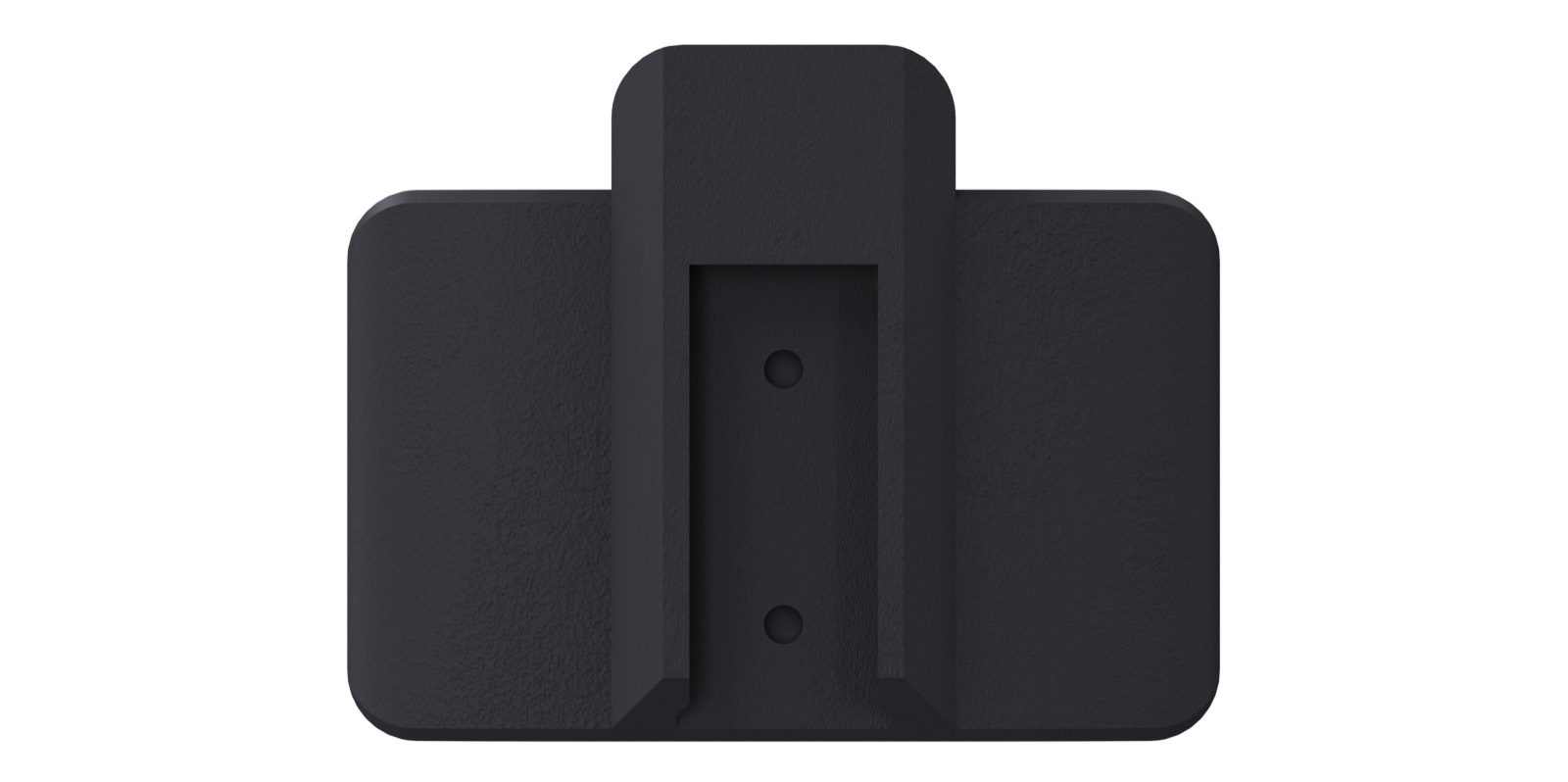
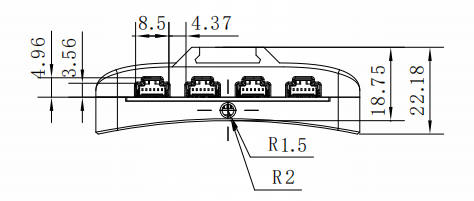
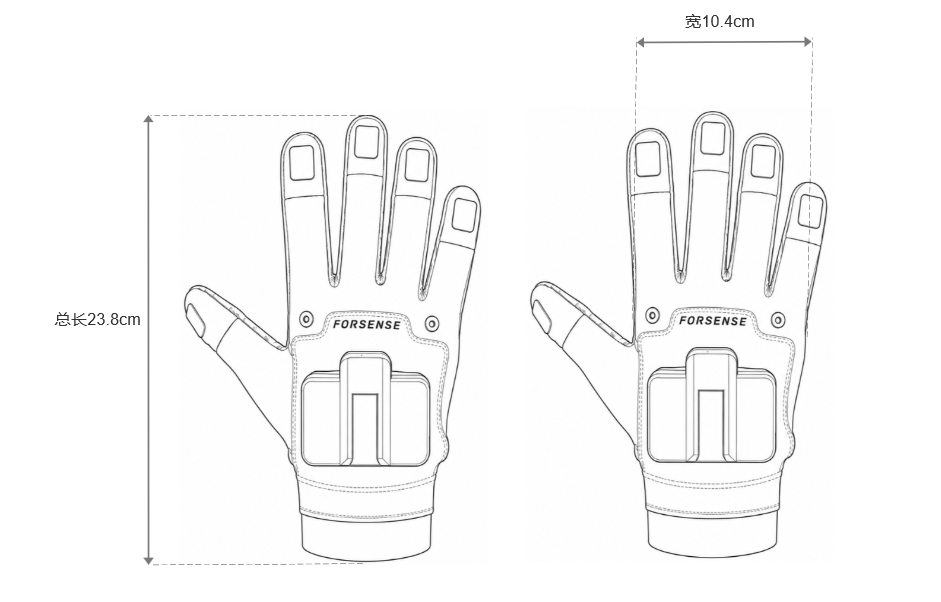
Operating temperature 0 to 40 degrees Celsius, humidity 20% to 80%. Fabric sizes are only M, L, XL. If a collector's hand length falls on a size seam, try a sample first rather than estimating from clothing sizes. The forearm module is an optional order, used to add forearm nodes; it does not change the mistaken impression that "the standard configuration already includes the forearm." TTL to USB-C is also an optional order, used for external harness power and data transmission.
When placed alongside 2026 tactile gloves, G7 should proactively state that it does not measure force
From August to September 2026, public information from Tujian, Chaowei, Fulaixin Materials, and Moxian has all been addressing the gap of "only knowing how the fingers bend, but not whether the grasp is secure." Fulaixin stated this gap very directly in its September 15 seminar: motion capture cannot see contact shape, grasp stability, or slippage. Chaowei's HSG-M1 is even designed to be strapped over an existing motion-capture glove. For TOBI's customers, this means the G7's spatial points are still useful, but they must not be packaged as a tactile data glove. The specification sheet lists no tactile array, no contact force, and no force feedback. If a task requires these, the evaluation sheet should list tactile sensors or a tactile-enabled dexterous hand as a separate line item, and separately discuss how it aligns with the G7 timestamps.
Writing it this way will not reduce qualified customers; it will only reduce the wrong ones. Labs and teleoperation teams that need fingertip spatial positions and can evaluate the magnetic environment and wired topology will continue reading about the Hub and the pins after seeing these boundaries. Teams that only want to buy "a glove that can sense slippage" will leave at this section and go look for tactile solutions instead. The professionalism of a product pitch is reflected in your willingness to send people away in a long-form article.
A minimal checklist you can take to schedule an evaluation
Include the following items in your evaluation email to TOBI, and the reply will come much faster than "I'd like to learn more about the glove": left and right hands or single hand; operator hand length and palm circumference, or directly specify M / L / XL; whether the workstation uses a wired Hub or must be wireless; if wireless is needed, whether a forearm node is also required; the target robotic hand's model, degrees of freedom, joint order, joint limits, and communication protocol; whether it will be collected simultaneously with the E6 or E2; whether contact force is also needed. What TOBI can confirm at the equipment level is the composition, sampling, latency definitions, spatial specifications, electrical interfaces, and sizing as stated in the G7 specification sheet. Robotic remapping, joint synchronization, and tactile sensing are quoted per project and are not included by default with the glove.
Prices, lead times, loaner evaluation, and warranty are subject to written confirmation before ordering. The 2 mm, 3 degrees, 120 Hz, and less than 20 / 30 milliseconds on the specification sheet are manufacturer specifications to be checked against at acceptance, not adjectives that the marketing department can amplify further. Next step: open G7 Product PageVerify the boundaries, or return to the product center and do a task comparison with the G2-L.
Breaking one teleoperation capture session into forty minutes that can be reviewed
Suppose a lab wants to collect a two-hand demonstration of "pinching a small part and placing it into a tray," and the operator's hand length falls within the L size. The first five minutes before starting should be hardware only: confirm that the left and right gloves, two connection cables, two data cables, Hub, and power adapter are all included in the standard configuration, and that the wireless module has not been mistakenly installed in this wired baseline. The main controller's indicator light should have left the slow blue flashing of initialization and entered the solid green of valid left/right hand synchronization. If the two hands are very close together, solid green may also indicate magnetic avoidance; this is a normal state listed in the specification sheet, and the recorder should write "avoidance" in the notes rather than "fault," otherwise it will be impossible to distinguish geometrically close-range operation from equipment abnormality after the fact.
The next ten minutes are for coordinates and baseline; do not rush to connect the robot. First, on an empty bench, perform three finger-touching motions and three hand-opening motions, checking whether the 120 Hz sampling is continuous, whether both left and right hand timestamps are present, and whether the fingertip positions fall within the repeatability discussion range corresponding to the 2 mm specification. Still do not copy the 2 mm as robot accuracy here. Only then connect the target hand's mapping program. If the mapping reverses the thumb direction, this should be recorded as a project software issue, not written back as a glove specification failure. Wired end-to-end less than 20 ms only describes the specification definition of the glove chain; the operator's felt sense of "responsiveness" also includes mapping computation, robot communication, and mechanical lag.
Spend another fifteen minutes collecting valid segments and failure segments. The 2026 tactile mid-training work repeatedly emphasizes primitive coverage rather than keeping only long successful videos. The same applies to the G7: slipping out of the fingertips, pinching too shallowly, and triggering avoidance because the two hands are too close together are all samples that should be retained, with the reason written in the labels. The final ten minutes are for export; check whether the files contain left/right hand identifiers, units, pose representation, and missing-data markers. If any one is missing, that segment of data still cannot go on the training drive. At no point is it necessary to claim that the glove has seen contact force. If a researcher temporarily wants to know the pinch force, the correct action is to stop and list tactile sensing as next-phase equipment, rather than estimating a force in the notes.
Original sentences recommended for retention on the solution page
When introducing the G7 externally, it is recommended to use these traceable original sentences directly. First, the Formotion Glove G7 is a magnetic-inertial device for professional-grade hand motion capture, suitable for the input side of high-precision dexterous hand teleoperation and professional data collection. Second, end-to-end latency is less than 20 milliseconds wired and less than 30 milliseconds wireless, with sensor sampling 120 Hz. Third, 2 mm position and 3 degree attitude are the manufacturer's spatial positioning specifications. Fourth, a single unit weighs 115 grams ± 5 grams, available in sizes M, L, and XL, with L as the standard model. Fifth, manufacturing is by Forsense, and TOBI provides selection, combined evaluation with E6 / E2, and delivery coordination. Sixth, tactile sensing, specific robot adaptation, and hardware synchronization with cameras are not included in the default delivery. All six sentences point to the product page or on-site specification sheet, allowing readers to leave this promotional piece and verify for themselves — this is a trust structure more useful than adjectives in 2026 content-driven customer acquisition.
How this differs from buying only the robot manufacturer's original teleoperation kit
Original manufacturer kits typically bundle the glove, mapping, and a particular hand model into a closed package; the advantage is fast demos, the disadvantage is that once the data leaves that hand model, it is hard to reuse. The G7, placed in the TOBI product center, follows the opposite product definition: first capture the human hand's spatial motion clearly, then confirm the mapping per project. This is more suitable for teams evaluating two dexterous hand models simultaneously, because the same batch of fingertip trajectories can be discussed under two joint orders rather than being locked into the first manufacturer's coordinate system. The cost should also be stated upfront: you will not see your own robot reliably pinching parts on the afternoon of unboxing. The first week's output should be a field description document and a replayable hand trajectory; control discussions come in the second week.
If the budget only allows buying one layer first, and the task clearly depends on contact, do not use the G7's spatial specifications to fill the tactile budget line. Publicly available solutions from October 2026 have already separated tactile gloves, external finger sleeves, and isomorphic skin for dexterous hands into independent SKUs. TOBI is willing to point out this gap during evaluation and continue providing the G7 as the spatial layer; it is unwilling to write the two layers as one price and one accuracy figure.
A teleoperation demonstration and teleoperation data are not the same purchase.
The demo requires visitors to see the robot move in sync within ten minutes. The data requirement is that the same coordinate system can be reproduced the next day. G7 can serve both, but pricing and acceptance criteria differ. The demo can use a temporary scale for joint debugging while mapping is incomplete, whereas data must freeze the mapping version. If the customer only purchased the demo, the contract should not list "trainable dataset" as a deliverable. If the customer purchased data, a single successful demo must not substitute for one minute of empty capture and a failure vocabulary. Writing the two purchases separately prevents a trade-show lead from being interpreted after the event as an order for the entire production line.
The exhibition itself must also control the magnetic environment. Temporary table frames, speakers, and motors at neighboring booths all affect magnetic tracking. If the indicator light enters avoidance or warning, the presenter should explain it according to the specification sheet rather than restarting until the light turns green. Explaining boundaries converts post-show emails into qualified evaluations more effectively than repeating "high precision." This is the same strategy as the product page: let the right people leave their contact information.
The Recorder's One-Minute Check
Before starting recording, the recorder answers only four yes/no questions: Is the size selected according to hand length? Is the indicator light in a working state as defined in the specification sheet? Does this session include the optional wireless module? Is the one-minute empty-collection sampling understood as 120 Hz? Only when all four are yes is it permitted to enter teleoperation integration testing. If any answer is no, troubleshoot hardware and wearing first; do not leave the problem for the robot programmer. This one-minute check condenses the long article into a field action, and also allows the evaluation email to include the check results rather than just an expression of interest.
Continue Reading & Next Steps
- Selection: how G7 and G2-L divide the work
- G7: fingertip spatial position and teleoperation
- G2-L: long-duration wireless hand demonstration
- Data: from glove to trainable samples
- Combination: Glove + E6 / E2 Head-Mounted
- Applications: labs, production lines and research
- Procurement: evaluation form and scope
Back to Product Center View G7 View G2-L G7 specification sheet G2-L specification sheet
This article was written on October 2, 2026, for selection and content acquisition purposes. Device parameters are subject to the on-site specification sheets and product pages and do not constitute a supply commitment. External papers and public reports only illustrate industry context; their success rates and dataset sizes belong to the original authors' experiments, not TOBI's measured results.