
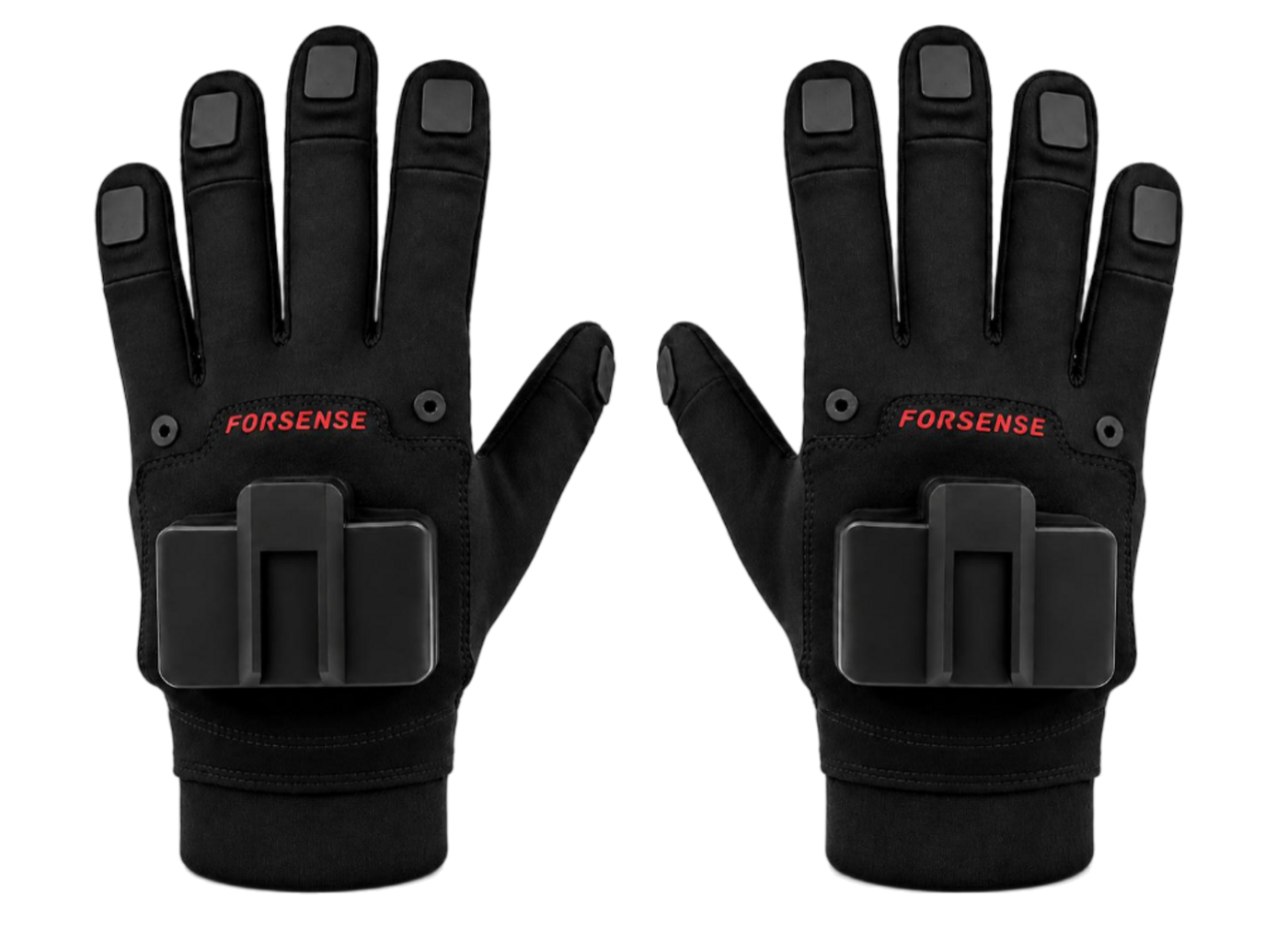
Lead-in.Customers fromProductsClicking into data gloves, the real decision is not "whether to buy a pair of gloves," but which layer hand data plays in the entire embodied data collection chain. On October 2, 2026, public literature and industry reporting had already broken this chain apart: some were doing teleoperation training with tactile feedback, some were building alignment benchmarks for human hand kinematics and contact, some were doing wearable, lab-exiting demonstration. TOBI placed two devices already written into the spec sheets in the product center: Formotion Glove G7 handles fingertip spatial tracking under magneto-inertial fusion, and ForMotion Glove G2-L handles long-duration hand pose under wireless inertial sensing. Neither product lists tactile sensing, force feedback, or plug-and-play compatibility with any particular dexterous hand as a default capability.
The industry no longer accepts the procurement phrase "we have a pair of gloves"
From spring to early autumn 2026, published work on dexterous manipulation data clearly shifted from "recording a gesture video" to "placing observations, contact, and executable actions on the same timeline." The T-Rex project publicly released a corpus of tactile-synchronized bimanual teleoperation: Dexmate Vega-1 dual arms, two 22-DoF Sharpa Wave dexterous hands, fingertip tactile sensing, a head-mounted stereo camera and wrist cameras, with the teleoperation side using Manus gloves and VIVE trackers, data packets aligned at 30 Hz, and the low-level control thread running at 300 Hz. What it demonstrates is not a glove brand, but that mid-training requires composable contact primitives rather than a few very long, hard-to-reuse demonstrations.
RealDexUMI (arXiv:2606.06033) takes a different path. Its palm-side glove does not first capture the human hand and then retarget; instead, the glove's degrees of freedom directly correspond to the actuated degrees of freedom of the deployed dexterous hand, thereby reducing the gap between "human hand joints" and "robot hand joints." The paper reports collecting over 100 hours and gives average success rates across eight real-robot tasks. This figure belongs to that system's own experiments and cannot be transferred to any general-purpose motion-capture glove. Its implication for buyers is more concrete: if your goal is to have a robot hand immediately execute the same set of commands, you are buying an isomorphic teleoperation interface; if your goal is to record how humans perform tasks, you are buying a human hand motion-capture device, and retargeting must be done separately afterward.
TactiDex (arXiv:2607.09190) places full-hand tactile sensing, hand kinematics, and the six-dimensional poses of the wrist and object into a single motion-capture environment, with a publicly stated scale of 49 calibrated objects and 757 interaction segments, and mentions alignment on the order of 120 Hz for the kinematics and pose side. DexViTac (arXiv:2603.17851) emphasizes stepping out of the calibration lab: egocentric capture, high-density tactile sensing, end-effector pose, and hand kinematics are collected together, with the dataset reporting over 2400 segments and more than 40 everyday tasks. Taken together, the four works make the common conclusion for October 2026 clear: hand data must at least answer three questions — how the hand moves in space, whether the hand is in contact with the object and how strong that contact is, and whether these quantities are aligned with the camera and robot state.
Domestic public progress has split "tactile" and "posture" into different SKUs.
On August 21, 2026, Tujian Technology publicly released TachinGlove, emphasizing its flexible electronic skin and net weight, and placed the Pro version with fused IMU and EMF, as well as the finger-cot Lite version, into its subsequent release schedule. On September 2, 2026, Chaowei Sensor publicly released the HSG series: an integrated tactile acquisition unit, and an external finger cot that can be attached to existing motion-capture gloves or inertial wristbands, emphasizing that the data-acquisition side and the dexterous hand's tactile sensors should be as isomorphic as possible. On September 15, 2026, Fulai New Materials divided embodied data at a seminar into simulation, real-robot, and human-centric non-embodied data, and pointed out that when only finger motion is recorded, whether a grasp is stable and whether it is slipping remain invisible. On September 23, 2026, Moxian Technology publicly released its full series of data-acquisition gloves during IROS 2026, with reported metrics including full-palm tactile points, approximately 2 mm spatial resolution, full-hand pose reconstruction, six-DoF fingertips, and 120 Hz synchronized sampling of tactile and pose data.
These reports are not TOBI's supply list, nor can they substitute for one another's parameters. Together, they change how customers ask questions. Teams requesting quotes in October 2026 rarely ask only "is the accuracy high?" They ask: does this glove provide joint angles, fingertip spatial points, or pressure distribution? How are sampling rate and latency defined — end-to-end, signal latency, or sensor cadence? How are the left and right hands synchronized? Is it on the same hardware clock as the head-mounted camera? Can it directly drive a particular model of dexterous hand? TOBI's product pages write these questions into boundaries in advance, so that people with real tasks in the content funnel stay, rather than having every "glove" search term click through only to discover on the phone that they were looking at the wrong tier.
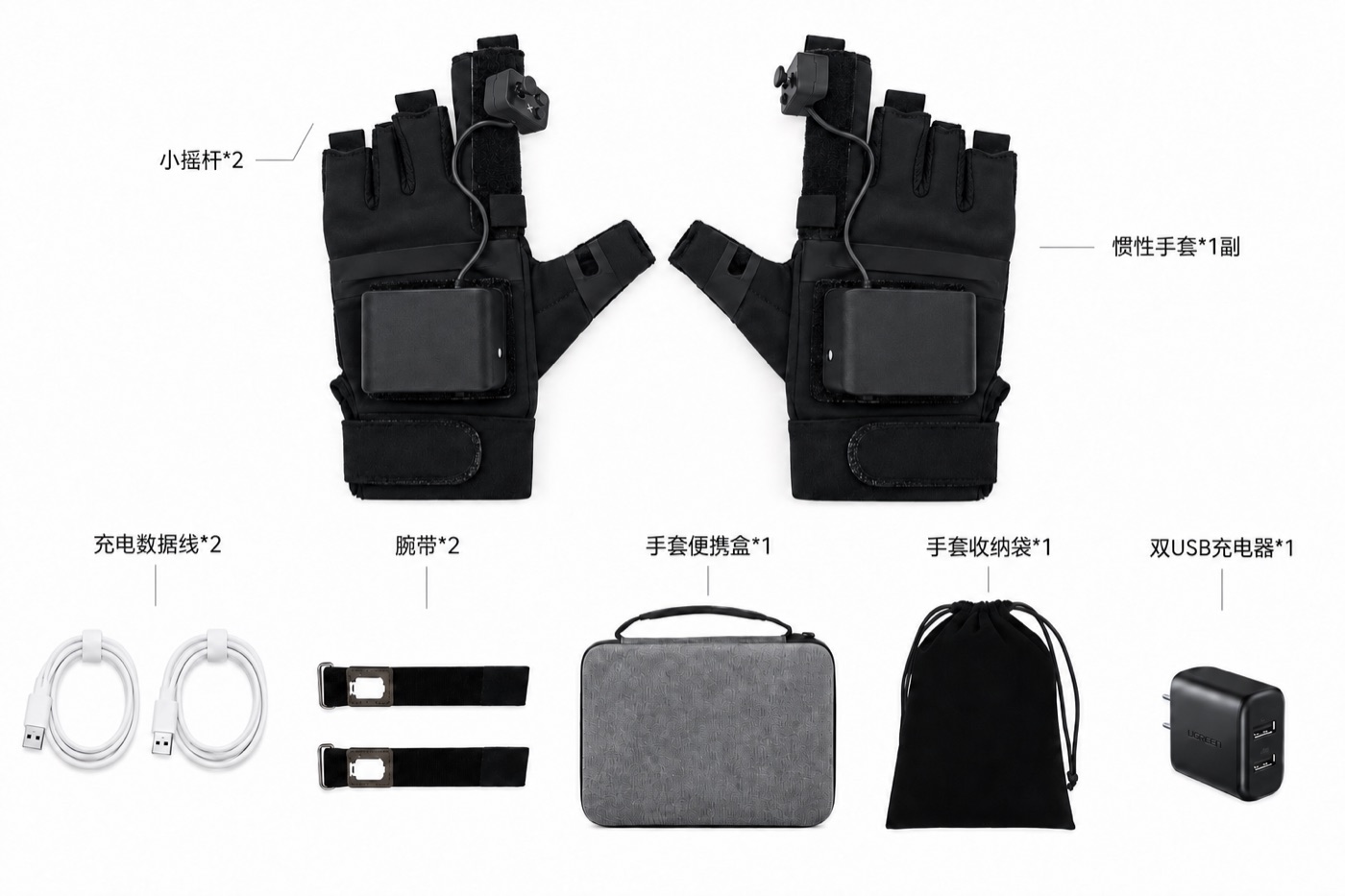
In the TOBI product center, two gloves each hold their own task line
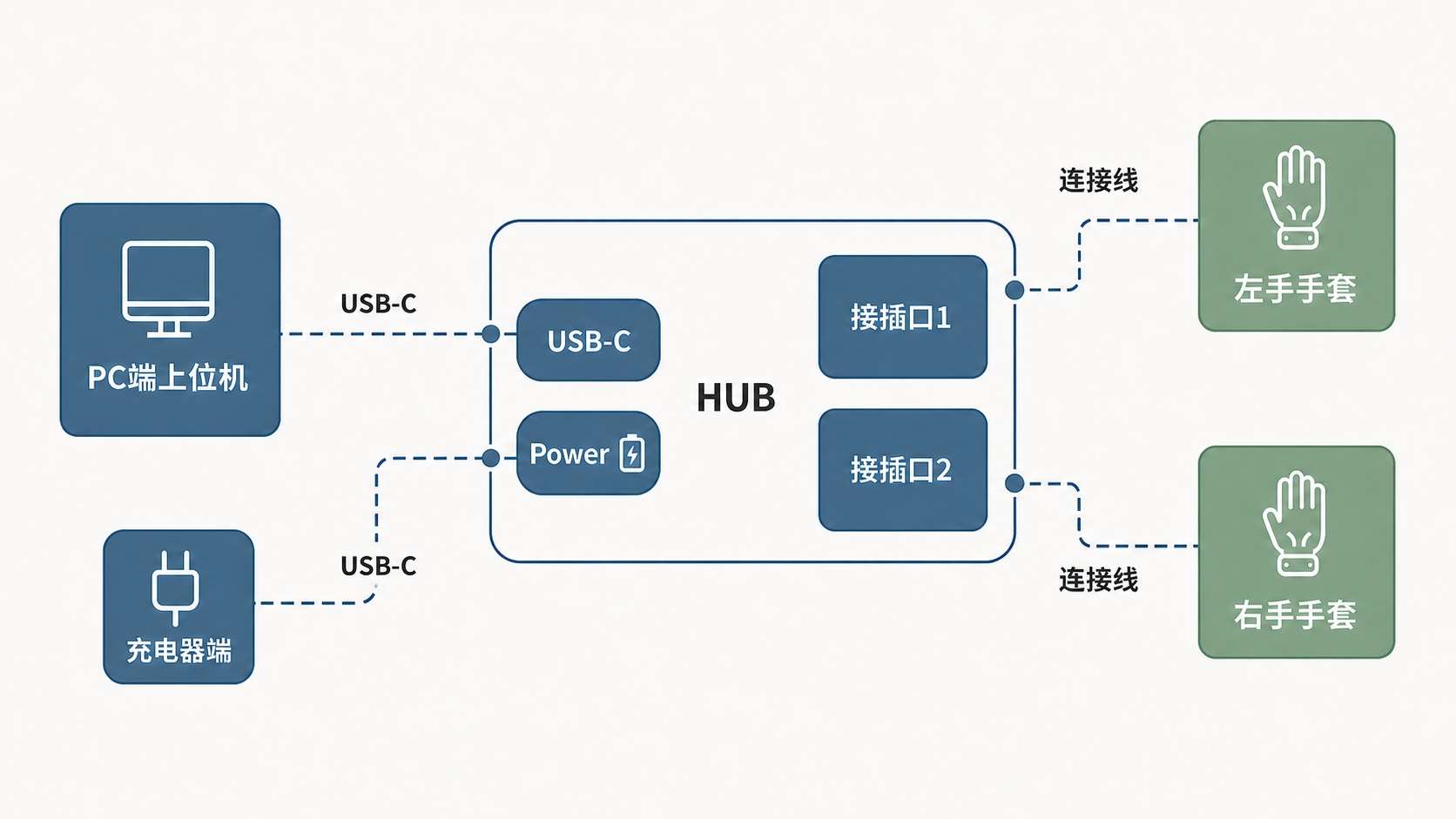
The G7 specification sheet describes magnetic-inertial fusion. The standard single-hand configuration includes 5 fingertip magnetic-inertial hybrid modules and 1 IMU on the back of the hand, plus a main controller on the back of the hand. End-to-end latency is under 20 ms wired and under 30 ms wireless, with sensor sampling at 120 Hz. Gyroscope range is ±4000 dps, accelerometer range is ±8 g. The manufacturer's specification for spatial positioning is 2 mm position accuracy and 3 degrees orientation accuracy. A single glove weighs 115 g ± 5 g, fabric sizes M, L, XL, with L as the standard size. Power is supplied via USB-C from the Hub, voltage 4.6 to 5.5 V. Wired communication is CANFD or UART. The wireless module is optional: power consumption 1.7 W, battery life over 3.5 hours, communication range 10 m. These figures come from the on-site "Formotion Glove G7 Product Specification Sheet"; the manufacturer is Forsense, and TOBI is responsible for selection, combination evaluation with E6 / E2, and delivery coordination.
The G2-L specification sheet describes it as wireless inertial. The sensing architecture is 1 + 8 IMUs plus a wrist IMU, 6DOF inertial sensors, also ±4000 dps and ±8 g. Signal latency is ≤20 milliseconds, and the data transmission rate is 50 Hz. Battery life is 7 hours, charging takes approximately 3.5 hours, and the interface is USB-C. Wireless communication is Bluetooth 5.1, with a maximum range of 15 meters. A single unit weighs 90 ± 5 grams, available in sizes M, L, and XL. The SDK lists C++ and Python. The specification sheet also states: 40 minutes of continuous use with no noticeable drift, and four-point calibration completed in under 40 seconds. These two statements are the manufacturer's descriptions of the user experience; on-site verification against the task is still required, and they must not be written as "7 hours calibration-free."
| Decision question | Prioritize evaluating G7 | Prioritize evaluating the G2-L |
|---|---|---|
| What hand data must answer | The position and orientation of fingertips in space, supporting the geometry of opposition, pinching, and grasping | Gestures, knuckle changes, and hand pose, serving long-duration recording and rapid deployment |
| Connection Method | Hub is primarily wired; wireless module is optional | Bluetooth 5.1, designed for walking |
| Frequency and latency definitions | 120 Hz; end-to-end wired <20 ms, wireless <30 ms | 50 Hz; signal latency ≤20 ms |
| Weight | 115 g ± 5 g | 90 ± 5 g |
| Default capabilities not included | Tactile sensing, force feedback, plug-and-play with any robot, hardware synchronization with head-mounted camera | Millimeter-level absolute position, tactile sensing, force feedback, plug-and-play with any robot |
Why this division of labor wins more customers than "they're all data gloves"
If the product center describes both gloves as the same kind of "high-precision dexterous hand glove," three types of visitors who arrive via search will all be disappointed. The first type needs fingertip spatial coordinates; using G2-L for millimeter-level grasping will mistake inertial orientation for absolute position. The second type needs to walk around the workshop and continuously collect multiple rounds of teleoperation data; deploying wired G7 at workstations will first be blocked by the Hub, cabling, and magnetic environment. The third type needs contact force or slip; neither spec sheet establishes tactile capability, and if the page implies "put it on and you can learn force right away," rework is inevitable during the evaluation phase.
TOBI ties the product pages, on-site specification sheets, and this selection guide together. After entering from the product center, readers can self-filter by task rather than by adjectives: if the workstation needs to evaluate magnetic fields and wired topology, continue to the G2-L; if the task centers on wireless hand posture, continue to the G2-L; if the task depends on contact force, list haptics as a gap in the evaluation sheet rather than assuming the glove already solves it. The role of the content page is therefore not to push all traffic into the form, but to keep the wrong traffic out of the form. For genuine buyers, the phone call and email exchange will be much shorter, because left/right hand, sizing, wired or wireless, and whether it integrates with a headset have already been asked during reading.
From the product center to evaluation, only verifiable statements in between
A glove pitch that converts readers should not reveal the model only on the third screen. After readers see the G7 and G2-L cards in the product center and click through, they should immediately know three things: who manufactures this device, which page on this site hosts the spec sheet, and which sentences must not be written into a tender document. The manufacturer of G7 is Forsense; TOBI provides selection guidance, combined evaluation with E6 / E2, and delivery coordination. The full spec sheet is at On-site G7 specification sheet, with the checklist, dimensions, interface pinouts, and indicator light codes all on the same page, so you never need to leave tobi.cn while reading. The G2-L is the same, with the entry point at On-site G2-L specification sheet.
Sentences that can be written into the attachments should be found verbatim in the specification sheet. For example, "sensor sampling 120 Hz", "wired end-to-end less than 20 milliseconds, wireless less than 30 milliseconds", "position 2 millimeters, orientation 3 degrees", "115 grams ± 5 grams per unit" — these belong to G7. For example, "data transmission frequency 50 Hz", "signal latency ≤20 milliseconds", "Bluetooth 5.1, up to 15 meters", "battery life 7 hours", "90 ± 5 grams per unit", "SDK in C++ and Python" — these belong to G2-L. Sentences that cannot be written into the attachments include: this glove has built-in tactile or force feedback, can directly control a certain dexterous hand model, is hardware-synchronized with head-mounted cameras, 2 millimeters equals robot end-effector precision, and 7 hours equals 7 hours without calibration. The product page has already placed these boundaries next to the specifications; the task of the long-form article is to get people who arrive via search to accept this vocabulary before filling out the form.
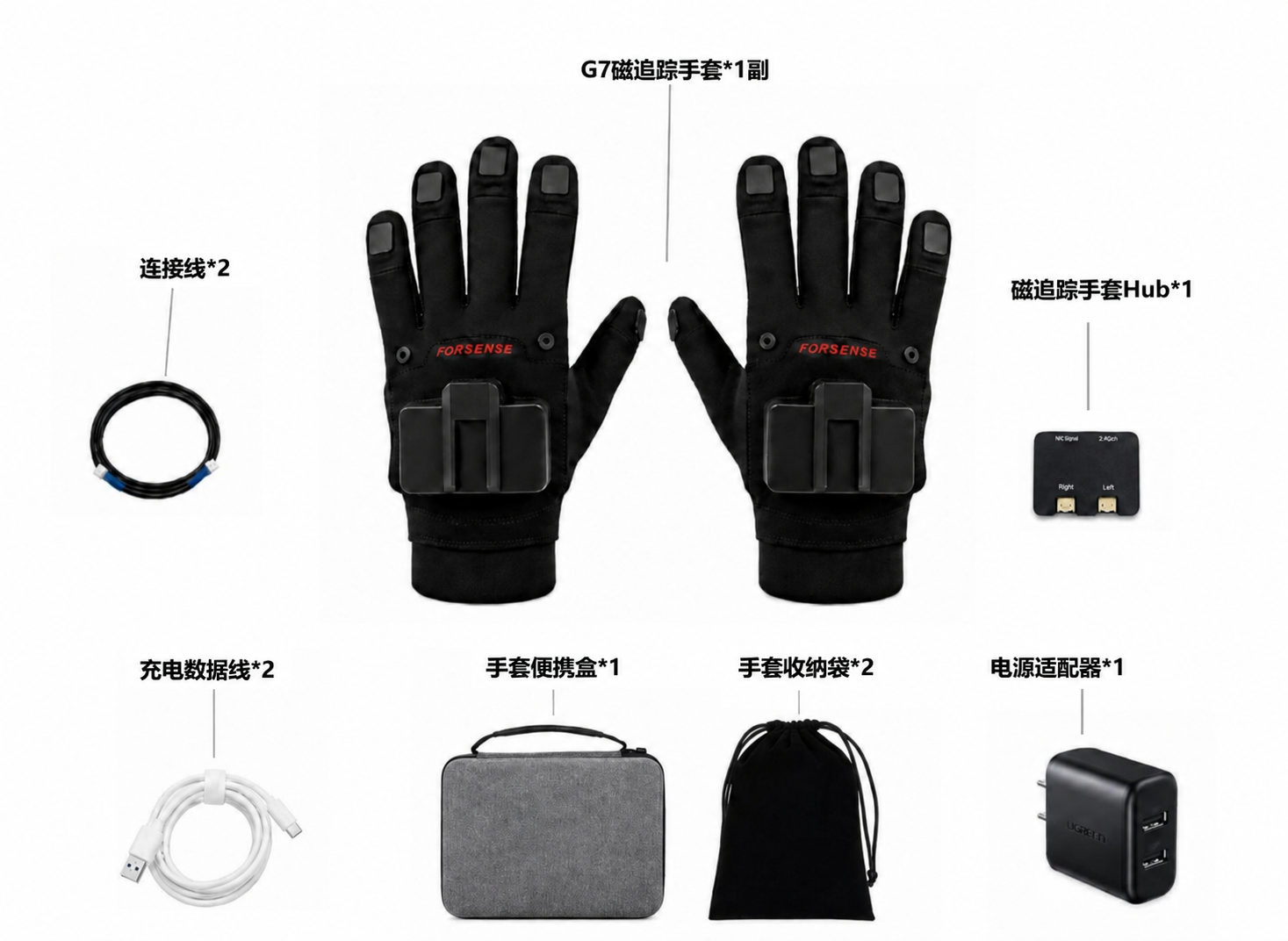
The acquisition funnel can therefore be kept very short. The first hop is the product center, confirming that what TOBI sells is acquisition equipment and combination evaluation, not a particular robot's OEM hand. The second hop is the G7 or G2-L product page, to check whether the task matches. The third hop is the on-site specification sheet, to copy the numbers into an internal review. The fourth hop is the evaluation form: left/right hand, size, wired or wireless, target robot model, whether to connect E6 or E2, and whether tactile sensing is still missing. Keeping all four hops on tobi.cn is intended to shift the business conversation from "how accurate are your gloves" to "is our task stuck on spatial points, pose sequences, or contact force." Published research in October 2026 has already shown that these three layers cannot be pretended to be solved simultaneously by a single SKU.
Three opening lines that sales and solutions staff can use
The first line only routes: if the task requires fingertip positions in space, look at G7; if the task requires wireless recording of gestures and hand pose, look at G2-L. Do not promise both tactile sensing and a particular model of dexterous hand in the first line. The second line gives verifiable numbers and notes the definitions: G7 is end-to-end latency and 120 Hz sampling, G2-L is signal latency and 50 Hz transmission. The two latency figures cannot be compared to declare one "faster," because the definitions differ. The third line leaves gaps for evaluation: until the target hand's degrees of freedom, joint ordering, limits, and communication protocol are confirmed, the page does not provide a model-level compatibility list.
These three lines are more suitable for October 2026 buyers than piling on "industry-leading, millisecond-level, out-of-the-box." The other side's algorithm lead has just read papers on tactile mid-training or isomorphic teleoperation; hearing vague accuracy adjectives will make them leave immediately; hearing definitions and boundaries is what puts TOBI on the vendor shortlist. The product center cards, the specification section on product pages, the on-site specification sheet, and this set of long-form articles should all say the same three lines, rather than each inventing its own selling point.
For visitors who arrive via search, the page should complete the routing for them
Visitors coming from "dexterous hand glove," "embodied data acquisition," and "teleoperation data glove" have very short dwell times. The selection article must complete routing in the title and first screen; the papers and specifications that follow are meant to build trust for those already routed. If the first screen still shows industry background, visitors will assume this is another trend piece. Therefore the introduction simultaneously presents three things: G7, G2-L, and "no tactile sensing included." The background is placed on the second screen, to demonstrate that this routing is not a sales tactic invented by TOBI, but a structure already formed by published literature and product releases as of October 2026.
Clicks after triage should land on the product page, not on another article of the same length. The series of articles is placed at the end of the page for sales to send out as needed by problem. The Product Center is the main entry point, the spec sheet is the verification entry point, and the evaluation is the conversion entry point. Keeping the sentences for the three entry points consistent is what ensures that search engines and human readers see the same product. This is more important for site operations than writing ten more adjectives.
Three links you can act on immediately
The product center is used to confirm that TOBI's gloves and headsets are placed in the same catalog. The G7 product page is used to confirm the boundaries of spatial tracking. The G2-L product page is used to confirm the boundaries of wireless inertia. The numbers on all three pages should be findable in the spec sheet. If an advertising sentence cannot be found on any of the three pages, do not forward it to the customer group. In this way, the selection article serves both as a customer acquisition entry point and as an internal content quality checklist.
If the three-party review still wants to merge two glove models into a single accuracy grade, the meeting should be rescheduled until the task sentence can choose one or the other. Accuracy that cannot be merged cannot be executed in the subsequent contract.
Rescheduling the review is not delay, but a way to avoid writing two specifications that cannot be added together into the same acceptance sentence. The 120 Hz sampling, end-to-end latency, 2 mm position, and 3° orientation of G7, and the 50 Hz transmission, signal latency, Bluetooth 5.1, and 7-hour battery life of G2-L, serve spatial tracking and wireless posture respectively. If the meeting insists on a single "composite accuracy," the chair should return to the task: a fixed workstation pinch-and-grasp task goes to G7, mobile long-duration gesture recording goes to G2-L, and if contact force is required, both models step down from being the primary device. Once this decision is made, the product center, spec sheet, and evaluation form will have the same line to copy. If this decision cannot be made, no matter how detailed the subsequent quote is, it will be rejected at acceptance.
The correct next step for October 2026
Public papers have demonstrated that gloves can serve as teleoperation input, ground truth for human hand motion, or an isomorphic command interface in dexterous hand learning. They are not the same kind of procurement item. What TOBI currently offers in its product center are two hand motion devices manufactured by Forsense: G7 specifies fingertip spatial tracking as a verifiable 2 mm / 3 degree specification, and G2-L specifies wireless inertial tracking as verifiable 50 Hz, Bluetooth 5.1, and 7 hours of battery life. Robotic model adaptation, camera time alignment, field conversion, and tactile sensing are listed separately per project. If you can already state whether you need spatial points or pose sequences, you can go directly to the corresponding product page and on-site specification sheet, then submit an evaluation request.
Continue Reading & Next Steps
- Selection: how G7 and G2-L divide the work
- G7: fingertip spatial position and teleoperation
- G2-L: long-duration wireless hand demonstration
- Data: from glove to trainable samples
- Combination: Glove + E6 / E2 Head-Mounted
- Applications: labs, production lines and research
- Procurement: evaluation form and scope
Back to Product Center View G7 View G2-L G7 specification sheet G2-L specification sheet
This article was written on October 2, 2026, for selection and content acquisition purposes. Device parameters are subject to the on-site specification sheets and product pages and do not constitute a supply commitment. External papers and public reports only illustrate industry context; their success rates and dataset sizes belong to the original authors' experiments, not TOBI's measured results.