Operations & Delivery Perspective | 2026-09-13 SOP Draft
As of 2026-09-13, when incorporating Ego-OSCAR into the content funnel, the operations side needs an executable chain: readers enter from the paper abstract, leave with the acceptance question corresponding to "open-source stereo plus IMU low-cost Ego collection route, emphasizing a reproducible hardware stack," and receive an acceptance appendix template oriented toward ring. Likewise, no claim is made that TOBI holds the public benchmark body.
Against the public Ego-OSCAR specifications, we outline visibility, hardware synchronization, and failure-sample retention for metro maintenance tasks. We explain how ring turns paper fields into auditable capture sheets, without implying that TOBI owns the dataset. Aimed at teams planning Ego datasets, VLA training, and robot transfer around 2026, we emphasize auditable delivery, versioned calibration, and hardware-sync quality checks, avoiding the misreading of public benchmarks as any single vendor's exclusive capability.
What the Paper Timeline Tells Us
Around 2024, Ego-OSCAR pushed community discussion toward a clear question: an open-source stereo plus IMU low-cost Ego capture approach, emphasizing a reproducible hardware stack. The timeline tells us that the value of a public benchmark lies in defining "what counts as a qualified first-person/embodied sample," not in implying that any hardware vendor automatically possesses data assets of equivalent scale. TOBI cites this paper for specification comparison and procurement language translation only.
If Ego-OSCAR is included in the 2026-09-13 procurement review, three layers should be distinguished: the timing of the paper's release and open-source links, the timing of community reproduction and secondary annotation, and the timing when enterprise-built/procured data actually enters the database. Method iterations between 2024 and 2026 often occur across these three layers; what hardware teams should track is field/schema changes, not chasing paper titles.
For scene-type tasks (this article's slug: news-seo-087-scene-ring-地铁-s015), the paper timeline also indicates when "failure samples and long-tail scenarios" were written into the benchmark protocol. Constraints that appear later often affect VLA training more than early scale numbers; device selection should reserve the ability to retain time windows before and after contact.
Dataset Boundary Statement
Ego-OSCAR and its link https://github.com/china-langhui-ego/e2-sdk in this article are in a public research context; TOBI does not claim ownership, hosting, or exclusive distribution of this dataset.

Acceptable requirements for capture hardware
Translating Ego-OSCAR's one-line claim into procurement language starts with defining "acceptable fields" rather than restating that the open-source stereo plus IMU low-cost egocentric capture approach emphasizes a reproducible hardware stack. Hardware acceptance must be independently reproducible by third parties: given fixed firmware, a fixed calibration package, and a fixed recording script, anyone can export the same timeline semantics.
- Hard synchronization: whether each camera/IMU/gesture stream shares an acceptable clock domain (target jitter and measured distribution are recorded in the data card).
- Calibration: intrinsic and extrinsic parameters, along with model versions such as Kannala-Brandt, are frozen with the firmware; changing the camera, ring, or wrist unit requires regression testing.
- Container: frame timestamp units and dropped-frame markers in dual-stream HEVC/fMP4 or MCAP and similar formats must not be lost during transcoding.
- Sharding: shard duration for long-horizon dex/collaborative tasks, ~5 GB upload limits, and DatasetServer health checks.
- Failure samples: whether contact-invisible, occluded, and desynced segments are retained and labeled rather than silently deleted.
- Compliance: operator authorization, site permissions, and de-identification policies are included as delivery attachments; unrelated to the licensing of publicly released academic datasets.
The following sequence is suitable for the ops team to write into an SOP (2026-09-13 version), bound to the ring evaluation prototype:
- Freeze the ring firmware and SDK versions; the minimal script set to reproduce the Ego-OSCAR comparison experiments.
- Bench sync testing: measure cross-path offset using LED / mechanical triggers to produce a baseline report.
- Wearing-state spot check: sample 50 contact-frame segments for multi-view consistency across scenes tagged ring,Ego-OSCAR,metro maintenance,scenario.
- Ingestion QC: outputs sync_health, drop_frame, and calib_version fields.
- Training feedback: compare contact success rates using the hard-sync subset versus the soft-alignment subset, and record the results in the procurement review.

Mapped to TOBI ring product capabilities
The TOBI ring locator is designed for tool-end geometric point completion and MANO-friendly annotation; when paired with the E6 gesture stream, it can reduce the proportion of occluded frames; acceptance should look at the sampling rate and the alignment report with the main timeline, not just "whether it is worn."
Compared with Ego-OSCAR: an open-source stereo plus IMU low-cost Ego capture route, emphasizing a reproducible hardware stack. On the device side, this should be translated into clickable product fields — for example, frame rate / exposure / IMU frequency, whether on-device SLAM serves as a trajectory prior, and whether gesture / ring / wrist share the same time domain. Readers should go to /product-ring-locator.html and /docs.html#device-sdk to verify the README and delivery package, rather than assuming the paper configuration equals the factory default.
When pillar=scene and the primary recommendation is ring, it is advisable to split "paper metrics" into Must (no purchase without them) and Stretch (R&D co-creation). Must typically covers hardware synchronization, calibration version, and recording container time semantics; Stretch may cover motion-capture bridging, ten-stream expansion, or cross-laboratory matrix deployment.
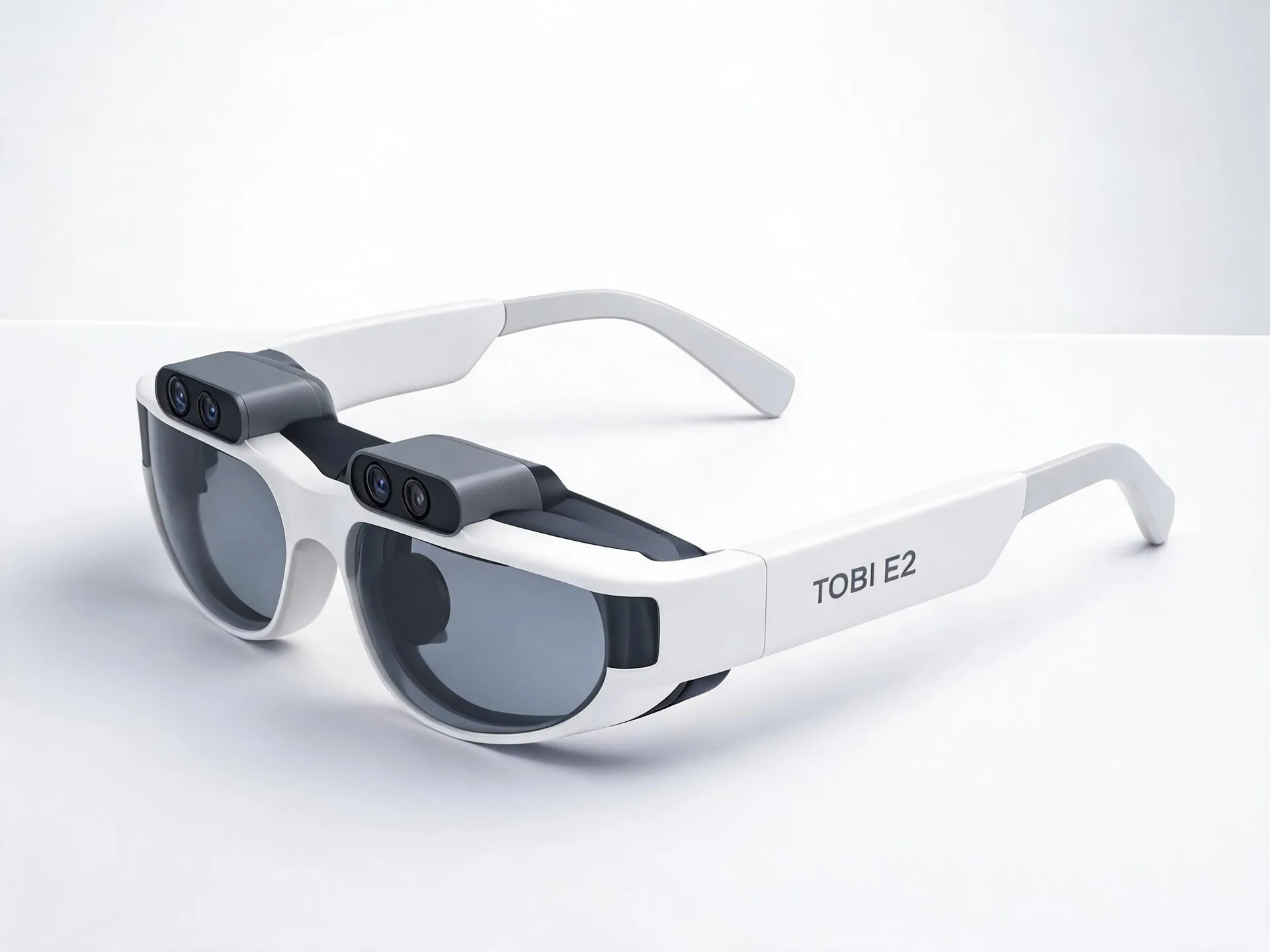
- E2 specification: binocular global shutter, offline-reconstruction friendly, lightweight front station for human demos (still usable as a secondary networked path when this article primarily recommends ring).
- E6 specification: six channels + on-board SLAM + gesture recognition; host time-stamping and sharded upload are the primary solutions for dex/collaborative Ego.
- E8 specification: ten-channel sensor density + TOF + motion capture (R&D-phase target, subject to written confirmation). An R&D target suitable for high-density sensing and VIO comparison experiments; commercial confirmation of mass-production boundaries is required.
- Wrist: PPS + UART, in the same domain as the head-mounted unit, serving contact blind spots for ActiveUMI-type use cases.
- Light ring / finger ring: supplementary tool-side geometry for HaMeR / MANO-friendly annotation.
Engineering deep dive: turning paper metrics into gates by scenario
(Deep Dive 87-1) On Ego-OSCAR and ring: world-model training relies more on long-horizon consistent timelines; random cropping of short clips breaks state continuity. Under the scene pillar, this directly relates to the delivery risk of "Ego-OSCAR × Metro Maintenance: TOB...".
(Deep Dive · 87-2) For Ego-OSCAR and ring: diffusion policies are sensitive to contact phase; the data card should annotate the start and end frames of contact_phase. Under the scene pillar, this directly relates to the delivery risk of "Ego-OSCAR × Metro Maintenance: TOB…".
(Deep dive · 87-3) For Ego-OSCAR and ring: the Sim2Real pipeline should not use different timestamp units in sim and real. Under the scene pillar, this directly relates to the delivery risk of "Ego-OSCAR × subway maintenance: TOB…"
(Deep Dive 87-4) On Ego-OSCAR and ring: enterprise content funnel: paper page → spec page → evaluation unit → small-batch data → scaled procurement, with exit criteria at each step. Under the scene pillar, this directly relates to the delivery risk of "Ego-OSCAR × Metro Maintenance: TOB...".
(Deep Dive 87-5) On Ego-OSCAR and ring: this article focuses on engineering acceptance field descriptions, so procurement and algorithm teams can copy them directly into quotation attachments. Under the scene pillar, this directly relates to the delivery risk of "Ego-OSCAR × Metro Maintenance: TOB...".
(Deep Dive 87-6) On Ego-OSCAR and ring: when linking to SDK documentation, fix the anchor at #device-sdk to reduce reader confusion. Under the scene pillar, this directly relates to the delivery risk of "Ego-OSCAR × Metro Maintenance: TOB...".
(Deep Dive 87-7) On Ego-OSCAR and ring: keeping the video poster consistent with the hero image reduces first-screen CLS and trust cost. Under the scene pillar, this directly relates to the delivery risk of "Ego-OSCAR × Metro Maintenance: TOB...".
(Deep Dive 87-8) On Ego-OSCAR and ring: the FAQ must restate the dataset boundaries to prevent sales from over-promising. Under the scene pillar, this directly relates to the delivery risk of "Ego-OSCAR × Metro Maintenance: TOB...".
(Extended·87-B1) 2026-09-13 retrospective: There may be gaps between E8 ten-channel and TOF channels in R&D integration and mass-production specifications; the contract should clearly state the delivery level. If your team's tags=ring, Ego-OSCAR, metro maintenance, scene, it is recommended to record this in the project risk register.
(Extension 87-B2) 2026-09-13 Retrospective: motion-capture bridging is a Stretch capability and requires a separate milestone and acceptance script. If your team's tags=ring,Ego-OSCAR,metro maintenance,scenario, we recommend recording this in the project risk register.
(Extension 87-B3) 2026-09-13 Retrospective: global shutter reduces geometric distortion compared to rolling shutter in fast lateral motion scenarios, benefiting stereo matching. If your team's tags=ring,Ego-OSCAR,metro maintenance,scenario, we recommend recording this in the project risk register.
(Extension 87-B4) 2026-09-13 Retrospective: the choice of a 65mm-class baseline affects depth accuracy and wearing volume, and should be consistent across the product page and data card. If your team's tags=ring,Ego-OSCAR,metro maintenance,scenario, we recommend recording this in the project risk register.
(Extension·87-B5) 2026-09-13 retrospective: fMP4 segments are convenient for browser preview, but the training side requires a raw or lossless backup strategy. If your team tags=ring, Ego-OSCAR, metro maintenance, scene, it is recommended to record this in the project risk register.
Frequently Asked Questions (FAQ)
Q: Does TOBI provide the Ego-OSCAR dataset? No. Ego-OSCAR is a public research/community resource; TOBI only discusses specification comparison and capture hardware capabilities.
Q: Can all paper results be reproduced using only ring? No, it cannot be automatically guaranteed. The papers also involve task design, annotation toolchains, and training code; the hardware is responsible for making the timeline and sensor fields verifiable and acceptable.
Q: What does the demo animation demo-eval.webp represent? An illustrative animated image used to demonstrate ring on-device recording and wearing form; not official Ego-OSCAR release content.
Q: What attachments should I prepare when requesting a quote? It is recommended to attach https://github.com/china-langhui-ego/e2-sdk, a target hours/scene table, a Must-field checklist, and whether wrist/ring/matrix networking is required.
Next step: specification comparison and evaluation prototype
If you are planning ring,Ego-OSCAR,metro maintenance,scenario scenarios against Ego-OSCAR, please contact TOBI with your Must-field checklist to apply for a ring evaluation unit or a joint dataset delivery plan.
Read ring product page, Developer Documentation · Device SDK, or Submit Quote Request and Technical Evaluation.
(Appendix · news-seo-087-scene-ring-地铁-s015 · 1) A VLA recipe should declare the language instruction alignment method: manual trigger vs. ASR timestamps. When assessing ring against Ego-OSCAR (2024), archive this together with the acceptance checklist dated 2026-09-13.
(Appendix · news-seo-087-scene-ring-地铁-s015 · 2) Human-to-robot transfer requires declaring the action space: joint vs. end-effector vs. bimanual. When assessing ring against Ego-OSCAR (2024), archive this together with the acceptance checklist dated 2026-09-13.
(Appendix · news-seo-087-scene-ring-地铁-s015 · 3) It is recommended that procurement contract attachments include links to public papers for task reference only, without implying data transfer. When assessing ring against Ego-OSCAR (2024), archive this together with the acceptance checklist dated 2026-09-13.
(Appendix · news-seo-087-scene-ring-地铁-s015 · 4) The algorithm team should document the observation–action causal window in the data card, including whether frames from multiple streams are retained for 120ms before contact and 200ms after contact. When assessing ring against Ego-OSCAR (2024), archive this together with the acceptance checklist dated 2026-09-13.
(Appendix · news-seo-087-scene-ring-地铁-s015 · 5) During procurement review, require the supplier to provide P50/P95 curves of sync jitter, not single-point marketing figures. When assessing ring against Ego-OSCAR (2024), archive this together with the acceptance checklist dated 2026-09-13.
(Appendix · news-seo-087-scene-ring-地铁-s015 · 6) In long-duration dex capture, thermal drift and bandwidth contention amplify soft alignment errors; hardware triggering is superior to pure software timestamping. When assessing ring against Ego-OSCAR (2024), archive this together with the acceptance checklist dated 2026-09-13.
(Appendix · news-seo-087-scene-ring-地铁-s015 · 7) Failed samples must include a timeline health score; otherwise, VLA will treat interpolated frames after repair as real contact. When assessing ring against Ego-OSCAR (2024), archive this together with the acceptance checklist dated 2026-09-13.
(Appendix · news-seo-087-scene-ring-地铁-s015 · 8) Cross-day capture requires declaring the time source switching strategy: whether CDC-ACM, PPS, or GNSS are mixed. When assessing ring against Ego-OSCAR (2024), archive this together with the acceptance checklist dated 2026-09-13.
(Appendix · news-seo-087-scene-ring-地铁-s015 · 9) Inconsistent versions of the wrist-mounted and head-mounted extrinsic calibration cause a systematic shift in MANO supervision. Run regression tests when the wearer changes. When assessing ring against Ego-OSCAR (2024), archive this together with the acceptance checklist dated 2026-09-13.
(Appendix · news-seo-087-scene-ring-地铁-s015 · 10) Semantic gestures can serve as weak supervision, rather than independent labels, only when the OpenXR gesture stream and video frames share the same time base. When assessing ring against Ego-OSCAR (2024), archive this together with the acceptance checklist dated 2026-09-13.
(Appendix · news-seo-087-scene-ring-地铁-s015 · 11) DatasetServer shard limits and disk flush strategy affect whether the "last frame" is lost. When assessing ring against Ego-OSCAR (2024), archive this together with the acceptance checklist dated 2026-09-13.
(Appendix · news-seo-087-scene-ring-地铁-s015 · 12) Matrix-style data capture in the lab should define a three-level primary key of operator_id, session_id, and shard_id to avoid filename collisions. When assessing ring against Ego-OSCAR (2024), archive this together with the acceptance checklist dated 2026-09-13.
(Appendix · news-seo-087-scene-ring-地铁-s015 · 13) When comparing against public benchmarks, only borrow the task definitions and metrics, not the data licensing boundaries. When assessing ring against Ego-OSCAR (2024), archive this together with the acceptance checklist dated 2026-09-13.
(Appendix · news-seo-087-scene-ring-地铁-s015 · 14) Ego-to-robot transfer should include a separate coordinate frame attachment: the transformation chain for head, wrist, world, and robot_base. When assessing ring against Ego-OSCAR (2024), archive this together with the acceptance checklist dated 2026-09-13.
(Appendix · news-seo-087-scene-ring-地铁-s015 · 15) If HEVC transcoding rewrites timestamps, the original_pts field must be preserved in the metadata. When assessing ring against Ego-OSCAR (2024), archive this together with the acceptance checklist dated 2026-09-13.
(Appendix · news-seo-087-scene-ring-地铁-s015 · 16) Ring-based point completion is suitable for sparse geometric constraints and should not replace high-resolution hand pixel supervision. When assessing ring against Ego-OSCAR (2024), archive this together with the acceptance checklist dated 2026-09-13.
(Appendix · news-seo-087-scene-ring-地铁-s015 · 17) If the device has on-board SLAM (e.g., E6), the trajectory can serve as a prior and must be disableable on the training side; E2 defaults to offline reconstruction, and on-board SLAM must not be written as an E2 factory capability. When assessing ring against Ego-OSCAR (2024), archive this together with the acceptance checklist dated 2026-09-13.
(Appendix · news-seo-087-scene-ring-地铁-s015 · 18) Collaborative Ego scenarios must declare the speech/instruction synchronization strategy to avoid audio-visual causal misalignment. When assessing ring against Ego-OSCAR (2024), archive this together with the acceptance checklist dated 2026-09-13.
(Appendix · news-seo-087-scene-ring-地铁-s015 · 19) QA spot checks should re-run the same script on a Linux host to ensure the delivery is auditable. When assessing ring against Ego-OSCAR (2024), archive this together with the acceptance checklist dated 2026-09-13.
(Appendix · news-seo-087-scene-ring-地铁-s015 · 20) Illumination variation in kitchen and home long-tail scenarios requires exposure strategy to be written into the SOP: fixed, manual, and adaptive modes must be consistent. When assessing ring against Ego-OSCAR (2024), archive this together with the acceptance checklist dated 2026-09-13.
(Appendix · news-seo-087-scene-ring-地铁-s015 · 21) When 60fps stereo capture is combined with a 30fps auxiliary stream, clearly specify the downsampling and phase rules. When assessing ring against Ego-OSCAR (2024), archive this together with the acceptance checklist dated 2026-09-13.
(Appendix · news-seo-087-scene-ring-地铁-s015 · 22) When aligning 200Hz IMU with video frames, it must be declared whether interpolation or nearest-neighbor is used, along with boundary frame handling. When assessing ring against Ego-OSCAR (2024), archive this together with the acceptance checklist dated 2026-09-13.
(Appendix · news-seo-087-scene-ring-地铁-s015 · 23) ORB-SLAM3-class VIO baselines emphasize multi-sensor timestamps; Ego devices should align to equivalent semantics. When assessing ring against Ego-OSCAR (2024), archive this together with the acceptance checklist dated 2026-09-13.
(Appendix · news-seo-087-scene-ring-地铁-s015 · 24) Open X-Embodiment emphasizes cross-platform action distributions; the Ego field schema should reserve an embodiment_id field. When assessing ring against Ego-OSCAR (2024), archive this together with the acceptance checklist dated 2026-09-13.
(Appendix · news-seo-087-scene-ring-地铁-s015 · 25) DROID-class robot data lacks human priors; E2's lightweight Ego is suitable as a pre-stage for human demonstration. When assessing ring against Ego-OSCAR (2024), archive this together with the acceptance checklist dated 2026-09-13.
(Appendix · news-seo-087-scene-ring-地铁-s015 · 26) The HaMeR lineage is sensitive to occlusion; ring + multi-path redundancy reduces the proportion of invisible frames. When assessing ring against Ego-OSCAR (2024), archive this together with the acceptance checklist dated 2026-09-13.
(Appendix · news-seo-087-scene-ring-地铁-s015 · 27) ActiveUMI demonstrates active perception; dual-channel acceptance of wrist-mounted plus head-mounted streams is the procurement-grade answer. When assessing ring against Ego-OSCAR (2024), archive this together with the acceptance checklist dated 2026-09-13.
(Appendix · news-seo-087-scene-ring-地铁-s015 · 28) World model training relies more on long-duration consistent timelines; random cropping of short clips destroys state continuity. When assessing ring against Ego-OSCAR (2024), archive this together with the acceptance checklist dated 2026-09-13.
(Appendix · news-seo-087-scene-ring-地铁-s015 · 29) Diffusion policies are sensitive to contact phase; the data card should annotate the start and end frames of contact_phase. When assessing ring against Ego-OSCAR (2024), archive this together with the acceptance checklist dated 2026-09-13.
(Appendix · news-seo-087-scene-ring-地铁-s015 · 30) The Sim2Real pipeline should not use different timestamp units in sim and real. When assessing ring against Ego-OSCAR (2024), archive this together with the acceptance checklist dated 2026-09-13.
(Appendix · news-seo-087-scene-ring-地铁-s015 · 31) Enterprise content funnel: paper page → spec page → prototype → small-batch data → scaled procurement, with exit criteria at each step. When assessing ring against Ego-OSCAR (2024), archive this together with the acceptance checklist dated 2026-09-13.
(Appendix · news-seo-087-scene-ring-地铁-s015 · 32) This article focuses on engineering acceptance field descriptions, so that procurement and algorithm teams can copy them directly into RFQ attachments. When assessing ring against Ego-OSCAR (2024), archive this together with the acceptance checklist dated 2026-09-13.
(Appendix · news-seo-087-scene-ring-地铁-s015 · 33) When linking to SDK documentation, fix the anchor to #device-sdk to reduce reader disorientation. When assessing ring against Ego-OSCAR (2024), archive this together with the acceptance checklist dated 2026-09-13.
(Appendix · news-seo-087-scene-ring-地铁-s015 · 34) The video poster matches the hero image, reducing first-screen CLS and trust cost. When assessing ring against Ego-OSCAR (2024), archive this together with the acceptance checklist dated 2026-09-13.
(Appendix · news-seo-087-scene-ring-地铁-s015 · 35) The FAQ must reiterate dataset boundaries to prevent sales from over-promising. When assessing ring against Ego-OSCAR (2024), archive this together with the acceptance checklist dated 2026-09-13.
(Appendix · news-seo-087-scene-ring-地铁-s015 · 36) There may be a gap between the E8 ten-channel and TOF channels in R&D integration versus mass-production specifications; the contract should specify the delivery level clearly. When assessing ring against Ego-OSCAR (2024), archive this together with the acceptance checklist dated 2026-09-13.
(Appendix · news-seo-087-scene-ring-地铁-s015 · 37) Motion-capture bridging is a Stretch capability and requires a separate milestone and acceptance script. When assessing ring against Ego-OSCAR (2024), archive this together with the acceptance checklist dated 2026-09-13.
(Appendix · news-seo-087-scene-ring-地铁-s015 · 38) Global shutter reduces geometric distortion in fast lateral motion scenarios compared to rolling shutter, benefiting stereo matching. When assessing ring against Ego-OSCAR (2024), archive this together with the acceptance checklist dated 2026-09-13.
(Appendix · news-seo-087-scene-ring-地铁-s015 · 39) The choice of 65mm-level baseline affects depth accuracy and wearing volume, and should be consistent across the product page and data card. When assessing ring against Ego-OSCAR (2024), archive this together with the acceptance checklist dated 2026-09-13.
(Appendix · news-seo-087-scene-ring-地铁-s015 · 40) fMP4 segments facilitate browser preview, but the training side requires a raw or lossless backup strategy. When assessing ring against Ego-OSCAR (2024), archive this together with the acceptance checklist dated 2026-09-13.
(Appendix · news-seo-087-scene-ring-地铁-s015 · 41) MCAP is well-suited to the ROS2 ecosystem; field naming should follow the team's schema registry. When assessing ring against Ego-OSCAR (2024), archive this together with the acceptance checklist dated 2026-09-13.
(Appendix · news-seo-087-scene-ring-地铁-s015 · 42) Scripts like linux_run_time_sync.sh should be versioned and cross-referenced with the firmware README. When assessing ring against Ego-OSCAR (2024), archive this together with the acceptance checklist dated 2026-09-13.
(Appendix · news-seo-087-scene-ring-地铁-s015 · 43) The open-source e2-sdk/e6-sdk only helps you get started; mass-production procurement still follows the commercial delivery package. When assessing ring against Ego-OSCAR (2024), archive this together with the acceptance checklist dated 2026-09-13.
(Appendix · news-seo-087-scene-ring-地铁-s015 · 44) When multiple capture operators work in parallel, mixing NTP and hardware time sources will prevent shards from being merged; a unified time source must be used. When assessing ring against Ego-OSCAR (2024), archive this together with the acceptance checklist dated 2026-09-13.
(Appendix · news-seo-087-scene-ring-地铁-s015 · 45) Health monitoring should include camera dropout, IMU saturation, remaining storage, and thermal throttling. When assessing ring against Ego-OSCAR (2024), archive this together with the acceptance checklist dated 2026-09-13.
(Appendix · news-seo-087-scene-ring-地铁-s015 · 46) Privacy: faces, house numbers, and screens require a redaction pipeline, and redaction logs must be auditable. When assessing ring against Ego-OSCAR (2024), archive this together with the acceptance checklist dated 2026-09-13.
(Appendix · news-seo-087-scene-ring-地铁-s015 · 47) Version ledger: firmware, calibration, APP, host scripts, DatasetServer — five version number categories bound to the session. When assessing ring against Ego-OSCAR (2024), archive this together with the acceptance checklist dated 2026-09-13.
(Appendix · news-seo-087-scene-ring-地铁-s015 · 48) The annotation toolchain is decoupled from the hardware; but exports must reference calib_version and sync_report. When assessing ring against Ego-OSCAR (2024), archive this together with the acceptance checklist dated 2026-09-13.
(Appendix · news-seo-087-scene-ring-地铁-s015 · 49) A VLA recipe should declare the language instruction alignment method: manual trigger vs. ASR timestamps. When assessing ring against Ego-OSCAR (2024), archive this together with the acceptance checklist dated 2026-09-13.
(Appendix · news-seo-087-scene-ring-地铁-s015 · 50) Human-to-robot transfer requires declaring the action space: joint vs. end-effector vs. bimanual. When assessing ring against Ego-OSCAR (2024), archive this together with the acceptance checklist dated 2026-09-13.
(Appendix · news-seo-087-scene-ring-地铁-s015 · 51) It is recommended that procurement contract attachments include links to public papers for task reference only, without implying data transfer. When assessing ring against Ego-OSCAR (2024), archive this together with the acceptance checklist dated 2026-09-13.
(Appendix · news-seo-087-scene-ring-地铁-s015 · 52) The algorithm team should document the observation–action causal window in the data card, including whether frames from multiple streams are retained for 120ms before contact and 200ms after contact. When assessing ring against Ego-OSCAR (2024), archive this together with the acceptance checklist dated 2026-09-13.
(Appendix · news-seo-087-scene-ring-地铁-s015 · 53) During procurement review, require the supplier to provide P50/P95 curves of sync jitter, not single-point marketing figures. When assessing ring against Ego-OSCAR (2024), archive this together with the acceptance checklist dated 2026-09-13.