When comparing against beauty and personal care, the public literature provides problem definitions, not experimental results from TOBI. The following only summarizes the publicly available scope of retrievable work to aid scenario understanding; it does not indicate that this data was captured by TOBI or that its conclusions have been reproduced.
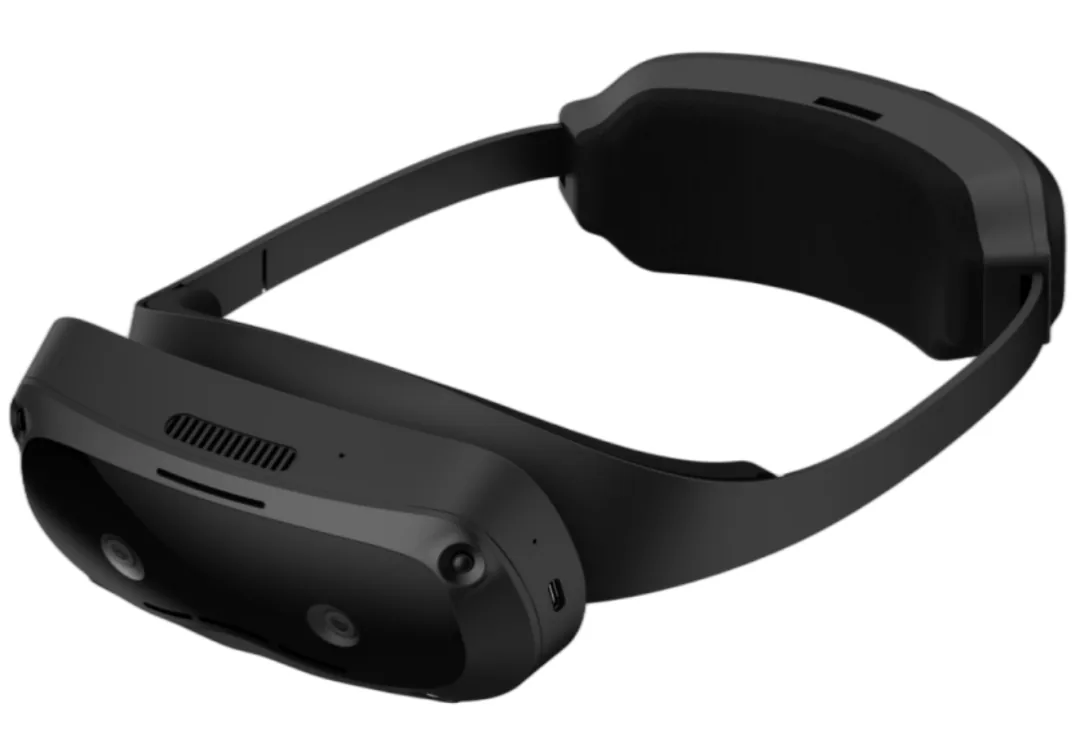
First-person video and robot actions are not the same thing
Ego4D (Grauman et al., CVPR 2022) and the kitchen-focused EPIC-KITCHENS show that large-scale first-person video can cover everyday scenarios, but most clips do not contain executable robot actions. For beauty and personal care, head-mounted video is suitable for observing "how a person does it," but cannot be directly used as action labels for a policy.
Real-device data emphasizes the number of scenes, not just the number of entries
DROID (Khazatsky et al., arXiv:2403.12945) placed capture across many real buildings and scenes; Open X-Embodiment / RT-X (ICRA 2024) brought data from multiple institutions and multiple embodiments into a unified format to discuss transfer. The implication for beauty and personal care is: changing to a different production line or a different shelf often constitutes a new scenario, and a single laboratory tabletop cannot represent an entire industry.
Around 2025, hand and proprioception-free interfaces were written into papers
EgoDex (arXiv:2505.11709, 2025) discusses learning dexterous manipulation from large-scale egocentric video; OpenEgo (arXiv:2509.05513, 2025) attempts to organize multi-source egocentric data into a format with hand trajectories and action primitives. UMI (Chi et al., RSS 2024) demonstrates that prop-free handheld interfaces can capture manipulation, but a domain gap exists between wrist-view and robot-camera perspectives. OpenVLA (arXiv:2406.09246) represents one route toward making vision-language-action models openly weighted. Together, these works advance the data problem in beauty care from "is there video?" to "are the hands, objects, and time aligned?"
What this means for TOBI's scenario work
We list fine close-range tasks such as nail art (a public category) as filterable tasks so that the capture checklist aligns with the skill and scenario breakdowns in the paper. This does not mean that in-stock products already cover all tasks in the paper, nor does it mean that using TOBI data can achieve the success rates reported in the paper.
Compliance notice: This document provides scenario methodology and a comparison with public literature. It does not constitute a commitment regarding capture success rates, model performance, or delivery schedules. Equipment configurations, tradeable hours, pricing, and licensing scope are subject to the written order. The papers cited herein are third-party public works and do not constitute a claim of TOBI Technology achievements. Illustrations are sourced from TOBI Technology's public equipment materials.
