Lead-in | Product Content for Precise Customer Acquisition
From the intersection of top embodied-AI scientists and data experts, the trajectory output path is not a model number on a catalog page but a set of verifiable device requirements, hardware requirements, and output requirements. This article, grounded in TOBI's current product matrix, explains the trajectory output path clearly and guides you to the corresponding product pages and evaluation entry points — so customers with real tasks can find us faster.
Industry insight: Why customers "search content, buy hardware, order data"
Embodied-AI procurement in 2026 increasingly resembles industrial equipment decision-making: first use content to confirm the problem structure, then use specifications to confirm deliverability, and finally use evaluation to lock in the device and dataset combination. Long-form content about trajectory output paths that only discusses trends without naming models cannot convert; content that only stacks parameters without discussing tasks cannot attract customers. TOBI binds the two together: content answers "why you need it," product pages answer "what we have," and consultation answers "how we deliver."
On the search side, customers will use terms like "stereo Ego," "six-camera capture," "eight-camera motion capture," "global shutter head-mounted," and "on-device SLAM" to find suppliers. On the content side, these terms must be matched with real product capabilities, and the mass production / R&D boundary must be honestly labeled — trust is part of the conversion rate.
Scientist's Perspective: How Capture Problems Define Device and Hardware Requirements
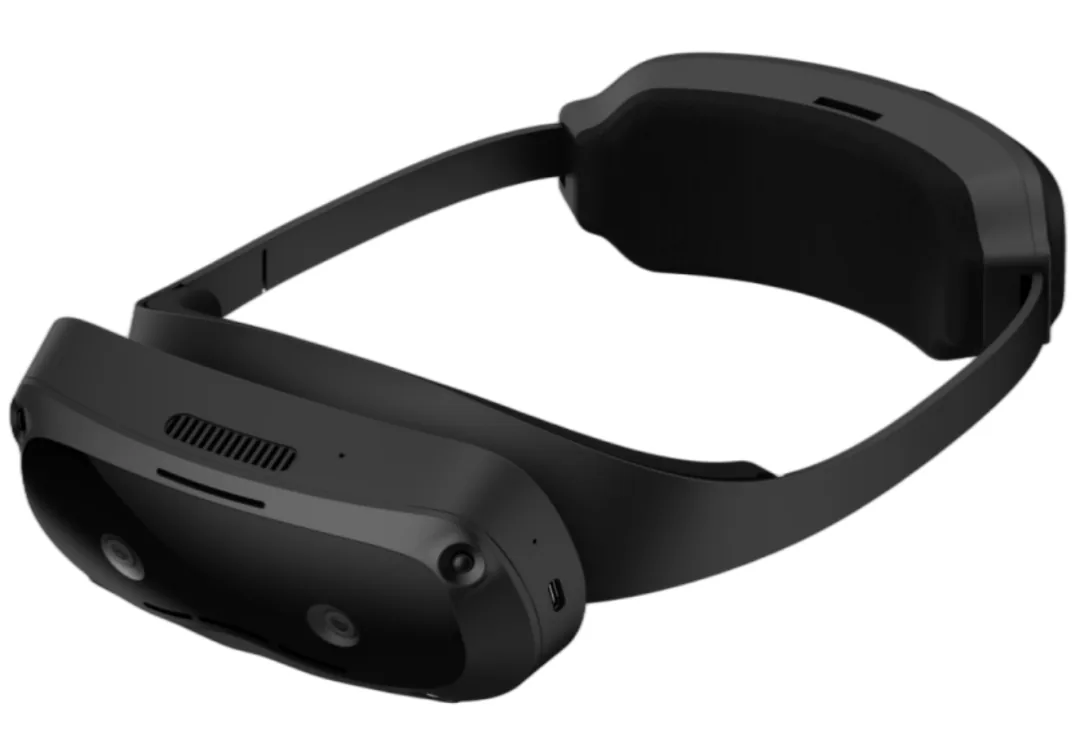
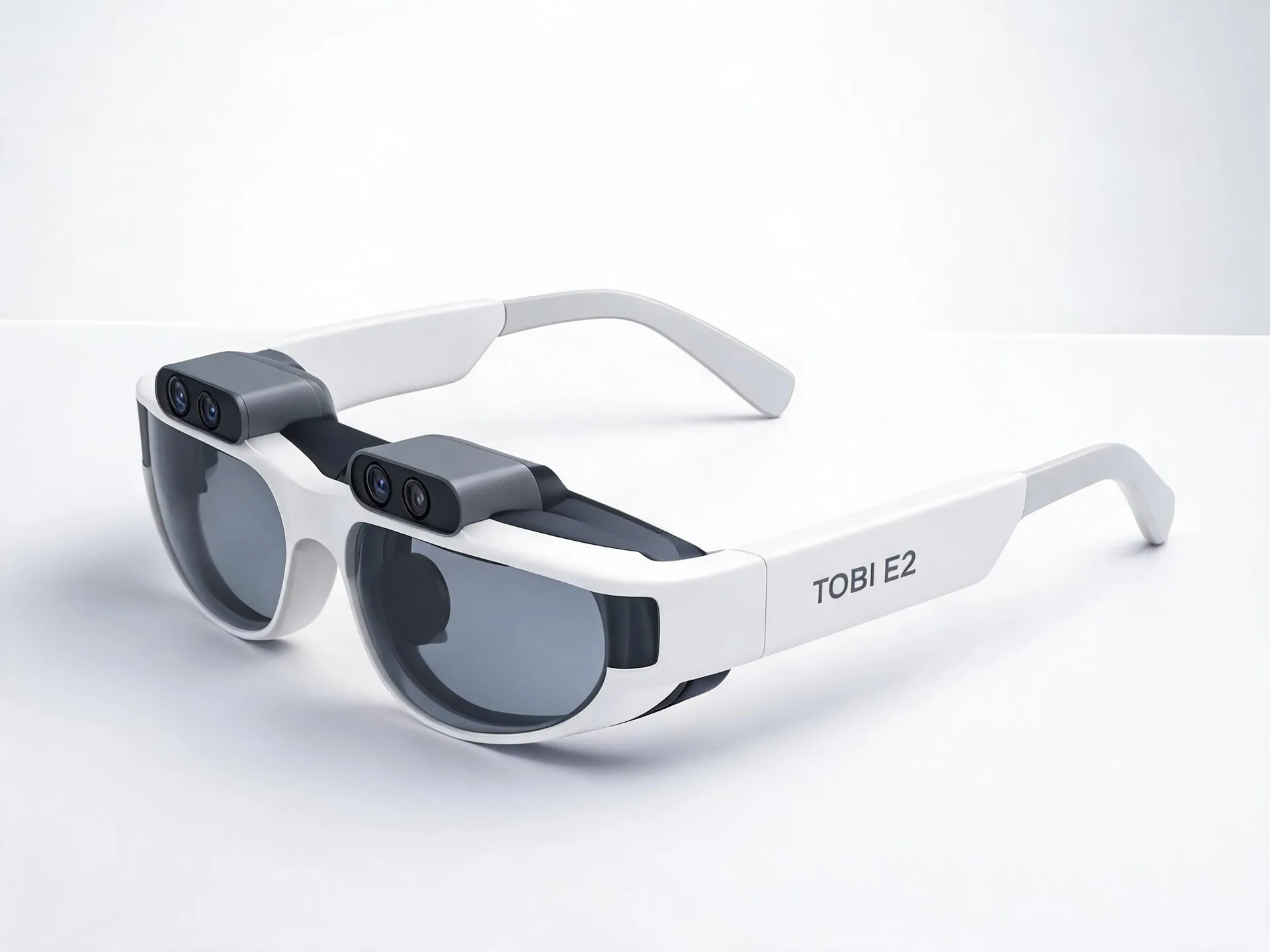
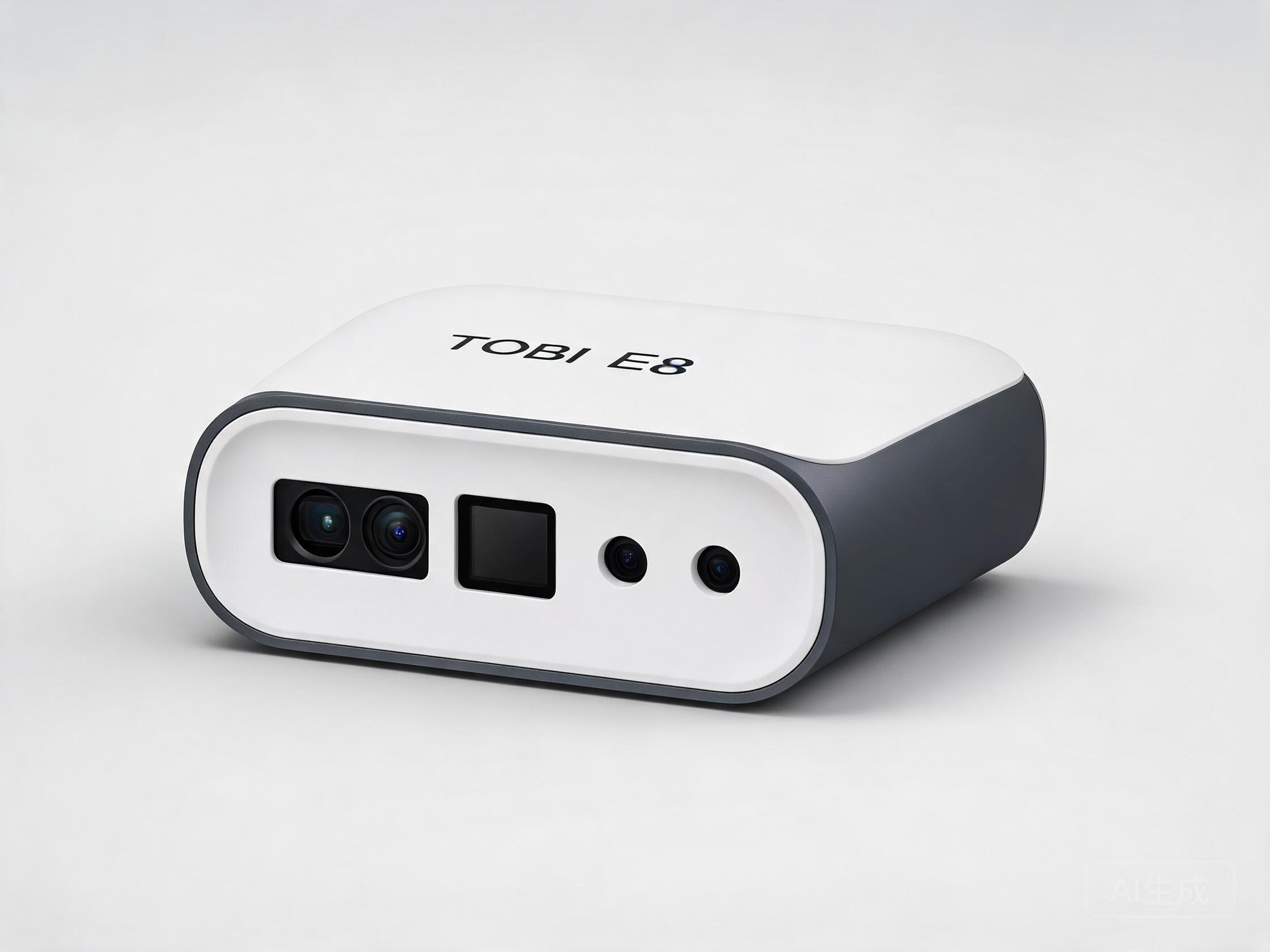
Embodied learning requires alignable observation-action distributions. For trajectory-producing pathways, the scientific questions come before the procurement questions: Does the field of view cover the hands and tools? Is there motion blur? Is timing synchronized from a common source? Are trajectories obtainable? Hardware is merely the engineering solution to these questions. E2 answers "wearable for long sessions, clear capture, exportable data" with lightweight binocular global shutter; E6 answers "training packages captured on site" with six-way synchronization plus on-device SLAM/gesture; E8 answers "head-mounted plus full-body ground truth captured in one pass" with eight-camera multimodal capture and motion capture. Choose the wrong question, and you will choose the wrong hardware.
Output requirements are equally a scientific constraint: video without timestamps and intrinsic/extrinsic parameters is hard to use in serious training; without failure and near-failure samples, dexterous policies will be overly optimistic. TOBI therefore repeatedly emphasizes the "output checklist" in its content, so that customers can evaluate any vendor using the same language.
Data Expert's Perspective: How Hardware Output Becomes a Trainable, Purchasable Asset
When data experts evaluate a device, the essence is whether it can stably produce versionable data packages. Key fields typically include multi-channel timestamps, camera intrinsic and extrinsic parameters, video encoding, IMU, (optional) trajectory / gestures / motion capture, and scene and authorization metadata. E2 emphasizes open interfaces and post-processing freedom; E6 emphasizes on-device same-source preprocessing; E8 emphasizes multimodal structured export.
| Dimension | E2 Binocular | E6 Six-Camera | E8 Eight-Camera Multimodal |
|---|---|---|---|
| Core Hardware | 2× RGB global shutter, 65mm baseline | 4× grayscale GS + 2× RGB, microsecond-level synchronization | Head-mounted multi-camera vision + motion capture module |
| Weight / Battery Life | <150g, >5h | Approximately 370g, suitable for long shifts | Approximately 300–350g (including motion capture, subject to documentation) |
| Trajectory Path | No on-device SLAM; reconstruction on PC | On-device SLAM nominal 5mm | Motion capture provides full-body pose ground truth |
| Typical Output | H.265 video + IMU + intrinsic and extrinsic parameters | Video + SLAM + Gestures + IMU | Vision + IMU + Motion Capture Timeline |
| Status | In production | In production | R&D / planned mass production, metrics subject to project confirmation |
Deep Dive: Trajectory Output Path
When it comes to "on-site delivery speed," top embodied-data experts ask the same questions: Is it measurable? Can it be written into an order? Can it be validated on samples from the target scenario? TOBI insists on mapping on-site delivery speed to the specifications and boundary descriptions on product pages, rather than marketing adjectives. For the trajectory output path, this means that after reading this article, customers should be able to identify: which device to choose, which output fields to examine, and what evaluation to schedule next.
Furthermore, on-site delivery speed changes the division of labor: the algorithm team is responsible for defining labels and evaluation, the operations team for effective hours and wear load, and the procurement team for acceptance and after-sales. Neglecting any one role, and no matter how good the hardware, the trajectory production path will become an idle asset by the second week. Therefore, this document frames on-site delivery speed as a shared cross-role language, making it convenient for customers to align internally and then locate TOBI precisely.
When it comes to "post-processing labor," top embodied-data experts ask the same questions: Is it measurable? Can it be written into an order? Can it be validated on samples from the target scenario? TOBI insists on mapping post-processing labor to the specifications and boundary descriptions on product pages, rather than marketing adjectives. For the trajectory output path, this means that after reading this article, customers should be able to identify: which device to choose, which output fields to examine, and what evaluation to schedule next.
Furthermore, post-processing manpower changes organizational division of labor: the algorithm team is responsible for defining labels and evaluation, operations for effective hours and wearing load, and procurement for acceptance and after-sales. Ignoring any role, no matter how good the hardware on the trajectory production path is, it becomes an idle asset by the second week. Therefore, this article writes post-processing manpower as a shared language across roles, making it easy for customers to align internally and then precisely find TOBI.
When it comes to "accuracy validation," top embodied-data experts ask the same questions: Is it measurable? Can it be written into an order? Can it be validated on samples from the target scenario? TOBI insists on mapping accuracy validation to the specifications and boundary descriptions on product pages, rather than marketing adjectives. For the trajectory output path, this means that after reading this article, customers should be able to identify: which device to choose, which output fields to examine, and what evaluation to schedule next.
Furthermore, accuracy validation changes the division of labor across roles: the algorithm team is responsible for defining labels and evaluation, the operations team for effective hours and wearing load, and procurement for acceptance and after-sales. Neglecting any one role, and even the best hardware along the trajectory production path will become an idle asset by the second week. Therefore, this article frames accuracy validation as a shared cross-role language, making it easier for customers to align internally and then precisely find TOBI.
Around the topic of "data dictionary differences," a top-tier embodied AI data expert will ask in parallel: Is it measurable? Can it be written into a purchase order? Can it be validated on samples from the target scenario? TOBI insists on mapping data dictionary differences to the specifications and boundary descriptions on product pages rather than marketing adjectives. For the trajectory output path, this means that after reading this article, a customer should be able to point out: which device to choose, which output fields to inspect, and what evaluation to book next.
Furthermore, differences in data dictionaries change how responsibilities are divided across an organization: the algorithm team defines labels and evaluation metrics, operations handles effective hours and wearing burden, and procurement manages acceptance and after-sales support. Ignoring any one of these roles means that even the best hardware in the trajectory output path will become an idle asset by the second week. This article therefore frames data dictionary differences as a shared language across roles, making it easier for customers to align internally and then find TOBI with precision.
When it comes to "mixed-deployment strategy," top embodied-data experts ask the same questions: Is it measurable? Can it be written into an order? Can it be validated on samples from the target scenario? TOBI insists on mapping mixed-deployment strategy to the specifications and boundary descriptions on product pages, rather than marketing adjectives. For the trajectory output path, this means that after reading this article, customers should be able to identify: which device to choose, which output fields to examine, and what evaluation to schedule next.
Furthermore, a mixed-deployment strategy changes the division of responsibilities across the organization: the algorithm team defines labels and evaluation, the operations team owns effective hours and wearing load, and procurement owns acceptance and after-sales. Neglecting any one role, and even the best hardware on a trajectory output path becomes an idle asset by the second week. This article therefore frames the mixed-deployment strategy as a shared cross-role language, so that customers can align internally and then find TOBI precisely.
How to Find TOBI Precisely Using This Article
- •If your keywords are stereo / lightweight / batch → prioritize opening the E2 product page to verify output boundaries.
- •If you need on-site trajectory and gestures from the same source → prioritize opening E6, and confirm the RGB rolling shutter / global shutter version.
- •If you need full-body motion capture or multimodal prototyping → schedule an E8 evaluation and request the current written specifications.
- •If contact is not visible → add a wrist camera; if tool-end positioning is needed → evaluate the light ring module.
- •If you need in-stock / custom datasets at the same time → submit the task scenario and scale together in your inquiry.
Next Step: Turn Selection into a Quotable List
Writing devices, peripherals, and datasets into the same evaluation table shortens the decision cycle more than requesting quotes individually.
- •Open the corresponding product detail page, to verify specifications and boundary descriptions.
- •Back to Product Matrix Filter and compare E2 / E6 / E8 and peripherals by capability.
- •View Solutions, aligning scenarios and delivery boundaries.
- •Book a Technical Assessment / Request a Quote for Equipment and Datasets(Target: return the framework within ≤1 business day).
- •Read Developer Documentation, so that the algorithm team can first align on export and integration.
TOBI's Perspective
Top-tier embodied data experts don't buy "headsets that look flashy"; they buy acceptable capture protocols and trainable output packages. TOBI writes E2 / E6 / E8 as verifiable specifications and datasets as tradable SKUs, guiding customers from a piece of content to an evaluation.
Addendum: In real-world delivery, the success of the trajectory output path depends on sample validation — first collect a small batch in the target scenario, verify synchronization, wearability, storage, and training gains, then scale up the order. TOBI's evaluation process encourages this "small closed loop," reducing risk for both sides and helping content readers become qualified opportunities faster.
Specifications and Boundary Notes (subject to the official product page)
- •E2: 2-channel RGB global shutter 1600×1200@30fps, single-camera HFOV 139°, VFOV 111°, 65mm baseline, IMU 800Hz, no on-device SLAM.
- •E6: 4-channel grayscale global shutter (including infrared recognition) + 2-channel RGB, microsecond-level synchronization, on-device SLAM / gestures, Qualcomm XR2 Gen1; RGB is available in rolling shutter / global shutter versions.
- •E8: positioned for eight-camera multi-modal capture, can be paired with full-body motion-capture modules; synchronization and positioning metrics are subject to written documentation and project confirmation, and information at the R&D stage does not constitute a supply commitment.
- •Wrist camera / light ring positioning: as a peripheral extension, the synchronization method with the host is confirmed per project.
- •Product configurations, test results, and delivery scope are subject to the current written specifications.