Introduction | For six-camera open-source systems, the manual matters more than the spec sheet
The E6 open-source SDK targets real-world engineering for six-camera first-person capture, gesture capture, and host synchronization — not the fantasy of cramming every capability into an "all-in-one Linux client." The README of the repository https://github.com/china-langhui-ego/e6-sdk clearly documents OpenXR, hand tracking, dual-stream HEVC/AAC in fMP4 or MCAP, camera extrinsics, and Kannala-Brandt fisheye calibration; host-side timing and upload are covered in a dedicated Linux integration chapter. Only by understanding the boundaries can open source be turned into productivity.
Cloning and Layered README Reading
Clone command: git clone https://github.com/china-langhui-ego/e6-sdk.git . First read through the device-side capabilities, container format, and calibration fields, then jump to host-side time synchronization and DatasetServer, and only afterward look at the mobile-side Bluetooth control. Layered reading avoids the fruitless anxiety of "can't find the Linux preview button."
Record the commit hash and LICENSE. E6 involves gestures and multi-camera extrinsics, so its licensing and privacy impact surface is larger than that of binocular setups; internal legal summaries should be involved earlier.
Copy the "standard support" and "undefined capabilities" from the README into the project risk register. RK3588 and on-board graphics control fall into the latter category; they must go through evaluation rather than being treated as defects.
Passing open-source samples does not mean passing production-line procedures. Samples demonstrate feasibility; procedures define acceptable risk.
Six-camera rig and gestures: how modalities enter the same session
Six-camera setups provide broader coverage and occlusion robustness, but also amplify synchronization and bandwidth costs. Session metadata should list the enabled camera group and any degradation events.
Gesture or hand tracking streams must share session IDs and time semantics with video, and confidence must be retained. Low-confidence intervals should be down-weightable by the training pipeline.
OpenXR-related interface changes must be communicated to integrators via version logs. Silently changing the gesture coordinate system will cause policy degradation that is difficult to detect over the long term.
If the task is not primarily hand-focused, it is still recommended to retain the gesture channel for diagnostics: hand state before and after contact often explains failures.
Container: division of labor between fMP4 and MCAP
Playback and some visual toolchains prefer fMP4; multi-topic retrieval and robot learning ecosystems often prefer MCAP. The primary delivery format should be locked at project kickoff.
The clock domains of the dual-channel video and audio tracks must be declared in the documentation. If audio is not used for training, explicitly ignore it to avoid automatic tool synchronization errors.
After export and upload, perform a container integrity check: missing tracks, corrupt indexes, or abnormal durations result in immediate rejection.
Transcoded derivatives must be labeled as to whether they are time-preserving, and must retain a pointer to the original session.
Calibration and Kannala-Brandt Fields
Fisheye intrinsics and multi-camera extrinsics are prerequisites for training on six-camera data. The open-source project provides the parameter format, but on-site spot checks are still required.
Parameter versions are upgraded with firmware and mechanical changes. Sessions without a version number in the data card must not enter the formal dataset.
Wearing deformation can cause extrinsic drift; procedures should specify daily quick visual inspection and periodic recalibration.
Joint acceptance with host time synchronization: geometrically correct but temporally wrong is equally untrainable.
Host-Side Closed Loop: Time Synchronization Plus Upload
The standard host environment is Linux x86_64. Serial-port time synchronization and chunked upload are the two components of the closed loop; neither can be omitted to call production integration testing complete.
Work orders must include a ttyACM list, time synchronization logs, health checks, and upload directory samples.
The mobile app handles network configuration, segment duration, and upload address; do not assume a Linux graphical client exists.
For the closed-loop demo, it is recommended to show customers one real short recording upload; it is more convincing than a spec sheet.
Integration Testing Acceptance Criteria
It is recommended to use a written checklist as the pass line for the E6 open-source pilot, signed by both algorithm and embedded teams.
- The device completes one six-camera short recording, with a complete container and full session metadata;
- Gesture or related channel timestamps are readable (if enabled for the task);
- The calibration field version number is present and spot-check verification has passed;
- The host-side CDC-ACM time service is operating stably;
- DatasetServer health check passed and at least one shard was received;
- Capability boundaries and out-of-scope requirements have been recorded in the risk register.
Documentation Package and Organizational Interfaces
E6 also has six categories of Drive/Baidu materials. For the six-camera pipeline, first refer to the dedicated Linux chapter, then download the debugging and firmware packages.
Support, sales, and R&D share the same boundary messaging to avoid promising customers capabilities outside the agreed scope.
Separate open-source Issues from commercial support tickets: documentation defects go to GitHub, project customization goes through the evaluation checklist.
Place pilot acceptance criteria in a contract appendix to reduce post-hoc disputes.
From open-source E6 to large-scale data capture
After the pilot passes, first expand operator and task diversity, then expand sites. Site expansion requires calibration and time-synchronization reproducibility as the entry ticket.
If you ultimately plan to purchase a dataset, keep fields compatible so that self-captured and externally sourced data can be co-trained and bucketed separately.
Periodically review README changes and synchronize internal procedures. Open source is a living document; procedures must have revision records.
Use a six-camera failure case library to drive supplementary capture, rather than uniformly adding hours.
Engineering Deep Dive, On-Site Access Control, Q&A and Appendix Requirements
Centered on "six-camera", it is recommended to list progress and risks separately in the project weekly report: verified facts, unverified assumptions, and next-step experiments — one sentence each. This way, open-source integration will not stall on a feeling of satisfaction, but on inspectable evidence. The same format can also be used to sync with external collaborators, reducing wasted meeting time.
During change windows involving "OpenXR", freeze parallel major changes: first complete a small-scope regression, then allow multi-user commits. Hardware open source is most vulnerable when multiple variables change simultaneously. The regression package should include a shortest-path success case and known failure cases to ensure failures are reproducible.
Add "gesture confidence" to the first-week tasks for new hires: not reading slogans, but personally completing one operation and submitting a screenshot of the record or a log summary. A low pass rate indicates a documentation gap, not merely a capability gap in the new hire. Documentation gaps must be fed back into the repository or documentation ledger.
Build a counterexample library for "Kannala-Brandt": next to each correct practice, include the incorrect practice and its consequences. Field personnel remember counterexamples more deeply than rules. The counterexample library is updated quarterly to stay in sync with the current firmware and toolchain.
If metrics related to "MCAP" drift, first perform layered diagnostics: device, host, network, procedures, human factors. Do not jump directly to changing models or hardware selection. Layered diagnostic records are retained for ninety days for audit and retrospective review.
When demonstrating "fMP4" externally, prioritize showing access gates and logs rather than only the final output. Decision-makers trust reproducible processes more. Demonstration scripts should be versioned to avoid inconsistent commitments caused by ad-hoc improvisation each time.
The responsible party for "CDC-ACM" must have clear veto authority and an escalation path. A quality role without veto authority is merely decorative. The escalation path should be written into the support manual so it can be executed even during holidays.
When measuring "DatasetServer," do not use only a binary success/failure indicator; retain the distribution: the 50th and 95th percentiles and the extreme tail. The tail determines production pain. Distribution charts brought to the weekly meeting drive resource allocation better than averages.
When the "Bluetooth control plane" requires cross-team collaboration, first write a one-page interface spec: inputs, outputs, timeouts, failure codes, owner. An interface is cheaper than a consensus meeting. Interface changes go through a short review to avoid private-chat decisions affecting the whole system.
When reviewing historical incidents involving the "camera array", use a unified template: phenomenon, affected sessions, root cause, fix, whether re-capture is needed. The template enforces the distinction between sporadic and systemic issues. Systemic issues must be fed back into firmware, documentation, or procedures, not resolved by individual heroics.
In budget discussions, break down the cost of "extrinsic calibration versions" into tool time, human-factor time, and rework time. Looking only at tool purchase price underestimates total cost of ownership. The broken-down figures better support investment in open-source governance.
Keep the minimal runnable example related to "bandwidth drop" always runnable: a broken example equals broken documentation. Continuous integration runs the example nightly; failures block merges. The example is also the fastest path for customer onboarding.
Around "x86_64", it is recommended to list progress and risks separately in the project weekly report: one sentence each for verified facts, unverified assumptions, and next-step experiments. This way, open-source integration does not stall on a feeling of satisfaction but on inspectable evidence. The same format can also be used to sync with external collaborators, reducing unproductive meetings.
During change windows involving out-of-scope on-board components, freeze large-scale parallel changes: first complete small-scope regression, then allow multi-user commits. The biggest risk in open-source hardware is multiple variables changing at the same time. The regression package should include shortest-path success cases and known failure cases, ensuring failures are reproducible.
Add "wear deformation" to a new hire's first-week tasks: not a reading assignment, but hands-on completion of one operation with a submitted screenshot or log summary. A low pass rate indicates documentation gaps, not merely new-hire capability. Documentation gaps must be fed back into the repository or the materials ledger.
Build a counterexample library for "illumination assistance": next to each correct practice, include the incorrect practice and its consequences. Field personnel remember counterexamples more deeply than rules. The counterexample library is updated quarterly to stay in sync with the current firmware and toolchain.
If metrics related to "release notes" drift, first perform layered diagnostics: device, host, network, procedures, human factors. Do not jump directly to changing models or hardware selection. Layered diagnostic records are retained for ninety days for audit and retrospective review.
When demonstrating "integration sign-off" externally, prioritize showing access gates and logs rather than only the final output. Decision-makers trust reproducible processes more. Demonstration scripts should be versioned to avoid inconsistent commitments caused by ad-hoc improvisation each time.
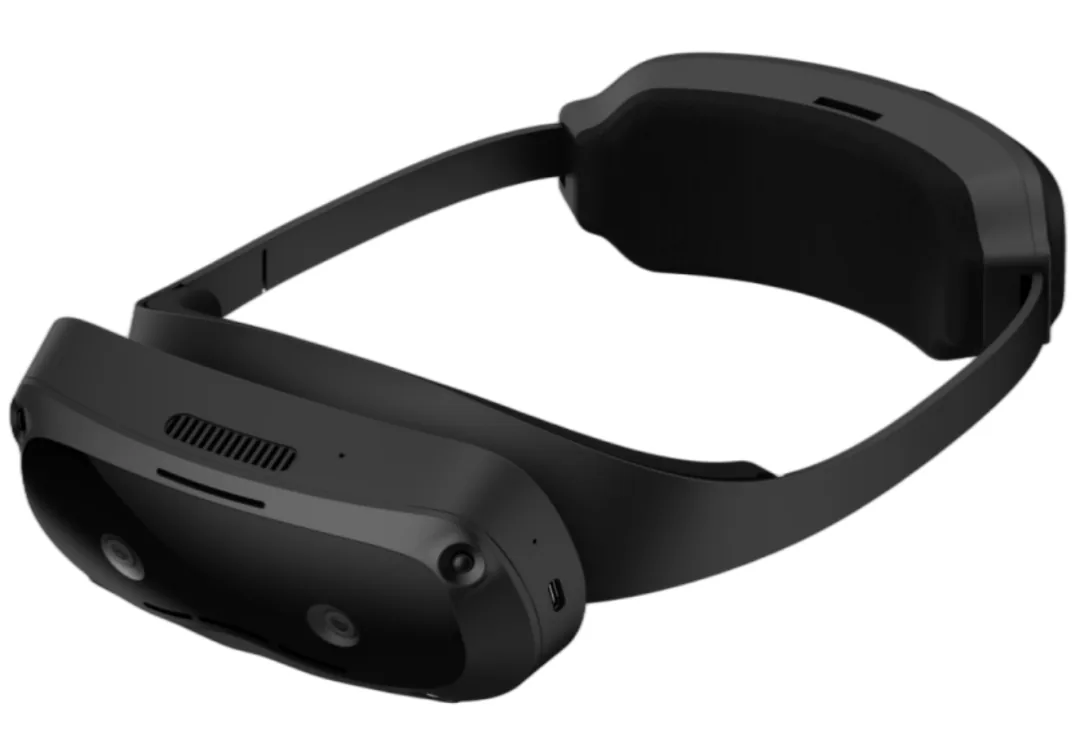
The ground truth in E6's README begins with capability layering: the device side (six-camera array, gesture capture, recording container, calibration parameters) is one layer; the host side (time synchronization and chunked upload) is another; the mobile side (Bluetooth configuration and preview) is yet another. Blurring all three layers into "it's all in the Linux client" is the most common misreading.
OpenXR and hand tracking change the ceiling of annotation and conditioning strategies; they do not automatically yield transferable robot skills. Gesture streams must carry timestamps and confidence values and share the same session ID as the video, otherwise they are merely a visually appealing skeleton gimmick.
The choice between fMP4 and MCAP for dual-channel HEVC/AAC should serve the training toolchain. MCAP is advantageous for multimodal topic-based retrieval; fMP4 is advantageous for human-eye playback and certain visual pipelines. The data card should clearly specify the primary delivery container to avoid two teams each holding one format while assuming interoperability.
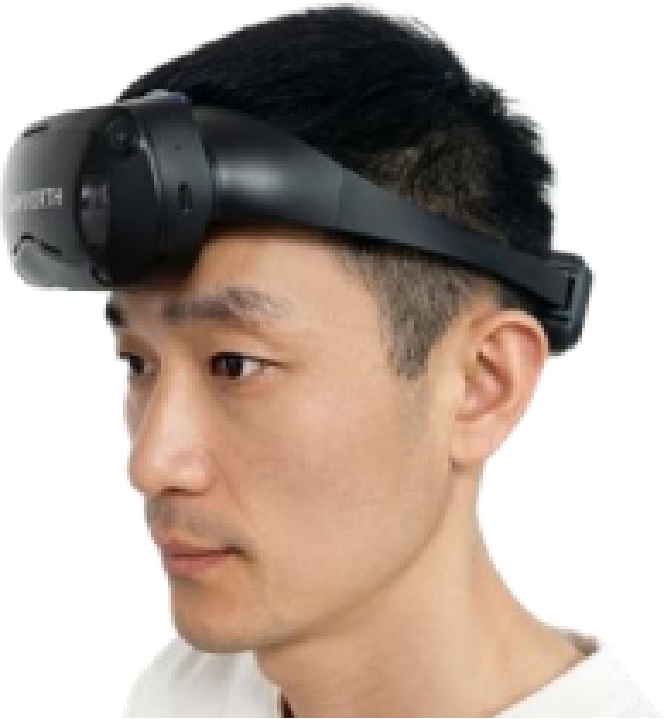
If the Kannala-Brandt fisheye model parameters change with firmware, the version number must be incremented. Six-camera extrinsics are sensitive to head-mounted deformation; when wearing tightness varies significantly, spot-check recalibration should be triggered rather than assuming factory calibration remains valid indefinitely.
The host synchronization section points to CDC-ACM and DatasetServer, not "just plug in the USB and you're done". Integration tickets must be accompanied by a serial-port node list, time-source script logs, and upload health-check output.
The Android control panel configures network, segment duration, and upload address via Bluetooth: these are standard control-plane functions. If a customer insists on Linux-only graphical control, this is an out-of-scope evaluation requiring a separate project, not an Issue to force the README to change its position.
Six cameras bring occlusion robustness but also synchronization and bandwidth pressure. Whether dropping one camera rejects the entire segment must be explicitly defined in the procedures. If the open-source example permits degraded recording, production procedures may be stricter, but the leniency of the example cannot be used to override production gates.
Gesture and RGB/grayscale camera exposure strategies may conflict. Low-light infrared assistance benefits motion capture but may alter the appearance distribution of hands. If a task strongly depends on skin color and texture, the illumination and auxiliary lighting strategy must be declared on the capture form.
For contributors, documentation patches to the E6 repository should also update the host-side boundary description, preventing new hires from misjudging Linux capabilities when only device-side examples are changed.
Using "whether time-sync, upload, and a single six-camera short recording can be completed on an x86_64 host" as the pass line for the E6 open-source pilot is closer to production than demonstrating rendered hand models.
The demo script for the E6 open-source pilot is recommended to be fixed as: power on, phone Bluetooth configuration, time source confirmation, a one-and-a-half-minute six-camera short recording, upload, local playback, and metadata printing. If the script times out, log a defect; do not improvise on the spot.
Segments with low gesture confidence should not be deleted directly; they should be retained and flagged. Deletion makes the failure distribution disappear; flagging teaches the model when not to trust the hand channel.
When delivering both MCAP and fMP4, designate a single primary format for training and the other format for human review. Two primary formats will split the toolchain.
Extrinsic calibration versions should be tagged together with mechanical versions. Changing only the software calibration while swapping the headband structure changes the physical system and requires a new version.
The rejection threshold for a dirty camera in the six-camera array must be explicitly defined. Using "still visible" as the field standard will contaminate training data with dirty-camera artifacts.
Changes to Bluetooth configuration items must be confirmed by readback. If commands are sent without readback, the device's actual segmentation duration may not match what the panel displays.
Guide customers with out-of-scope requirements (on-board preview) to the evaluation checklist and flag them in CRM, so support staff do not treat them as standard defects.
Open-source release notes should use a Chinese summary with English details, so that both domestic field teams and international collaborators can consume them simultaneously.
For bandwidth-constrained environments, pre-define a camera array degradation matrix: which cameras can be turned off and what the impact on the task is. Ad-hoc verbal degradation is not auditable.
Integration sign-off forms are retained for ninety days as quality system evidence and as the internal definition of open-source pilot completion.
The failure case library is archived into four categories: occlusion, exposure, synchronization, and upload. Re-capture orders are placed by category.
Integration testing with DatasetServer must be rehearsed using real LAN addresses; faking success on a local loopback is prohibited.
If Kannala-Brandt parameters come from the factory, the incoming inspection spot-check ratio must be specified in incoming quality control. No matter how standardized the open-source format is, it cannot replace incoming inspection.
Teach sales one sentence: E6 open source accelerates integration; written specifications define delivery boundaries. This manages expectations better than a parameter table.
Hold a retrospective meeting after the pilot ends: identify which README sentences were misinterpreted and revise the documentation sentence by sentence. Misinterpretation is a high-value signal of documentation defects.
Q: Is it normal that no preview is visible on Linux? A: Yes. The standard control plane is on the mobile app; the standard Linux capabilities are installation, time synchronization, and receiving.
Q: Are gestures mandatory to capture? A: It depends on the task; if captured, confidence scores and timestamps should be retained, with low-confidence frames flagged rather than silently deleted.
Q: Choose MCAP or fMP4? A: The training toolchain determines the primary format; the other format can be for human viewing, but there cannot be two primary formats.
Q: How often should extrinsics be recalibrated? A: Spot-check according to trigger conditions and cycle; deformation, impact, and firmware updates require recalibration.
Q: Can the RK3588 be used directly as the host? A: Out of scope; evaluate first. The default is x86_64.
Q: How do I troubleshoot a failed segment upload? A: First check the health check, address reachability, disk space, and the 5 GB limit, then check the device queue.
Q: Can the six-camera array continue with one camera turned off? A: Check the procedures: production may specify rejection; the leniency of the example cannot override production gates.
Q: Does the Bluetooth configuration need read-back? A: Yes. Writing without read-back will cause the panel and the device to fall out of sync.
Q: Can the Kannala-Brandt example be used directly? A: No. The example only illustrates the format; production must use on-site reports.
Q: Which comes first, time synchronization or upload? A: Time synchronization first, then recording, then upload.
Q: How is a successful pilot defined? A: A short recording succeeds, metadata is complete, time synchronization is stable, upload completes, boundaries are written into the risk register, and sign-off is obtained.
Q: How are gesture coordinate system changes notified? A: Announced at the top of the release notes; integrators run regression tests.
Q: What if bandwidth is insufficient? A: Use the pre-defined camera-group degradation matrix. Ad hoc verbal degradation without a record is prohibited.
Q: Can sales claim full ARM support? A: No; anything beyond the README requires an evaluation ticket.
Q: If the documentation package and the repository conflict, which takes precedence? A: The written specification and version comparison table; and file an Issue to fix the documentation.
Q: Does low-light infrared affect skin-tone tasks? A: Possibly; the capture form declares the auxiliary lighting strategy.
Q: How should MCAP topics be named? A: Freeze the naming convention, write it into the reading scripts, and prohibit multiple synonymous names.
Q: Does the customer only want an on-board all-in-one unit? A: A compromise topology can be evaluated, for example, a bypass time-synchronization box.
Q: How to handle open-source Issues requesting board-side features? A: Route them to the evaluation checklist template; do not treat them as standard defects.
Q: How is the failure-case library used? A: Supplement collection by category, rather than adding hours on average.
Q: Which takes priority, calibration or timeline? A: Both are gating criteria; neither can be missing for entry into the formal dataset.
Q: What is the ticket for multi-site expansion? A: Time synchronization and calibration must be reproducible.
Q: How to manage expectations? A: The mantra: open source accelerates integration, written specifications define boundaries.
Q: What should the pilot retrospective change? A: README sentences that were misread take priority for correction.
Q: What should be noted for concurrent multi-device operation? A: Plan disk and port allocation; use reconciliation primary keys to prevent cross-contamination.
Q: What is the degradation behavior when the phone loses control? A: Predefined; do not invent it on the spot.
Q: Mixing data with E2 for training? A: Unify the metadata dialect and time units.
Q: Can the demo script be changed on the spot? A: No; timeouts are recorded as defects.
When implementing "open"-related capabilities, six-camera synchronization acceptance must be based on the camera-group list in the session metadata, not on verbal on-site reports. At the same time, the confidence threshold for the gesture channel must be included in the training configuration and frozen together with the data version. It is recommended to write these requirements into the current week's checklist and review at next week's stand-up whether they have been implemented; if not, record it as a process defect rather than an individual attitude issue. The same checklist can also be shared with external collaborators to reduce memory bias on both sides about "what has already been said," keeping open-source integration and delivery acceptance always traceable.
When implementing "open"-related capabilities, the host-side demo must include at least one real upload; showing only a local preview is prohibited. At the same time, out-of-scope requests should all go into the evaluation backlog and not idle in the open-source support queue. It is recommended to write these requirements into the weekly checklist and review at the next stand-up whether they were executed; if not, record it as a process deficiency rather than a personal attitude issue. The same checklist can also be shared with external collaborators to reduce memory bias on both sides about "it was already said," keeping open-source integration and delivery acceptance always traceable.
When implementing "open"-related capabilities, if an extrinsic-parameter spot check fails, isolate the entire batch and wait for recalibration before deciding whether to re-collect. At the same time, the Chinese summary in the release notes must clearly state whether compatibility is broken, to avoid on-site teams missing details in the English text. It is recommended to write these requirements into the current week's checklist and review at next week's stand-up whether they have been implemented; if not, record it as a process defect rather than an individual attitude issue. The same checklist can also be shared with external collaborators to reduce memory bias on both sides about "what has already been said," keeping open-source integration and delivery acceptance always traceable.
When implementing "open"-related capabilities, manage the bandwidth degradation matrix in advance in tabular form, with changes requiring two-person confirmation. At the same time, the pilot sign-off sheet is quality system evidence, not a formality. It is recommended to write the above requirements into the weekly checklist and review at next week's stand-up whether they have been properly executed; if not executed, record it as a process defect rather than a personal attitude issue. The same checklist can also be shared with external collaborators to reduce both parties' memory bias about "what has already been said," keeping open-source integration and delivery acceptance always traceable.
When implementing "open"-related capabilities, before mixing training with binocular data, unify time units and coordinate-system naming. At the same time, the customer success team uses boundary talking-point cards to prevent ad hoc promises about board-side graphics capabilities. It is recommended to write these requirements into the current week's checklist and review at next week's stand-up whether they have been implemented; if not, record it as a process defect rather than an individual attitude issue. The same checklist can also be shared with external collaborators to reduce memory bias on both sides about "what has already been said," keeping open-source integration and delivery acceptance always traceable.
When implementing "open"-related capabilities, low-light task capture forms must declare the auxiliary lighting and exposure strategy. Once MCAP topic names are frozen, reading scripts must not tolerate synonymous aliases. It is recommended to add these requirements to the weekly checklist and review at next week's standup whether they have been fully implemented; if not, record it as a process deficiency rather than an individual attitude issue. The same checklist can also be shared with external collaborators to reduce memory discrepancies over "already communicated" between both sides, keeping open-source integration and delivery acceptance always traceable.
When implementing "open"-related capabilities, integration timeouts are recorded as defects and are not concealed by extending meetings. At the same time, incoming inspection spot-checks whether the Kannala-Brandt report format is parseable. It is recommended to write these requirements into the current week's checklist and review at next week's stand-up whether they have been implemented; if not, record it as a process defect rather than an individual attitude issue. The same checklist can also be shared with external collaborators to reduce memory bias on both sides about "what has already been said," keeping open-source integration and delivery acceptance always traceable.
When implementing "open"-related capabilities, the failure case library is updated weekly to drive the priority of supplementary data collection. Meanwhile, a Bluetooth readback failure is treated as an incomplete configuration, and recording must not be started. It is recommended to write the above requirements into the checklist for the current week, and review at next week's stand-up meeting whether they have been properly implemented; if not, record it as a process defect rather than an issue of personal attitude. The same checklist can also be shared with external collaborators to reduce memory bias on both sides about "it has already been said," ensuring that open-source integration and delivery acceptance are always traceable.
When implementing "open"-related capabilities, the x86_64 industrial PC is written into the solution template as the default host. At the same time, open-source repository labels distinguish device-side from host-side issues to accelerate triage. It is recommended to write these requirements into the current week's checklist and review at next week's stand-up whether they have been implemented; if not, record it as a process defect rather than an individual attitude issue. The same checklist can also be shared with external collaborators to reduce memory bias on both sides about "what has already been said," keeping open-source integration and delivery acceptance always traceable.
When implementing "open"-related capabilities, a fix PR for misread documentation sentences must be submitted within forty-eight hours after the retrospective. At the same time, disk stress testing must be performed in advance for concurrent multi-device operation to avoid on-site failures on the first day. It is recommended to write these requirements into the current week's checklist and review at next week's stand-up whether they have been implemented; if not, record it as a process defect rather than an individual attitude issue. The same checklist can also be shared with external collaborators to reduce memory bias on both sides about "what has already been said," keeping open-source integration and delivery acceptance always traceable.
Additional requirement: Six-camera sync acceptance must be based on the camera group list in session metadata, not on on-site verbal reports. Out-of-scope requirements go into the evaluation backlog and do not idle in the open-source support queue. The pilot sign-off sheet is evidence of the quality system, not a formality. If conflicts are found during execution, the written specification and the current frozen version take precedence, and a documentation revision must be raised within twenty-four hours to avoid relying on ad-hoc verbal explanations on site for long-term operation.
Additional requirements: The confidence threshold for the gesture channel must be included in the training configuration and frozen together with the data version. If an extrinsic-parameter spot check fails, isolate the entire batch and wait for recalibration before deciding whether to re-collect. Before mixing training with binocular data, unify time units and coordinate-system naming. If conflicts are found during execution, the written specification and the current frozen version take precedence, and a documentation revision must be proposed within twenty-four hours, avoiding long-term reliance on ad hoc verbal explanations on site.
Additional requirements: the host-side demo must include at least one real upload; local preview only is prohibited. The Chinese summary of the release notes must clearly state whether compatibility is broken, to avoid missing English details on site. The customer success team uses boundary-language cards to prevent ad-hoc promises about on-device graphics capabilities. If conflicts are found during execution, the written specification and the current frozen version take precedence, and a documentation revision must be raised within twenty-four hours—avoiding reliance on ad-hoc verbal explanations for long-term operation on site.
Additional requirements: All out-of-scope requests go into the evaluation checklist and do not idle in the open-source support queue. The bandwidth degradation matrix is managed in tabular form in advance, and changes require two-person confirmation. Low-light task collection sheets must declare auxiliary lighting and exposure strategy. If conflicts are found during execution, the written specification and the current frozen version take precedence, and a documentation revision must be proposed within twenty-four hours, avoiding long-term reliance on ad hoc verbal explanations on site.
Additional requirements: if extrinsic calibration spot checks fail, quarantine the entire batch and wait for re-annotation to complete before deciding whether to recollect. The pilot sign-off sheet is quality-system evidence, not a formality. Once MCAP topic names are frozen, reading scripts must not tolerate synonymous aliases. If conflicts are found during execution, the written specification and the current frozen version take precedence, and a documentation revision must be proposed within twenty-four hours to avoid relying on ad hoc verbal explanations in the field for long-term operation.
Additional requirements: The Chinese summary in the release notes must clearly state whether compatibility is broken, to avoid on-site teams missing details in the English text. Before mixing training with binocular data, unify time units and coordinate-system naming. Integration timeouts are recorded as defects and are not concealed by extending meetings. If conflicts are found during execution, the written specification and the current frozen version take precedence, and a documentation revision must be proposed within twenty-four hours, avoiding long-term reliance on ad hoc verbal explanations on site.
Additional requirements: The bandwidth degradation matrix is managed in tabular form in advance, and changes require two-person confirmation. The customer success team uses boundary talking-point cards to prevent ad hoc promises about board-side graphics capabilities. Incoming inspection spot-checks whether the Kannala-Brandt report format is parseable. If conflicts are found during execution, the written specification and the current frozen version take precedence, and a documentation revision must be proposed within twenty-four hours, avoiding long-term reliance on ad hoc verbal explanations on site.
Additional requirements: The pilot sign-off sheet is evidence for the quality system, not a formality. Low-light task collection sheets must declare auxiliary lighting and exposure strategy. The failure-case library is updated weekly to drive the priority of supplementary collection. If conflicts are found during execution, the written specification and the current frozen version take precedence, and a documentation revision must be proposed within twenty-four hours, avoiding long-term reliance on ad hoc verbal explanations on site.
Additional requirements: Before mixing training with binocular data, unify time units and coordinate-system naming. After MCAP topic names are frozen, read scripts must not tolerate synonymous aliases. A Bluetooth read-back failure is treated as incomplete configuration, and recording must not start. If conflicts are found during execution, the written specification and the current frozen version take precedence, and a documentation revision must be proposed within twenty-four hours, avoiding long-term reliance on ad hoc verbal explanations on site.
Additional requirements: The customer success team uses boundary talking-point cards to prevent ad hoc promises about board-side graphics capabilities. Integration timeouts are recorded as defects and are not concealed by extending meetings. The x86_64 industrial PC is written into the solution template as the default host. If conflicts are found during execution, the written specification and the current frozen version take precedence, and a documentation revision must be proposed within twenty-four hours, avoiding long-term reliance on ad hoc verbal explanations on site.
Additional requirement: low-light task capture forms must declare the auxiliary lighting and exposure strategy. During incoming inspection, spot-check whether the Kannala-Brandt report format is parseable. In the open-source repository, tag issues to distinguish device-side from host-side problems to accelerate triage. If conflicts are found during execution, the written specification and the current frozen version take precedence; submit a documentation revision within twenty-four hours to avoid relying on ad hoc verbal explanations on site for long-term operation.
Additional requirements: After MCAP topic names are frozen, read scripts must not tolerate synonymous aliases. The failure-case library is updated weekly to drive the priority of supplementary collection. A fix PR for misread documentation sentences must be submitted within forty-eight hours after the retrospective. If conflicts are found during execution, the written specification and the current frozen version take precedence, and a documentation revision must be proposed within twenty-four hours, avoiding long-term reliance on ad hoc verbal explanations on site.
Additional requirements: Integration timeouts are recorded as defects and are not concealed by extending meetings. A Bluetooth read-back failure is treated as incomplete configuration, and recording must not start. Disk stress testing must be performed in advance for concurrent multi-device operation to avoid on-site failures on the first day. If conflicts are found during execution, the written specification and the current frozen version take precedence, and a documentation revision must be proposed within twenty-four hours, avoiding long-term reliance on ad hoc verbal explanations on site.
Additional requirements: Incoming inspection spot-checks whether the Kannala-Brandt report format is parseable. The x86_64 industrial PC is written into the solution template as the default host. Six-camera synchronization acceptance must be based on the camera-group list in the session metadata, not on verbal on-site reports. If conflicts are found during execution, the written specification and the current frozen version take precedence, and a documentation revision must be proposed within twenty-four hours, avoiding long-term reliance on ad hoc verbal explanations on site.
Additional requirements: the failure case library should be updated weekly to drive the priority of supplementary data collection. The open-source repository should distinguish between device-side and host-side issues to accelerate triage. The confidence threshold for the gesture channel should be included in the training configuration and frozen together with the data version. If conflicts are discovered during execution, the written specification and the current frozen version shall prevail, and a documentation revision should be proposed within twenty-four hours, avoiding reliance on ad-hoc verbal explanations on site for long-term operation.
Additional requirements: A Bluetooth read-back failure is treated as incomplete configuration, and recording must not start. A fix PR for misread documentation sentences must be submitted within forty-eight hours after the retrospective. Host-side demos must include one real upload; showing only a local preview is prohibited. If conflicts are found during execution, the written specification and the current frozen version take precedence, and a documentation revision must be proposed within twenty-four hours, avoiding long-term reliance on ad hoc verbal explanations on site.
Additional requirements: The x86_64 industrial PC is written into the solution template as the default host. Disk stress testing must be performed in advance for concurrent multi-device operation to avoid on-site failures on the first day. All out-of-scope requests go into the evaluation checklist and do not idle in the open-source support queue. If conflicts are found during execution, the written specification and the current frozen version take precedence, and a documentation revision must be proposed within twenty-four hours, avoiding long-term reliance on ad hoc verbal explanations on site.
Supplementary requirements: open-source repository labels should distinguish device-side from host-side issues to accelerate triage. Six-camera synchronization acceptance must be based on the camera group list in session metadata, not on on-site verbal reports. If extrinsic calibration spot checks fail, isolate the entire batch and wait for re-annotation to complete before deciding whether to re-capture. If conflicts are discovered during execution, the written specifications and the current frozen version take precedence, and a documentation revision must be submitted within twenty-four hours to avoid relying on ad-hoc verbal explanations for long-term on-site operation.
Additional requirements: A fix PR for misread documentation sentences must be submitted within forty-eight hours after the retrospective. The confidence threshold for the gesture channel must be included in the training configuration and frozen together with the data version. The Chinese summary in the release notes must clearly state whether compatibility is broken, to avoid on-site teams missing details in the English text. If conflicts are found during execution, the written specification and the current frozen version take precedence, and a documentation revision must be proposed within twenty-four hours, avoiding long-term reliance on ad hoc verbal explanations on site.
Additional requirements: Disk stress testing must be performed in advance for concurrent multi-device operation to avoid on-site failures on the first day. Host-side demos must include one real upload; showing only a local preview is prohibited. The bandwidth degradation matrix is managed in tabular form in advance, and changes require two-person confirmation. If conflicts are found during execution, the written specification and the current frozen version take precedence, and a documentation revision must be proposed within twenty-four hours, avoiding long-term reliance on ad hoc verbal explanations on site.
Next Step: Moving from an Open-Source SDK to an Acceptable Joint Integration
If your team is evaluating the E6 open-source SDK and the six-camera synchronization closed loop, first complete cloning, package verification, and host-side integration based on the GitHub README and delivery package, then write synchronization, upload, calibration, and licensing boundaries into the project acceptance attachment. The open-source repository helps you get started quickly; the written specification determines the delivery scope.
Go to Developer Docs · E2 / E6 Device SDK Get the clone command, Drive / Baidu materials, and Linux integration instructions, or directly Contact Technical Integration Align versions, samples, and acceptance fields.