Lead | Open-source binocular is not a demo repository
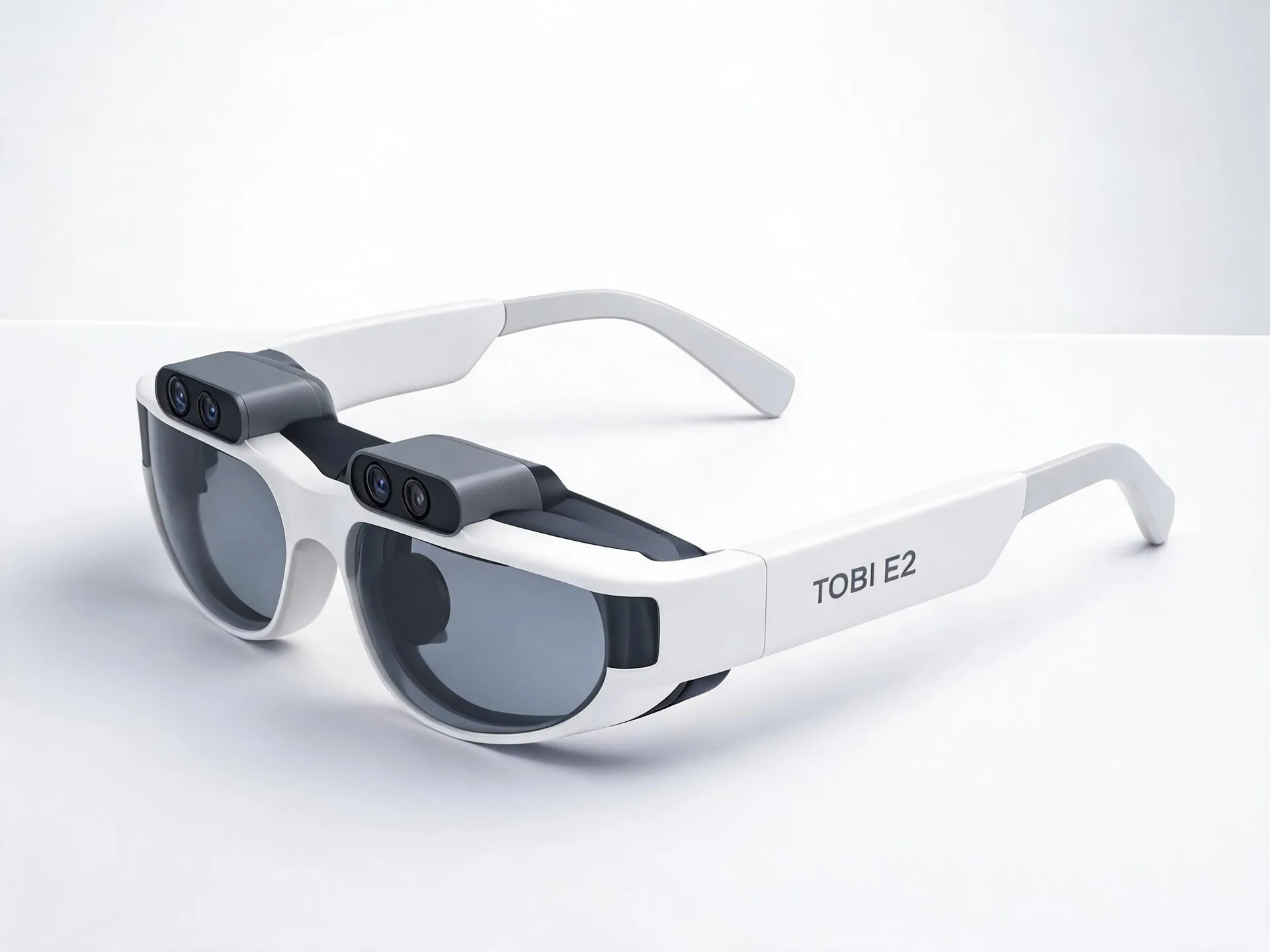
When an embodied-AI team says "we open-sourced the SDK," what readers really want to know is not whether the repository is public, but whether, after cloning, they can obtain a timestamped, trainable and rejectable binocular timeline within reproducible steps. TOBI exposes the recording capability of the E2 binocular capture headset through china-langhui-ego/e2-sdk: a C recording API (libsxr_recorder), dual-channel HEVC/fMP4 and 800 Hz IMU synchronization. This article lays out, in engineering order, the gates from git clone to the first trainable sample, to avoid misreading the README as a marketing page.
First lock down the authorities: repository, LICENSE and README version
The entry point is fixed at https://github.com/china-langhui-ego/e2-sdk . Recommended command: git clone https://github.com/china-langhui-ego/e2-sdk.git . The first thing to do after cloning is not to modify code, but to record the commit, submodule status, LICENSE text, and the host and device version matrix declared in the README. In open-source collaboration, version drift causing "it compiles on my machine but can't record on yours" is often more time-consuming than API design flaws.
Treating the README as the primary authority means that, in case of conflict, the repository documentation and the written specifications in the delivery package take precedence over third-party blogs or verbal commitments. If you also hold a commercial delivery package, you should establish a mapping table between open-source commits and delivery package versions, to prevent algorithm engineers from integrating against the GitHub tip while production engineers accept against an old ROM.
The licensing boundary warrants a separate internal note: to what extent are training, distillation, redistribution and secondary delivery to customers each permitted? Many teams ignore the LICENSE during the pilot phase and only patch it during scaled procurement or financing due diligence, at very high cost.
For security and compliance, the cloned mirror should land in the company's permitted code area; do not accidentally push local changes containing internal network addresses to a public fork. The discipline of read-only starting out matters more than rushing to submit a PR.
Environment setup: from the dependency matrix to a minimal compilable example
Install and compile the dependencies and example project according to the README. It is recommended to reproduce in a clean container or a dedicated workstation, rather than relying on a development machine that has been contaminated by other XR stacks but happened to compile. The minimum goal is: the sample compiles, the device is recognized, and one short recording can be written to disk.
Debug materials must not be mixed with source code. The E2 debug environment, the mobile app and SDK, the device SDK, the headset ROM, the user manual and the sample videos each belong to different Google Drive and Baidu Netdisk packages; the source repository handles interfaces and builds, while the network-disk packages handle firmware and integration binaries. Mixing them makes it impossible to answer which version is actually running right now.
Recommend fixing in the internal knowledge base: the clone directory, toolchain version, ADB authorization policy, storage path quota, and which tag to roll back to on failure. Writing these as a checklist a newcomer can complete in half a day is what enables producing the first timeline independently.
If build warnings are treated as errors, first distinguish third-party header noise from recorder-related warnings. Grade the warnings to avoid pointless perfectionism blocking integration, and to avoid burying genuine API misuse in a flood of logs.
libsxr_recorder: Treating recording as a testable contract
One core of E2's open-source value is the C recording API (libsxr_recorder). For embedded and algorithm integration, an API being callable is not enough; the start and stop semantics, buffering strategy, error codes, dropped-frame notifications and metadata write timing must be explicit. Put these into contract tests: repeatedly start and stop with short sessions, asserting file integrity, monotonic timestamps and left/right pairing.
A trainable timeline requires the left and right channels and the IMU to be consumable by the same reading script. If the left and right channels are packaged in separate fMP4 files, there must be a machine-readable association key, such as session ID, starting monotonic clock and frame index mapping. Two channels that look synchronized but lack an association key degrade into a soft-alignment guessing game on the training side.
Incorporating the recording contract into continuous integration does not require a real device to be permanently resident: golden sample packages can be used for reader-side assertions, with nightly smoke tests on the real device. If the open-source repository updates recorder behavior, a contract failure blocks the upgrade.
For parallel acquisition by multiple operators, session naming must prevent collisions. A timestamp plus device serial plus task number is recommended. If the open-source example uses fixed filenames, production scripts must rewrite them, or silent overwrites will occur.
Dual-stream HEVC/fMP4: container selection and training-side ingestion
Dual-channel HEVC written to fMP4 is a trade-off among bandwidth, image quality and the ecosystem toolchain. For egocentric binocular capture, the key is not the advertised bitrate, but whether keyframes are discernible within the contact window, whether the time base is rewritten by the player or transcoder, and whether audio/video tracks, if present, introduce an additional clock domain.
A common pitfall in training pipelines is adding an extra re-encoding layer for storage convenience. Re-encoding may lose precise timestamps or alter frame timing. The correct approach is: raw fMP4 files serve as read-only assets; derived formats explicitly declare whether they preserve timing; quality control is based on the original session.
It is recommended to specify in the data card the encoding tiers, resolution, target frame rate, actual frame rate distribution, and whether higher bitrate strategies are enabled for key tasks. Without these fields, the model team cannot explain domain shifts across batches.
Storage planning should be estimated by effective hours rather than raw hours. Segments rendered unusable by dropped frames, overexposure or loose wearing should be removed before ingestion, and rejection reason codes retained to feed the flywheel for improving operating procedures.
800 Hz IMU: how high-frequency inertia pins down visual causality
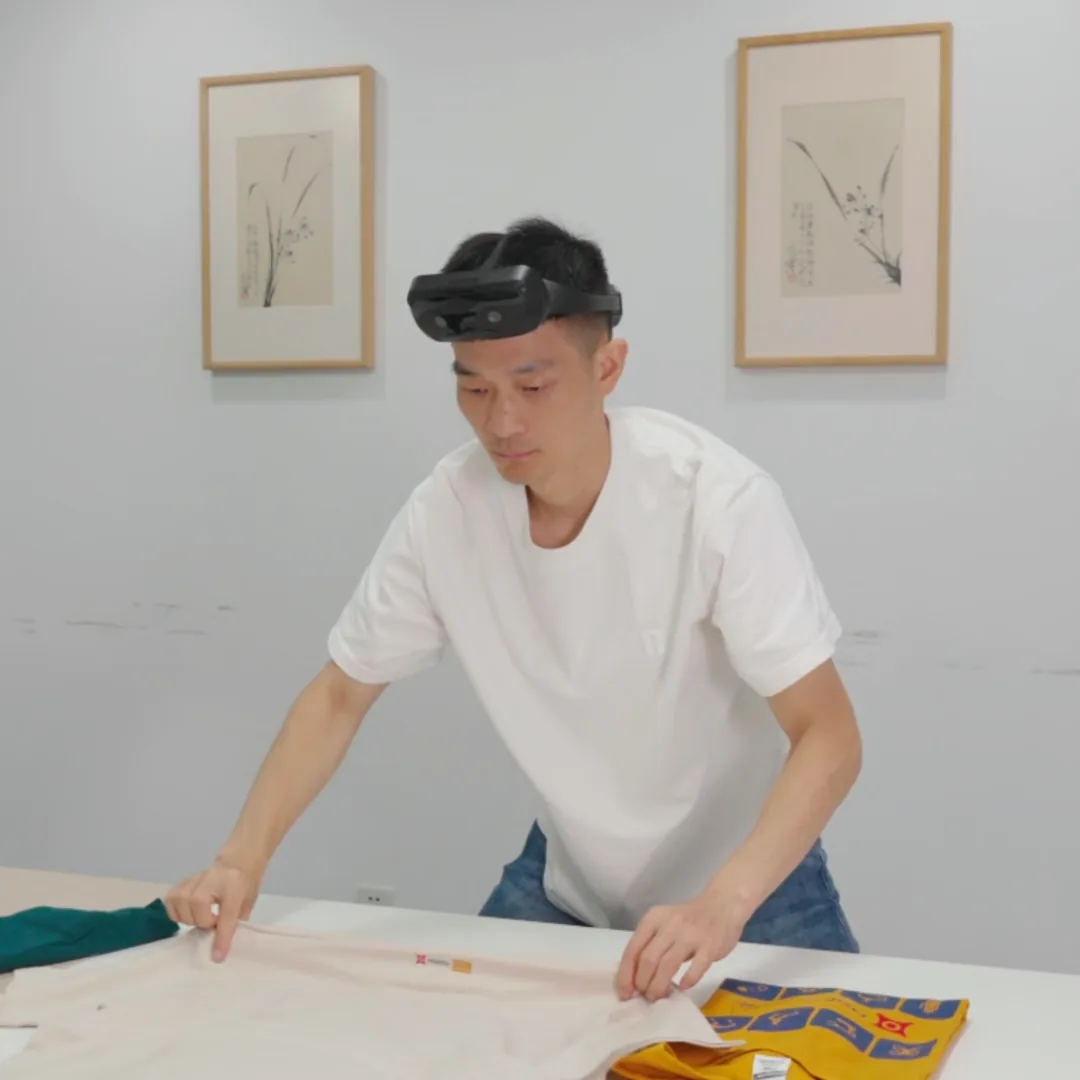
The significance of an 800 Hz inertial measurement unit is to provide dense evidence of motion between visual frames. If the IMU timestamps are not aligned with the video time base, high frequency instead becomes high-frequency noise labels. An open-source stack should expose the IMU clock source, units, coordinate frame, and the method of alignment with frame time.
Algorithm-side acceptance can use a simple experiment: three segments of stationary, constant-speed head rotation and rapid nodding, checking whether the angular velocity integral and the visual optical flow direction have the same sign and whether the phase is stable. You do not need to run full localization and mapping from the start to detect timing or axis errors.
Write an IMU health score into the session metadata: sample drop rate, gap histogram, saturation count. During training, anomalous segments can be down-weighted or rejected, rather than letting the diffusion policy fit sensor faults.
If a wrist camera or an external third-person viewpoint is introduced later, the inertial and multi-camera systems should share the same interpretable time semantics. E2 open source is a stereo entry point, but the timeline language should reserve for multimodal from day one.
Acceptance checklist for the first trainable sample
"Trainable" does not mean the loss can decrease; it means the supervision semantics are trustworthy. Write the following items as a sign-off sheet, signed jointly by the recording lead and the algorithm interface owner, as the ticket for entering small-scale self-acquisition.
- Left- and right-eye files are paired, with matching session IDs and a start-time difference within the agreed threshold;
- Inertial files are readable, timestamps are monotonic, and units and axis orientations are documented;
- At least one short task containing contact or rapid head movement, for convenient manual inspection of phases;
- Calibration or extrinsic parameter version number written into metadata;
- Open-source license and operator authorization traceable;
- The reading script runs through in a clean environment in one pass, with no manual path modifications required.

Material packages, role division and small-scale self-acquisition
GitHub solves how to build and how to call the interfaces; the network-disk materials solve which firmware version, which mobile app version and which user manual to use. When the first timeline fails, troubleshoot layer by layer: power and wearing, app configuration, firmware, recording parameters, host export. Do not suspect the algorithm before verifying the firmware version.
The sample video package is used to align what normal looks like. Treat it as a visual regression baseline: record equivalent motions under new firmware and compare exposure, motion blur and left/right synchronization by eye. If an open-source team releases only source code without samples, integration cost multiplies.
Recommend defining a three-way role split: device firmware owner, recording software owner and data quality owner. Without a signatory, the first timeline will bounce back and forth in a state where everyone can explain it and no one is accountable.
After the first sample passes, do not immediately chase hour counts. First fix the task script, lighting, operator, storage and naming. Collect twenty to fifty consecutive samples under the same procedure, observe whether the dropped-frame and inertial health distributions are stable, before talking about scaling people and scenarios.
Common failure modes and release gates
Build fails: usually the toolchain or dependencies were not locked per the README; use a container to pin them. Recording works but left/right are out of sync: check whether post-hoc soft alignment was incorrectly applied, or whether the time base was damaged by re-muxing during export. Inertial curves jump erratically: first confirm units and axis orientation, then check for batched delays caused by buffering.
Training loss looks good but real-device contact is poor: go back and check the bitrate in the contact window and whether wrist modalities are needed, rather than blaming model width first. Write the clone commit hash, material package checksum and sample reading hash into the release gate; no ad-hoc package may enter the training cluster.
In external communications, distinguish open-source availability from project acceptance scope: the former helps the ecosystem, the latter protects both parties. The TOBI documentation page places the device software development kit alongside written specifications precisely as this governance stance.
Print this checklist and post it at the integration workstation. The victory of open source is not in star counts, but in whether a stranger can follow the same steps and obtain the same trainable timeline.
Engineering Deep Dive, On-Site Access Control, Q&A and Appendix Requirements
Around "binocular", it is recommended to report progress and risks separately in the project weekly report: one sentence each for verified facts, unverified assumptions, and next-step experiments. This way, open-source integration will not stop at feeling good, but will stop at inspectable evidence. For external collaborators, the same format can be used for synchronization, reducing wasted meeting time.
During change windows involving "libsxr_recorder", freeze parallel large-scale changes: first complete small-scope regression, then allow multi-person commits. The biggest risk in hardware open source is multiple variables changing at the same time. The regression package should include shortest-path success samples and known failure samples to ensure failures are reproducible.
Write "fMP4" into the first-week tasks for new hires: not reading slogans, but personally completing an operation and submitting a record screenshot or log summary. A low pass rate indicates a documentation gap, not just the new hire's ability. Documentation gaps should flow back into the repository or materials ledger.
Establish a counterexample library for "800Hz IMU": next to each correct practice, place the incorrect practice and its consequences. Field personnel remember counterexamples more deeply than they remember clauses. The counterexample library is pruned and updated once per quarter, kept in sync with the current firmware and toolchain.
If metrics related to "E2 firmware" drift, first perform layered diagnosis: device, host, network, procedure, human factors. Directly jumping to changing models or hardware selection is prohibited. Layered diagnostic records are retained for ninety days for audit and review.
When demonstrating "left-right eye association keys" externally, prioritize showing access control and logs rather than just the final image. Decision-makers trust reproducible processes more. Demonstration scripts should be versioned to avoid inconsistent commitments caused by improvisation each time.
The person responsible for "container timing guarantees" must have clear veto authority and an escalation path. A quality role without veto authority is decoration. The escalation path is written into the support manual so it can be executed even on holidays.
When measuring "short worn recordings," do not rely solely on a binary success/failure metric; instead, retain the distribution: the 50th percentile, the 95th percentile, and the extreme tail. The tail determines production pain. Distribution charts brought to weekly meetings drive resource allocation more effectively than averages.
When the "read script" requires cross-team collaboration, first write a one-page interface: inputs, outputs, timeouts, failure codes, owner. An interface is cheaper than a consensus meeting. Interface changes go through a short review; avoid private-chat decisions that affect the whole system.
When reviewing historical incidents involving "LICENSE", use a unified template: phenomenon, affected sessions, root cause, fix, and whether re-collection is needed. The template must distinguish between sporadic and systemic issues. Systemic issues must be fed back into firmware, documentation, or procedures, rather than relying on individual heroics.
In budget discussions, break the cost of "dataset package checksum" into tool time, human time, and rework time. Looking only at tool purchase price underestimates total cost of ownership. The broken-down numbers better support investment in open-source governance.
Keep the minimal runnable example related to "baseline geometry" always runnable: a broken example equals broken documentation. Continuous integration runs the example nightly; failures block merges. The example is also the fastest path for customer onboarding.
Regarding "frame-drop marking," it is recommended to track progress and risks in a dedicated section of the project weekly report: one sentence each for verified facts, unverified assumptions, and next-step experiments. This way, open-source integration will not stall on a sense of satisfaction but on inspectable evidence. The same format can be used to sync with external collaborators, reducing wasted meeting time.
During change windows involving "session naming," freeze parallel major changes: complete small-scale regression first, then allow multi-person submissions. Hardware open-source is most vulnerable when multiple variables change simultaneously. The regression package should include shortest-path success samples and known failure samples to ensure failures are reproducible.
Write "wrist extension reservation" into the new hire's first-week tasks: not reading slogans, but personally completing one operation and submitting a record screenshot or log summary. A low pass rate indicates a documentation gap, not just new-hire capability. Documentation gaps must flow back into the repository or dataset ledger.
Build a counterexample library for "clean container compilation": correct practices must be accompanied by incorrect practices and their consequences. Field personnel remember counterexamples more deeply than they remember rules. The counterexample library is pruned and extended once per quarter to stay in sync with the current firmware and toolchain.
If metrics related to "export consistency" drift, first perform layered diagnosis: device, host, network, procedure, human factors. Do not jump directly to changing the model or hardware selection. Layered diagnosis records are retained for ninety days for audit and retrospective.
When demonstrating "contact window bitrate" externally, prioritize showing access control and logs rather than only the final image. Decision-makers trust repeatable processes more. Demo scripts are versioned to avoid inconsistent commitments caused by improvisation each time.
From clone to first timeline, it is recommended to manage expectations at the pace of "half a day to read, one day to record, three days to train": read the README, LICENSE, and dataset ledger within half a day; complete a short recording and visual inspection within one day; run the read script and train a very small baseline within three days, using contact or head-turn tasks to verify whether the timeline is learnable. Writing this pace into the project weekly report exposes risks better than only reporting "repository cloned."
Left and right eye geometry and baseline should be clearly stated in the data card. Even if the open-source phase prioritizes recording connectivity, subsequent stereo or depth-related experiments still depend on these fields. Missing fields will only surface as problems in the second month, by which time sessions have piled up and the cost of re-labeling is far higher than writing three extra lines of metadata on the first day.
For battery and storage, open-source examples often assume ideal conditions. Production self-collection requires pre-shift checks: remaining battery, available space, lens cleanliness, strap tightness. Write the check results into the session sidecar log so quality control can distinguish device problems from task problems.
If exporting via Wi-Fi or cable, record the export tool version and time spent. Repackaging during the export phase is a high-risk area for timestamp corruption. Where checksums can verify file consistency between device and host, prioritize implementing a consistency gate.
For security, the open-source repository may contain example configurations. It is strictly forbidden to commit real production service addresses, accounts, or internal network topology back to the fork. Use path filtering when syncing the internal fork with upstream to prevent secrets from flowing back.
When integrating with the mobile application, clarify who owns the authority to "start recording." Simultaneous triggering from both ends causes session fragmentation. The procedure should specify a single control plane and document that choice in the operations manual.
For the annotation team, explain in advance how binocular files are paired for labeling. Sending the wrong eye or swapping left and right will corrupt stereo and hand-eye related supervision. The open-source read script should provide a left-right preview collage to reduce the chance of human error.
If you plan to mix-train E2 data with E6 data, first unify timestamp units and coordinate system conventions before discussing model architecture. When two SDKs coexist in open source, the most expensive part is not compilation but the two metadata dialects.
If the procurement side uses "already open-sourced" as a reason for price reduction, they should simultaneously require reproducible steps and sample hashes. Open source without hashes only reduces acquisition friction and does not automatically reduce integration risk.
Finally, conduct a blind test: use a clean computer and follow only the documentation pages and README to see if the first timeline can be reproduced. If reproduction fails, the documentation is incomplete — this is not an executor capability issue.
Write the E2 open-source integration as an internal service level objective: complete clone and build within one working day, complete a short recording within two working days, and complete the read script and micro baseline within five working days. Overdue is not about blaming individuals but triggering investigation of documentation or environment defects. Service levels make open-source onboarding manageable.
The left-right eye association key design should include the device serial number, session start monotonic time, and task ID. Using only filename timestamps will cause problems in daylight-saving-time scenarios or across time zones. Once the association key is determined, training scripts are prohibited from using heuristics to guess left-right correspondence.
Create a Chinese reference table for the error codes of libsxr_recorder and post it in the integration group announcement. When field engineers cannot understand the English enums, they will use the restart method to mask the real storage-full or permission problems. The reference table is also an excellent PR candidate for open-source documentation.
Short recording samples should cover: stable indoor light, strong backlight near a window, fast head turns, and reaching to grasp. The four types of actions respectively stress-test exposure, motion blur, inertial phase, and binocular overlap. Recording only "standing and talking" cannot prove trainability.
After exporting to the host, immediately compute the checksum and compare it with the device-side manifest. Any inconsistency should first be treated as an incident, not as "probably close enough." A consistency gate can catch hidden repackaging.
If the team uses a Windows workstation for compilation, keep a separate Linux reading machine to avoid "only the compiler's environment can read." Cross-environment failures indicate undeclared dependencies.
Include the disk write cost of the IMU at eight hundred hertz in storage planning. High-frequency text or binary logs may fill small storage before video does. Planning errors will manifest as unexplained stops during long recordings.
Research use permitted by an open-source LICENSE does not automatically cover portrait authorization for on-site customer footage. Two tracks run in parallel: the code license and the data collection consent form. If either is missing, the dataset cannot be delivered externally.
When the first timeline is used for a paper or external demonstration, a de-identification process is still required, and de-identification must preserve timing. Open-source success does not equal compliance success.
Establish an "E2 Golden Ten Minutes" course: from power-on to completing a short recording within ten minutes. The course video and documentation cross-verify each other; new hires who only look at one are likely to miss steps.
Before integrating with the wrist camera, first ensure the head-mounted binocular timeline is clean. Overlaying the wrist on a dirty base modality only amplifies the troubleshooting space.
Review upstream commits once a month to assess whether to follow. A long-term drifting fork without assessment becomes private debt.
If the build dependencies require an intranet mirror, write the mirror address in a private appendix, not in the public commit to be pushed.
The procurement-friendly framing: open source reduces integration uncertainty, but does not lower the bar for hardware and data quality. Prove quality with gating.
Final acceptance is based on "an unfamiliar engineer completing it following the documentation." Completion by a team veteran only proves that veterans exist.
Q: After cloning, must I use the latest commit? A: The pilot should lock a tag or commit number that has been validated by samples; chasing the latest requires regression testing to avoid sending upstream experimental changes directly into production.
Q: Without a device, can I prepare the reading side first? A: Yes, you can first run read assertions using sample videos and the golden package, but the first trainable timeline still requires a closed loop with real-device short recording.
Q: Is it normal for left and right eye file sizes to differ significantly? A: It may be bitrate fluctuation or an anomaly on one channel; check the actual frame rate and dropped-frame markers rather than just whether it plays.
Q: What if the IMU frequency declaration does not match the file line count? A: First check units and dropped samples; then check whether the export was truncated. If it does not match, it must not be ingested.
Q: Can software timestamps alone be used to align binocular data? A: The goal of the open-source stack is verifiable timing semantics; software alignment can serve as diagnostics but cannot replace the recording contract.
Q: Will converting the container to a common training format lose timing? A: It may. Derived formats must declare timing preservation results, and the original session must serve as the quality control baseline.
Q: How to avoid overwriting when multiple people collect simultaneously? A: Add the device serial and task number to the session name; fixed filenames are prohibited for production.
Q: Must all compilation warnings be eliminated? A: Handle them by severity: treat recorder-related warnings as errors, and third-party noise may be suppressed, but the reason for suppression must be documented.
Q: Does the LICENSE permit commercial training? A: The repository LICENSE text is authoritative, and data collection authorization must be reviewed separately; the two are not interchangeable.
Q: How large a model should be trained on the first timeline? A: A very small baseline is sufficient to verify learnability; the goal is to validate the data, not to chase benchmarks.
Q: How does loose wearing manifest in the data? A: It may cause extrinsic-level geometric jitter and motion blur; pre-shift checks and rejection reason codes must cover this.
Q: What should be noted when co-training with E6 data? A: First unify timestamp units and metadata dialects, then discuss network architecture.
Q: Does slow export affect synchronization? A: Export does not alter the capture clock, but re-muxing may change the time base; consistency validation is required.
Q: Can GitHub alone be used without the cloud drive materials? A: Source code is a starting point, but firmware and application versions may not be aligned; the materials package remains essential for production.
Q: How is reproducibility demonstrated? A: Operate on a clean machine following the documentation; if it fails, fix the documentation rather than relying on trained personnel.
Q: What frame drop rate is acceptable? A: Set the threshold by task and write it into an appendix; contact tasks are usually stricter.
Q: Is stereo calibration required for training? A: It depends on the algorithm; however, versioned intrinsic parameter fields are recommended even if not used at present.
Q: How long should a short recording be? A: One to three minutes is sufficient for acceptance short recordings; extend the duration only after the structure is stable.
Q: What if there is no documentation for error codes? A: Open an Issue to supplement the documentation and temporarily record it in an internal reference table; do not rely on guessing.
Q: Can compilation be done in a virtual machine? A: It can be attempted, but USB passthrough and debug bridging often have issues; a physical machine is still recommended for on-device integration testing.
Q: What are the minimum fields of a data card? A: Session number, device, submission number, dataset package version, frame rate distribution, IMU health, license and authorization.
Q: If training loss is good but real-device performance is poor, could it be the timeline? A: Possibly; first conduct phase sensitivity experiments, then modify the model.
Q: How do you track open-source update frequency? A: Upstream changes are evaluated monthly, and upgrades are performed after regression testing when necessary.
Q: How to sync an internal fork? A: Periodically rebase or cherry-pick, and run contract tests.
Q: What to show customers in a demo? A: Show access control, logs, and short recording playback, not just appearance rendering.
Q: Who signs off on the first timeline? A: The recording lead and the algorithm interface owner sign off jointly.
Q: Where is the rollback point after a failure? A: The pre-recorded label submission and the matching firmware package.
Q: How to avoid transferring temporary packages via chat? A: Enforce ledger numbering; no troubleshooting without a number.
Next Step: Moving from an Open-Source SDK to an Acceptable Joint Integration
If your team is evaluating the E2 open-source SDK and the dual-directory pipeline, first complete cloning, materials package verification, and host-side integration testing based on the GitHub README and delivery package, then write synchronization, upload, calibration, and licensing boundaries into the project acceptance appendix. The open-source repository helps you get started quickly; written specifications determine the delivery scope.
Go to Developer Docs · E2 / E6 Device SDK Get the clone command, Drive / Baidu materials, and Linux integration instructions, or directly Contact Technical Integration Align versions, samples, and acceptance fields.