EgoAVU (CVPR 2026) and related egocentric audio-visual work point out that existing models are vision-biased and often cannot match which part of the frame the sound comes from. Therefore TOBI retains audio in samples and writes the offsets. The E2 public sample specifies 16 kHz stereo, approximately 97 ms later than the left-eye exposure.
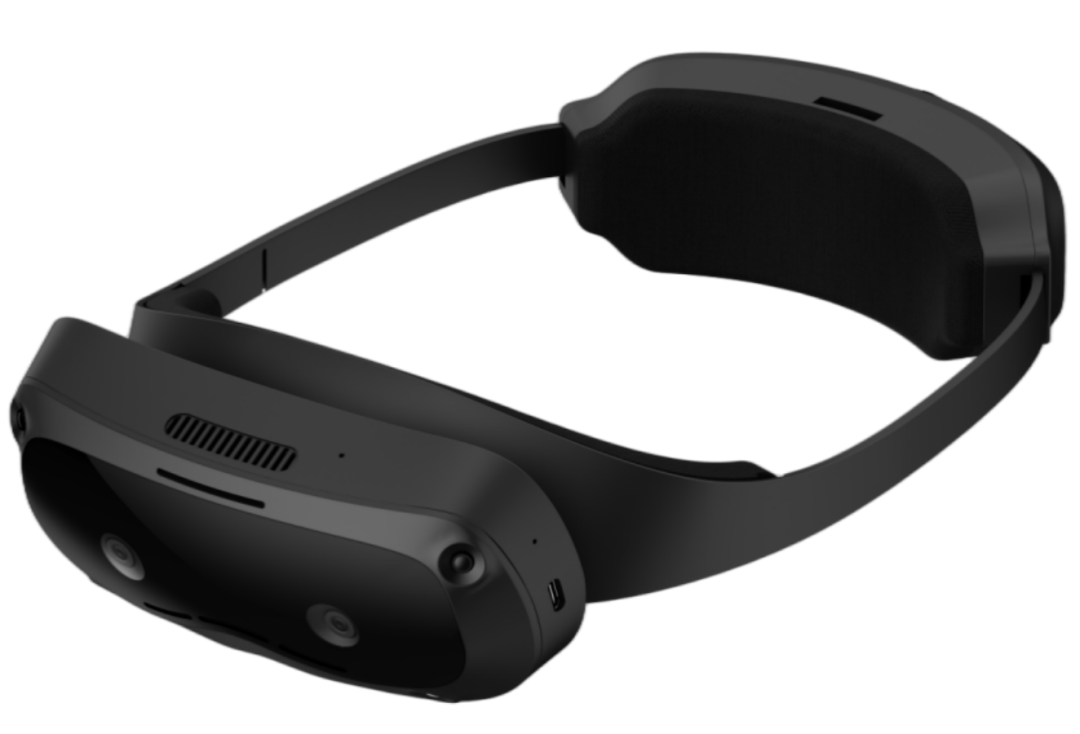
Why the Offset Must Be a Field
Saying "probably a bit later" verbally cannot be trained. Offsets are written into samples in milliseconds and must be consistent with time_sync so that evaluation can be reproduced.
Left and right audio channels, silent segments, and ambient noise notes affect whether audiovisual questions can be addressed; they should appear in the documentation.
How to cite literature scores
The improvement margins reported by EgoAVU belong to the original authors' experimental setup. News citations explain "why audio must be retained and offsets written," without claiming that TOBI reproduces their relative improvements.
Optional discard.Buyers may choose not to use audio conditioning during training; however, this does not justify removing the statement about the existence of the offset field.
Authorization
Recording authorization is as important as venue authorization. Unauthorized recordings must not enter the resaleable library.
Acceptance and Communication Checklist
- Verify that the offset unit is milliseconds.
- Verify that left and right channels are declared.
- Verify consistency with time_sync.
- Verify that silent segments are marked.
- Check the environmental noise notes.
- Verify that time-stretching has not been misused to fake synchronization.
- Verify that training can optionally discard audio.
- Verify that evaluation separately tests audiovisual questions.
- Verify that authorization includes audio recording.
- Verify that literature citations are labeled as not being results from this segment.
How the Newsroom Writes This Topic
External communications and internal training should reference the same page:Tiered Data and Delivery Sample. If roadshow pages, posters, channel articles, or promotional content conflict with the sample fields, errata should be made based on the openable fields of the official website samples, not overridden with louder slogans.
The long-term value of audiovisual fields
Even if the buyer's current model does not consume audio, the offset field should still exist: tomorrow's audiovisual benchmarks may require it. Deleting a field damages the asset more than adding one. The official recommendation is: retain, declare, optionally use.
Common Communication Pitfalls
In communications related to "Why Audio Offsets Are Written into Samples: A Comparison with EgoAVU and Egocentric Audiovisual Literature," common misconceptions include: stating offsets verbally; deleting fields during training; citing literature scores as results from this segment. The correction is simple: return to the tiered data page and delivery samples, open the links, and write the field names into the requirements document and acceptance checklist. If news and sales materials cannot point to an openable sample, they should be paused until samples and attachments are aligned.
The cost of misconceptions is not just rework. Wrong supervision enters model weights, wrong authorization enters compliance risk, wrong catalog entries enter engineering debt. Official news writes out misconceptions to reduce industry collaboration costs, not to blame any particular type of buyer.
Suggested field comparison with the official website page
It is recommended to open the three-level pages side by side in a browser: tiered diagram cards and pipeline, four delivery sample cards, and related articles in this series. Use pen and paper or a table to list: depth, directory, key file names, whether optional, and acceptance method. Only after the table is complete should you decide on in-stock hours and equipment selection. Reversing the order makes it easy to purchase the wrong package.
If your team uses an internal wiki, paste the official website link rather than paraphrasing screenshots. Screenshots go out of date; the samples and specifications pointed to by the link will be updated. When updates occur, the version number and announcement take precedence, and the acceptance version should be locked in the order.
During cross-departmental review, the algorithm lead confirms the training read path, the data lead confirms indexing and validity, legal confirms authorization and redaction, and procurement confirms depth and hours. Four people checking against the same field table is closer to a deliverable state than four people each writing a paragraph of adjectives.
Field table example and acceptance dialogue
A dialogue that can be read aloud at a review meeting is as follows. Procurement asks: What is the depth of this order? Answer: Write D2, or D2+D3, or including optional D4, and keep it consistent with the quote. Algorithm asks: Where do we read for training? Answer: The native sources under device/ and the time synchronization under indexes/; previews do not enter the training columns. Data asks: What about missing columns? Answer: Leave them blank; do not fill in fake values. Legal asks: Authorization and redaction? Answer: The contract attachment states the scope; estimates state the method. QA asks: How do we reject? Answer: According to the validity gate and the list of failure segments. Writing this dialogue as meeting minutes is closer to delivery than writing it as a paragraph of adjectives.
Field example (copyable into a requirements sheet): depth; device model and serial number strategy; scenario and secondary task; number of hours; whether narrative is included; whether estimates and method are included; whether audio offset is required; validity gate version; authorization number; whether failed attempts are separated; delivery window; acceptance contact. Every cell should point to a row in a sample page or attachment. If any cell can only be filled with "TBD," the order has not yet reached a scale-ready state.
Boundaries with Adjacent Topics
This article focuses on "Why Audio Offsets Are Written into Samples: A Comparison with EgoAVU and Egocentric Audiovisual Literature" and does not replace the details in adjacent articles. If field-level questions remain after reading, please jump to the corresponding depth or pipeline article in the series rather than adding verbal explanations here. The series navigation links provide the previous and next articles for continuous reading; the in-stock and equipment entry points serve readers who want to act immediately.
Boundary awareness protects the reader's time: the main roadmap article covers the map, the D1 article covers the raw footage, and the D2 article covers alignment; the same ultra-long general essay should not be copy-pasted into every article. However, each article must still carry its own complete compliance section and checklist, so that a single article can be independently forwarded to a customer email without being incomplete.
Publication and correction mechanism
This article is updated in step with the version of the tiering page on the official website. If sample links, format labels, or gating descriptions change, the newsroom should publish a correction or replacement article under a new version number, while keeping an understandable title continuity in the news list. The acceptance version locked in a customer contract does not change automatically because of a news update; any change must go through written confirmation.
Errata feedback based on the field table is welcome: please specify the page anchor, sample file name, and expected field. Modification requests based solely on subjective impressions asking to "make it stronger" are not welcome — if "stronger" cannot be opened, it cannot enter official news.
Beijing Langhui Technology Co., Ltd. accepts embodied AI collaboration inquiries through the address and hotline disclosed on its official website. For technical roadmap discussions, please include the target paradigm, depth, and scenario tasks; material requests and quotations are subject to written confirmation. This article may be forwarded; when forwarding, please retain the compliance section and source link to avoid it being excerpted into absolute promotional claims.
Readability and layout notes
This draft uses the official newsroom layout: lead block, entry buttons, tiered subheadings, checklist card, compliance notice box, and series navigation. The checklist uses short sentences to avoid copy-pasting the same set of phrasing; images include captions to avoid large unexplained images interrupting the reading flow. On mobile, the single-column body width is maintained for easy forwarding by frontline procurement and algorithm colleagues.
A Ten-Minute Path for First-Time Readers
Minutes 1–2: Open the tiering page and identify the four card types D1 through D4 and the pipeline arrows. Minutes 3–4: Open the delivery samples and click at least one real link among the four cards to confirm that it opens. Minutes 5–6: Return to this article's checklist and tick the applicable items into the requirements draft. Minutes 7–8: Decide whether you need spot hours or equipment, and open the corresponding entry point. Minutes 9–10: Forward the compliance section together with the source links to colleagues to avoid distortion from partial excerpts.
If after ten minutes you still cannot articulate the depth and scenario tasks, it means the project initiation information is insufficient; you should first complete the target paradigm and authorization scope rather than continuing to purchase undefined hours. The purpose of official news is to turn those ten minutes into a repeatable organizational action, not a one-time reading experience.
Around "Why Audio Offsets Are Written into Samples: A Comparison with EgoAVU and Egocentric Audiovisual Literature," remember three takeaways: fields must be openable, responsibilities must be layered, and commitments must be acceptable. Achieving these three points brings the technical roadmap back from a poster to collaborative engineering and contract language. Without them, no matter how long the article is, it is merely decoration.
Method notes: how to use it in real operations
Place "Why Audio Offsets Are Written into Samples: A Comparison with EgoAVU and Egocentric Audiovisual Literature" back into the operational context rather than leaving it at abstract nouns. Take "supermarket shelf restocking" as an example: first confirm whether the goal is VLM description and question answering, or whether real-robot post-training is needed; then decide whether the depth stops at D2 or must include D3 narrative; if auxiliary points for hand entry into containers are needed, then evaluate whether to purchase D4. The same logic applies to "back-kitchen food preparation" and "wire harness assembly": the task names differ, but the field discipline is the same.
The method steps are recommended to be written as: define the paradigm → define the depth → open sample links to verify fields → write the requirements form → select spot hours or equipment → lock the acceptance version. If any step uses adjectives in place of field names, it should be sent back to the previous step. A team can run through these five steps in a single internal rehearsal; the rehearsal record is more useful than another meeting arguing about whether the data is good.
If a drill reveals that a sample cannot be opened, offsets are undeclared, the narrative is not from the wearer's perspective, estimates lack a method, or previews have leaked into the training path, this indicates that the topic has not yet reached a scale-ready state. The correct action is to fix the fields and attachments, not to increase marketing efforts. Official news spells out the method clearly so that customers and partners can collaborate using the same checklist.
For teams that already have a field table, this article's checklist can be mapped to an internal ticketing system: each item corresponds to an owner and a deadline. Until the mapping is complete, it is not recommended to present this topic as an external milestone poster. A collaborative technical roadmap always looks more like a checklist than a slogan.
One final organizational suggestion: write the link to this article and the tiering page anchor into the same chapter of both the new-employee handbook and the sales handbook, so that the two teams do not each hold their own verbal version. The day the fields are aligned is the day the marketing gains momentum.
The above methodology can be printed together with this article's checklist as the cover page of a project initiation review attachment. Simply note the official tiered page link and date in the upper right corner of the printout. This page can be archived together with the requirements document.
How a buyer review meeting is run
Around "Why Audio Offsets Are Written into Samples: A Comparison with EgoAVU and Egocentric Audiovisual Literature," it is recommended to split the review meeting into three segments: the first segment reads only public samples and field tables, prohibiting discussion of unpublished scores; the second segment assigns responsibilities item by item against this article's checklist; the third segment decides the depth tier and whether to purchase bypass capabilities. The meeting output should be a signable field alignment table, not a slogan-style summary.
Within 48 hours after the review meeting concludes, the meeting conclusions should be written back to the requirements document attachment and the internal work order status updated. If the conclusions conflict with the official samples, the openable samples take precedence, and both parties' data leads should be copied via email. Before the conflict is resolved, it is not recommended to proceed with expanded collection or equipment orders.
For projects requiring multi-department joint sign-off, this article can be used as a "common language" attachment: R&D reviews the fields, procurement reviews the media and acceptance milestones, and legal reviews the authorization and de-identification boundaries. Having all three parties sign in the blank spaces of the attachment results in less rework than three unrelated memoranda.
How to conduct spot checks after delivery
Post-delivery spot checks should cover three categories: whether files can be opened via the sample paths; whether key fields are non-empty and units are consistent; and whether narratives and estimates (if purchased) conform to the wearer's perspective and the declared method. The spot-check ratio and the non-conformance handling path must be written in advance in the order attachments to avoid ad-hoc negotiation after delivery.
A recommended fixed spot-check report template: sampling list, non-conforming items, handling conclusion, re-inspection date. The report can be archived together with links to this news series, forming a dual-track record of "public statement + order execution." The public statement is for external explanation; the order execution is for internal accountability. The two should not be merged into a single advertorial.
Procurement Alignment and Archiving Recommendations
When reading this article "Why Audio Offsets Are Written into Samples: A Comparison with EgoAVU and Egocentric Audiovisual Literature" alongside the "Solutions · Tiered Data" page, it is recommended to map the section headings to an internal review agenda: write the four items—native frame rate, index spot-check, manual annotation spot-check, and delivery sample link—as checkable items, and reference this article's publication date and page path in the order attachment to prevent drift between verbal commitments and written statements.
If your company already has data collection specifications, treat the field recommendations in "Why Audio Offsets Are Written into Samples: A Comparison with EgoAVU and Egocentric Audiovisual Literature" as an alignment table rather than a replacement table: first list existing fields, then mark which can be mapped to public samples on the tiered data page and which are internal extensions. Completing the mapping before expanding collection can reduce rework.
For cross-department collaboration, it is recommended that the data owner host the alignment meeting: R&D confirms the training interface fields, procurement confirms the delivery medium and acceptance milestones, and legal confirms the authorization and de-identification boundaries. The meeting minutes can directly cite the section "Why audio offsets are written into samples: comparing EgoAVU with the egocentric audiovisual literature" to reduce transcription errors from secondhand retelling.
After public pages are updated, historical orders are still governed by the signed attachments. If new guidance related to "Why Audio Offsets Are Written into Samples: A Comparison with EgoAVU and Egocentric Audiovisual Literature" needs to be synchronized to orders in execution, a change order should be processed with confirmation from both parties, rather than defaulting to the latest web copy.
For overseas teams, it is recommended to retain a Chinese-English field name correspondence and specify numeric units in the field descriptions. Around "Why Audio Offsets Are Written into Samples: A Comparison with EgoAVU and Egocentric Audiovisual Literature," the Chinese and English columns on the tiered data page should point to the same facts, avoiding divergent evolution of the two language versions.
Quality spot-checks should fix the sampling ratio and nonconformance handling path: full-batch rework, partial re-labeling, or downgraded delivery must be clearly written in the order attachment in advance. "Why Audio Offsets Are Written into Samples: A Comparison with EgoAVU and Egocentric Audiovisual Literature" provides the methodology; specific thresholds are locked by both parties in the order.
If tiered data is used for bidding or fundraising materials, please cite only public pages and verifiable sample links, and do not expand on unpublished model scores. Citations of "Why Audio Offsets Are Written into Samples: A Comparison with EgoAVU and Egocentric Audiovisual Literature" should be traceable to the page date and version number.
Attachments: contact info · WeChat QR code · requirements form
Beijing Langhui Technology Co., Ltd. (TOBI) welcomes technical discussions based on the field specification sheet. Public entry points:Tiered Data · Delivery Sample · Annotation Workbench · News list.

Advertising law and delivery boundaries.This article is the official newsroom of Beijing Langhui Technology Co., Ltd. explaining the tiered data technical roadmap and procurement methodology. It is not performance advertising and does not constitute a commitment regarding model scores, delivery times, inventory, or success rates. The accuracy figures, improvement margins, and benchmark names in the papers belong to their original authors; the citations on this page are for comparison only and do not indicate that TOBI Technology has reproduced those scores, nor are they results of the capture described here. Tradeable hours, annotation tiers, media, pricing, and delivery times are subject to Embodied Data Page, Tiered Data Page Subject to the display at the time and the written order. Where portraits, venues, screens, or trade secrets are involved, authorization must be completed first; unauthorized footage must not enter the resale library.