Introduction
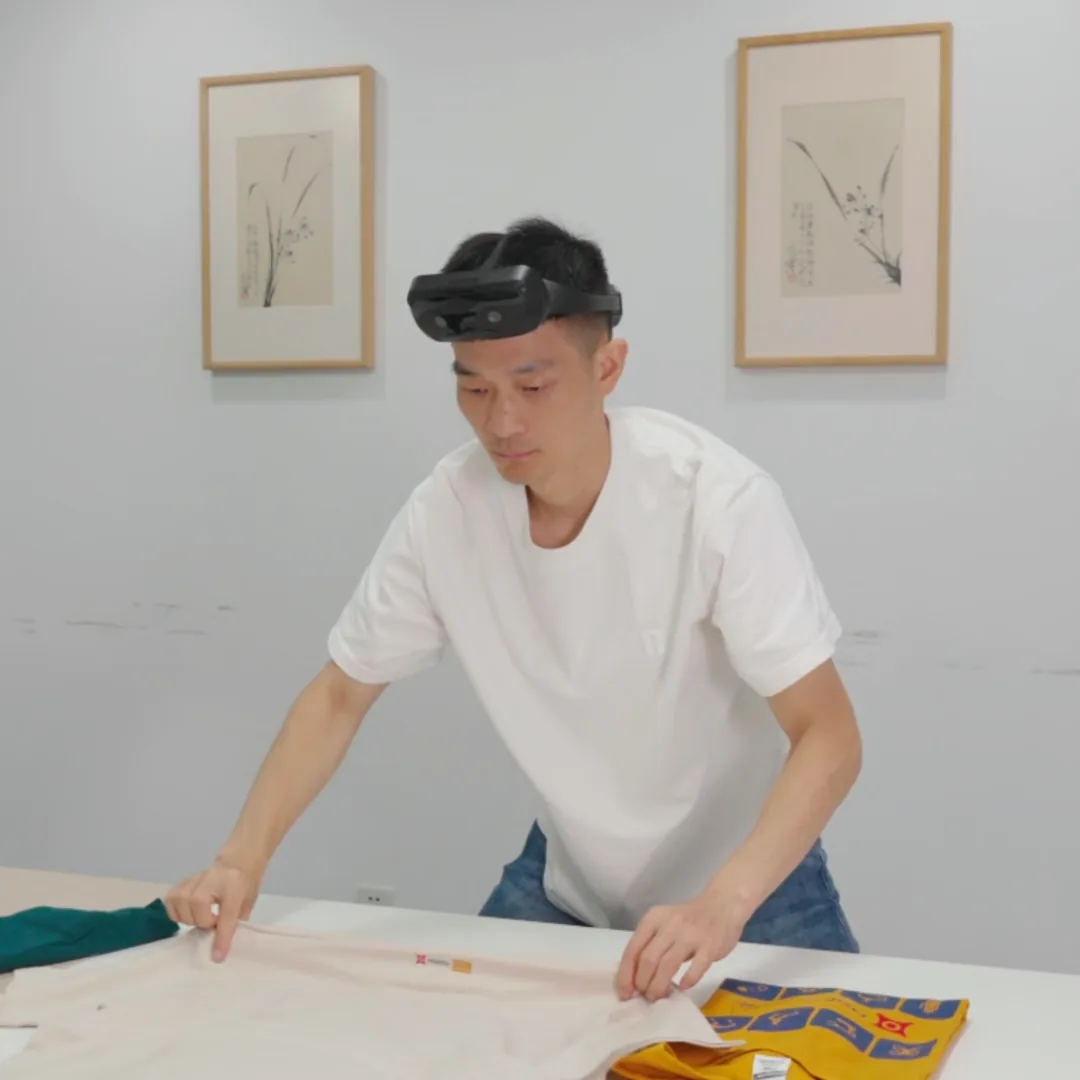
Human egocentric demonstrations are cheap, dense, and rich in common sense; real-robot data is expensive, strongly aligned, but hard to scale. Cross-embodiment transfer turns the former into a "skill package" consumable by the latter—not a simple video-to-joint-angle conversion, but a complete delivery of action-space normalization, viewpoint protocols, task graphs, and compliance licensing. As datasets begin to circulate in the form of procureable skill packages, the embodied supply chain will see a new division of labor: who handles production-grade capture, who handles transfer protocols, and who handles target-embodiment adaptation. This article discusses this division of labor, and how TOBI connects egocentric devices and data-market entry points onto the same value chain.
Demonstrations Are Not Skill Packages: Three Layers of Protocol Are Still Missing
Many teams believe that having human videos is enough to "train a robot." At least three layers of protocol are missing in between. The first layer is the perception protocol: how egocentric/exocentric/wrist cameras map to the robot's camera layout. The second layer is the action protocol: how human hand movements map to executable commands for grippers, dexterous hands, or humanoid arms. The third layer is the task protocol: whether success criteria, safety constraints, and permitted recovery strategies align with the target embodiment. Demonstrations without protocols are merely good-looking content, not procureable skills.
Algorithmic routes include end-effector pose space alignment, contact event intermediate representation, proprioception-conditioned VLA, and adaptation with a small amount of real-robot data. Regardless of the route, the timeline quality and dual-view geometry of the source data remain the upper bound. Dirty human data will cause transfer learning to learn non-transferable shortcuts.
EgoVerse, unified paradigms like ACE, and various cross-embodiment aggregate datasets discussed publicly are all attempting to reduce protocol friction. TOBI's positioning is not to claim ownership of these public assets, but to provide production-grade capture front ends and acceptable human egocentric/robot data products, enabling enterprises to assemble skill packages according to their own protocols.

Data Recipe: From Human Egocentric Demonstrations to Robot Policies
An executable recipe is usually layered. The base layer uses large-scale human egocentric data (including wrist and optional exocentric views) to learn contact common sense and phase structure; the middle layer uses aligned action representations or contact events to train transferable policy skeletons; the top layer uses a small number of real-robot trajectories from the target embodiment for calibration. When procuring, buy data by layer rather than buying "one big package hoping it does everything."
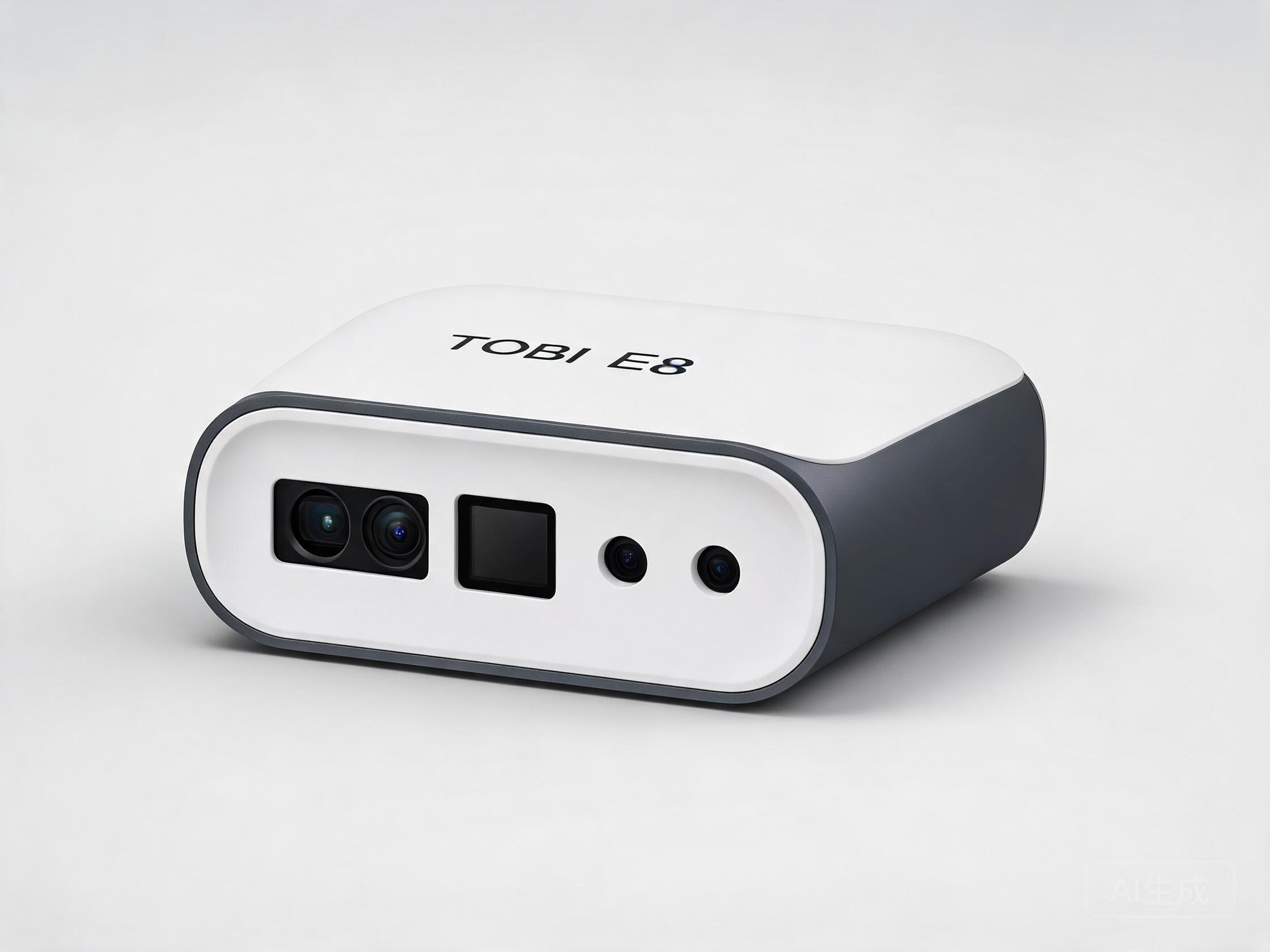
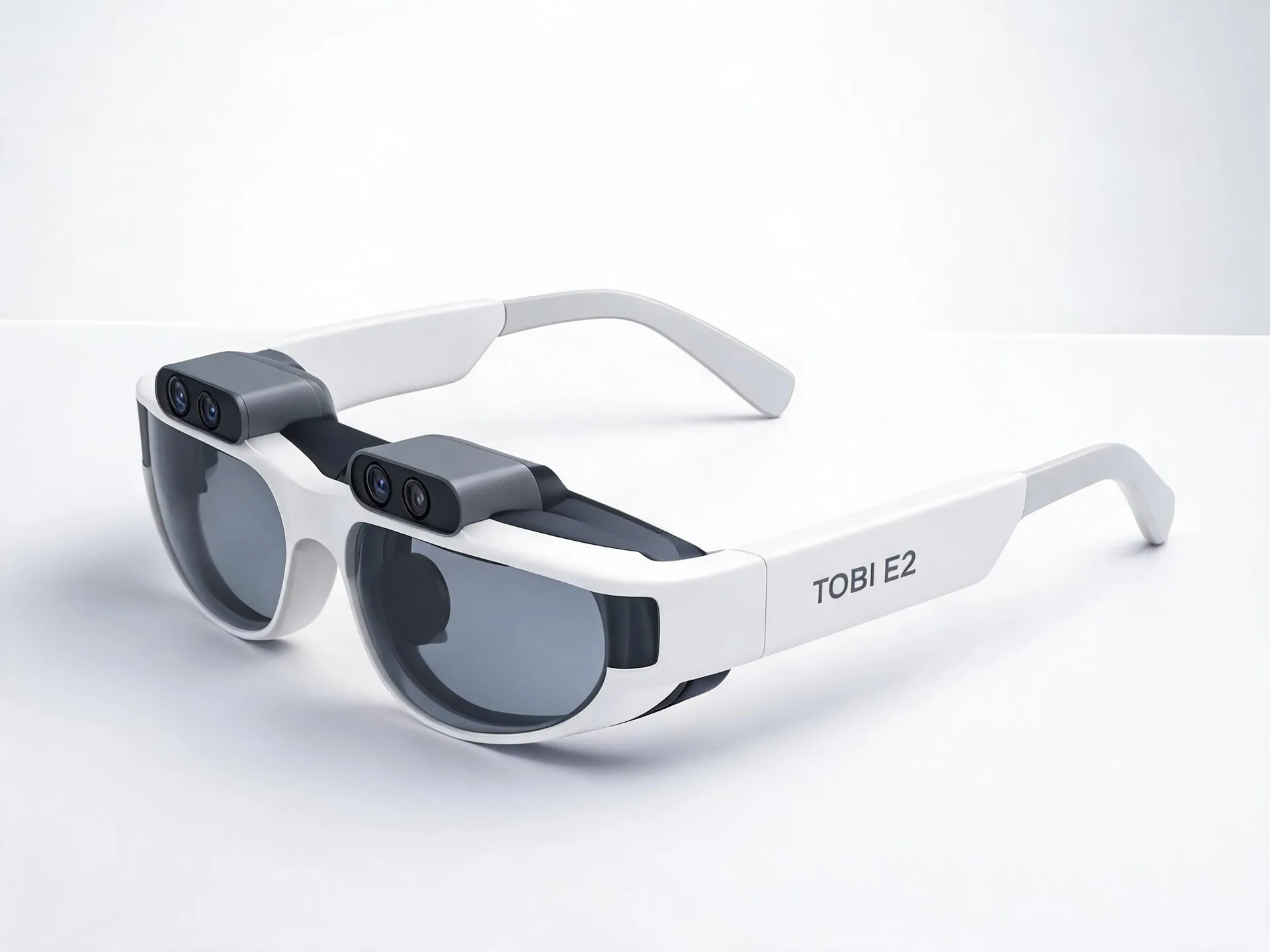
At the device tier, TOBI E2 is suitable for rapidly scaling up human demonstrations; E6/E8 suit multi-camera, long-duration, and more complex sensing; the wrist camera completes dexterity coverage. For customers with an existing robotic platform fleet, real-robot trajectories can also be captured in parallel to form paired assets of "human demonstration + platform calibration." Hardware synchronization and calibration version management are prerequisites for skill packs across batches to be stacked in training.
The chief scientist should define "transferability" as measurable metrics: how many additional hours of human egocentric data yield how much success-rate gain under a fixed real-robot budget; how the degradation curve behaves when objects or scenes change; whether failure recovery transfers. Without these curves, a skill package is just a marketing term.
Purchasable skill packages: delivery format, compliance, and quality inspection
Skill packages on the market side should have product attributes: clear task boundaries, a declared list of supported embodiment categories (rather than a false claim of "works with all robots"), a data card (distribution, synchronization, calibration, annotation, failure ratio), licensing scope (training/distillation/redistribution restrictions), quality inspection reports, and sample visualizations. Procurement and legal care about licensing and privacy; algorithms care about metadata; business cares about whether tasks match KPIs—all three must be able to converse over the same specification document.
As a dataset-market entry point, TOBI emphasizes soft conversion rather than exaggerated promises: first validate transfer gains with a small-scale package, then scale up; first align task graphs and embodiment constraints, then discuss hours; first confirm synchronization and key modalities such as wrist cameras, then optimize pricing. This way of selling is slower, but it better matches the risk-control realities of enterprise procurement in 2026.
Value chain division of labor and TOBI's position
In the future embodied supply chain, algorithm companies will not need to build all capture capacity themselves, and capture companies will not need to develop all policies in-house. In between, data products with higher standards will emerge: egocentric demonstration packages with protocols, dexterous packages with failure structure, long-horizon packages with task graphs, and transfer packages with dual viewpoints. Whoever can stably supply these products will gain a steady stream of leads beyond thought leadership.
TOBI's chosen position is: production-grade egocentric capture (E2/E6/E8, wrist cameras) plus procureable high-quality egocentric/robot datasets. We treat hardware synchronization, worn-state stability, dual viewpoints, and contact-level modalities as default engineering capabilities, and treat data cards and consulting entry points as default commercial capabilities. For VLA teams, procurement, and algorithm engineers, this means a shorter path to advance human demonstrations into verifiable robot skill iterations.
Finally, here are the action recommendations: spend one week drafting the protocol for the target task (viewpoints, actions, task graph, success criteria); capture a minimum viable demonstration set using TOBI equipment; procure or customize a small alignment dataset for transfer experiments; validate the gain curve with real-robot hours; then decide on scaling up. This path is closer to success than "buy a lot of data first, then find an algorithm."
Skill Package Business Model: How to Make Transfer Quotable and Acceptable
Cross-platform transfer must enter the procurement process, and three business questions must be answered: what to buy, what to verify, and who is responsible when problems arise. For what to buy, it is recommended to split into a demonstration package, a protocol package, and an adaptation package; for what to verify, it is recommended to bind to a transfer gain curve and a blind-test set; on responsibility, the data provider is responsible for source data quality and metadata, and the algorithm integration party is responsible for the target platform policy, and writing the boundaries clearly reduces disputes. TOBI prefers to clarify the boundaries first and then scale up, because long-term customer value outweighs a single large order.
Quotes can be structured by task family + effective hours + modality combination, rather than raw hours alone. Packages that include wrist data, dual viewpoints, failure structure, and long-horizon task graphs should reasonably command different prices. This way customers pay for structure, and suppliers are motivated to improve structure rather than compete to the bottom. Public Ego trends have raised demand, but only structured products can turn demand into sustainable revenue and sustainable model progress.
Technically, action-space normalization does not need to pursue a single mathematically canonical representation. For enterprises, the sufficient standard is: executable on the target embodiment, safely constrainable, and alignable with demonstration events. Some tasks are satisfied with end-effector pose; others must retain finger-level events. Skill packages should declare their action-representation level, avoiding the false promise of "one package for everything." An honest statement of applicability is actually a plus for professional buyers.
On the compliance side, human demonstration involves portrait rights, workstation confidentiality, and potential third-party intellectual property (such as the appearance of the product being operated). Authorization text must cover uses such as training, evaluation, and internal distillation, and clarify whether redistribution of features or generated data is permitted. "Cheap data" without authorization can become a liability during financing or IPO due diligence. TOBI treats compliance fields as a standard part of the data card, not an after-sales patch.
From an organizational capability perspective, companies that succeed across robotic platforms often have a "data product manager" role: someone who understands a bit of algorithms, a bit of data capture, and the language of procurement. Without this role, the equipment team and the model team will complain about each other. If external suppliers can partially take on this translation function, it will significantly reduce internal friction for customers. TOBI's consulting entry and solution pages essentially provide this kind of translation, mapping E2/E6/E8, wrist cameras, and dataset SKUs to the customer's task map and robotic platform inventory.
Looking further ahead, skill packages may declare dependencies like software libraries: depending on a specific calibration version, depending on a certain type of gripper, depending on a minimum camera set. The clearer the dependency declarations, the faster the integration. This requires upstream capture to take metadata discipline extremely seriously. Production-grade egocentric capture is precisely the hardware and process guarantee for that discipline. Whoever can output data products with dependency declarations is closer to the endgame narrative of "procureable robot skills."
Therefore, cross-embodiment transfer is not a topic that a single paper can settle, but a supply chain taking shape. Human egocentric demonstrations are the upstream raw material, protocols and quality inspection are midstream processing, and target-embodiment adaptation is downstream assembly. TOBI chooses to stabilize the upstream, deliver the midstream clearly, and validate side by side with the customer's downstream algorithms. For teams seeking thought leadership and lead growth, articulating this supply chain clearly is itself a high-conversion content strategy.
Pilot Playbook: Validating the Transfer Hypothesis in Thirty Days
A thirty-day playbook could be: week one completes the protocol draft and equipment onboarding; week two captures the minimum human egocentric demonstrations and produces the data card; week three completes action alignment and small-scale training; week four validates the gain curve under a fixed real-robot budget and decides whether to procure for scale-up. Set go/no-go gates throughout: no capture without a clear protocol, no training without a complete data card, no scale-up without significant gains. A no-go is not a failure—it is avoiding a larger failure.
In the script, TOBI can simultaneously offer device rental or purchase options, as well as small-scale dataset samples, to reduce the customer's one-time decision pressure. The key to soft conversion is letting the other party experience quality through real feedback, rather than persuading with adjectives. The product page, solution page, and dataset consultation entry on the official site correspond to the different decision nodes in the script.
If the customer already has first-person data from public trends for pretraining, private TOBI data is better suited for domain refinement and contact reinforcement. Do not rebuild an "all-purpose public dataset"; build "the skill package most useful for your embodiment and production line." Once positioning is clear, competition is no longer about who resembles a certain public project name, but about who can better improve your shift metrics.
Cross-department communication templates also matter. The one-pager for algorithms covers synchronization, modalities, and formats; the one-pager for procurement covers acceptance, licensing, and pricing structure; the one-pager for business covers task boundaries and expected gain ranges. Once the three pages are aligned, project progress will accelerate by an order of magnitude. TOBI's content strategy and sales collateral are being built up along this structure, so that thought leadership can be steadily converted into qualified leads.
Ecosystem Collaboration: Who Provides Demonstrations, Who Completes Adaptation
As skill pack marketplaces emerge, finer-grained specialization will appear in the ecosystem: some partners excel at certain types of household task demonstration, some at industrial assembly, and some at target platform adaptation. TOBI focuses more on production-grade capture and quality gating, and is open to collaborating with adaptation partners, rather than claiming to handle all downstream algorithms.
The collaboration interface remains the data card and protocol: timeline, calibration, task graph, licensing. Only when the interface is stable can the ecosystem flourish. This is why this article repeatedly emphasizes protocol depth.
For enterprise clients, the advantage of choosing a platform-based data capture vendor is that multiple task families can share the same quality-control and synchronization standards, reducing the learning curve. For startup algorithm teams, they can first purchase a small package to validate, then decide whether to build an in-house capture team.
Risk note: Do not package cross-platform transfer as an unconditional promise. Any skill package should state its scope of applicability and known failure modes. Honest disclosure filters out wrong customers and retains those suited for long-term collaboration — this is healthy lead quality, not a reduction in leads.
When human Ego demonstrations, robot calibration, and online feedback form a closed loop, purchasable skill packages are no longer one-off products but subscription-based capability updates. TOBI's device installed base and data ingestion points are the front-end and mid-tier nodes prepared for this loop.
After reading this article, we suggest coming to the conversation with your embodiment list and a draft task graph: together we can judge whether to buy equipment first, buy a sample package first, or run a one-week closed-loop pilot first. The more concrete the action, the less mysterious the transfer.
Next step: turn timeline capabilities into purchasable assets
If your team is evaluating multi-camera Ego acquisition pipelines, wrist camera solutions, or wishes to directly purchase verifiable, high-quality Ego / robot datasets, you can start with product specs and scenario solutions, then align with the data delivery team on task coverage, sync metrics, and compliance boundaries.
View TOBI product line (E2 / E6 / E8 and wrist camera)to learn about Solutions from acquisition to dataset delivery, or directly Inquire about high-quality Ego dataset procurement.
Notes
Cross-embodiment transfer performance depends on the target robot, scene, and protocol design; there is no universally guaranteed success rate. Public project and trend names in this article are for contextual reference only; TOBI products and datasets are subject to the official website and contract terms, and do not include unverified certification claims.
Appendix Perspective: Skill Package Versioning and Continuous Delivery
Once a skill pack enters enterprise procurement, it must be versioned: v0.1 validates the transfer hypothesis, v0.x expands objects and scenes, and v1.0 aligns with the calibration set of a specific target platform. Each version must freeze the protocol, calibration, and annotation definitions, and provide a diff description relative to the previous version. Without version discipline, mixed training leads to silent regressions. Continuous delivery means incremental expansion and fast real-robot feedback, not a once-a-year bulk data dump. TOBI's consulting entry point and data product design are built precisely for this iterative procurement model: validate first, then scale, fully auditable throughout.
For multi-platform customers, do not fantasize that a single human Ego package can be adapted to all robots without modification. A more realistic approach is a "common demonstration package + platform adaptation package". The common package sells contact and task structure; the adaptation package sells calibration for the target platform, camera layout correspondence, and a small amount of real-robot data. Pricing and responsibility boundaries become clear accordingly. Thought-leadership articles that only discuss models without discussing this product structure will struggle to help procurement make decisions. This article deliberately spells out the product structure so that both sides speak the same language at lead conversion time. As the industry moves from model demonstrations toward a skill supply chain, TOBI aspires to be a trusted collection and data node on that supply chain.
During the device onboarding period, it is recommended to first freeze a minimum viable collection topology before expanding the number of camera channels, to avoid pursuing sensor stacking before the timeline has stabilized.
For algorithm review, turning the four metrics—sync health score, occlusion rate, contact-event density, and failure ratio—into a fixed dashboard is more effective at flagging data problems than looking at the loss curve alone.
For procurement review, requiring suppliers to provide reproducible QC scripts and sample visualizations is essential; without both, it is difficult to enter the shortlist.
When mixing public trend data with private data, the ratio and domain labels should be explicitly recorded to prevent evaluation from being confounded by data source.
Wrist camera contamination, loose cables, and extrinsic drift are common on-site issues. Pre-shift checks in the SOP can significantly increase the proportion of usable hours.
Long-duration projects must plan for operator rotation; overly uniform motion style harms cross-operator generalization.
Cross-embodiation adaptation packages should declare target gripper and camera layout assumptions, to avoid discovering during integration that the demonstration is not executable.
For content acquisition, using acceptance checklists and controlled-experiment narratives is more likely to earn shares from engineering leads and spark project discussions than vague leadership claims.
Within thirty days after dataset delivery, keep a rapid supplementary capture channel open to fill modality gaps exposed by evaluation, which is faster than re-tendering.
The ultimate measures of success remain task success rate and human-intervention rate on the target embodiment; all capture and synchronization investment should be explainable in terms of these two metrics.
For dexterous subsets, prioritize ensuring complete wrist streams and loadable contact events before pursuing scene diversity; reversing the order will cost a lot of money on background data you will not use.