
Introduction
The decisive factor in dexterous manipulation rarely lies in “large-scene recognition,” but in millimeter-level contact: slipping, re-grasping, compliant insertion, cable manipulation, and deformation of flexible parts. These events are often occluded by the back of the hand in head-mounted viewpoints, and lack contact semantics in joint-angle trajectories. Wrist cameras, hand-object contact annotations, and failure samples thus form the triangulation framework for dexterous data. This article, from both algorithmic and procurement perspectives, explains how to build a learnable contact distribution, and how TOBI integrates wrist cameras and the Ego host into the same production-grade timeline.
Invisible Contact: The Structural Shortage of Dexterous Data
Classic behavior cloning assumes that "vision already contains all the information needed for decision-making." In dexterous tasks, this assumption often breaks down. Contact on the inner side of the fingers, slight slipping, or changes in force direction may manifest only as a few pixels of texture jitter, and may be entirely invisible to a head-mounted camera. The model then learns the wrong shortcut: it "guesses" success based on large object displacements or background cues. Once the lighting or background changes, the contact strategy fails immediately.
There are three mainstream approaches to filling this information gap: closer vision (wrist/fingertip cameras), more direct tactile/force sensing, and explicit contact event labels. The three differ in cost and scalability. Wrist cameras are relatively easy to deploy and compatible with existing visual pretraining; force/tactile signals are strong but have high calibration and consumable costs; contact labels enable contrastive learning between failures and successes. In production practice, the wrist camera is often the most cost-effective first step.
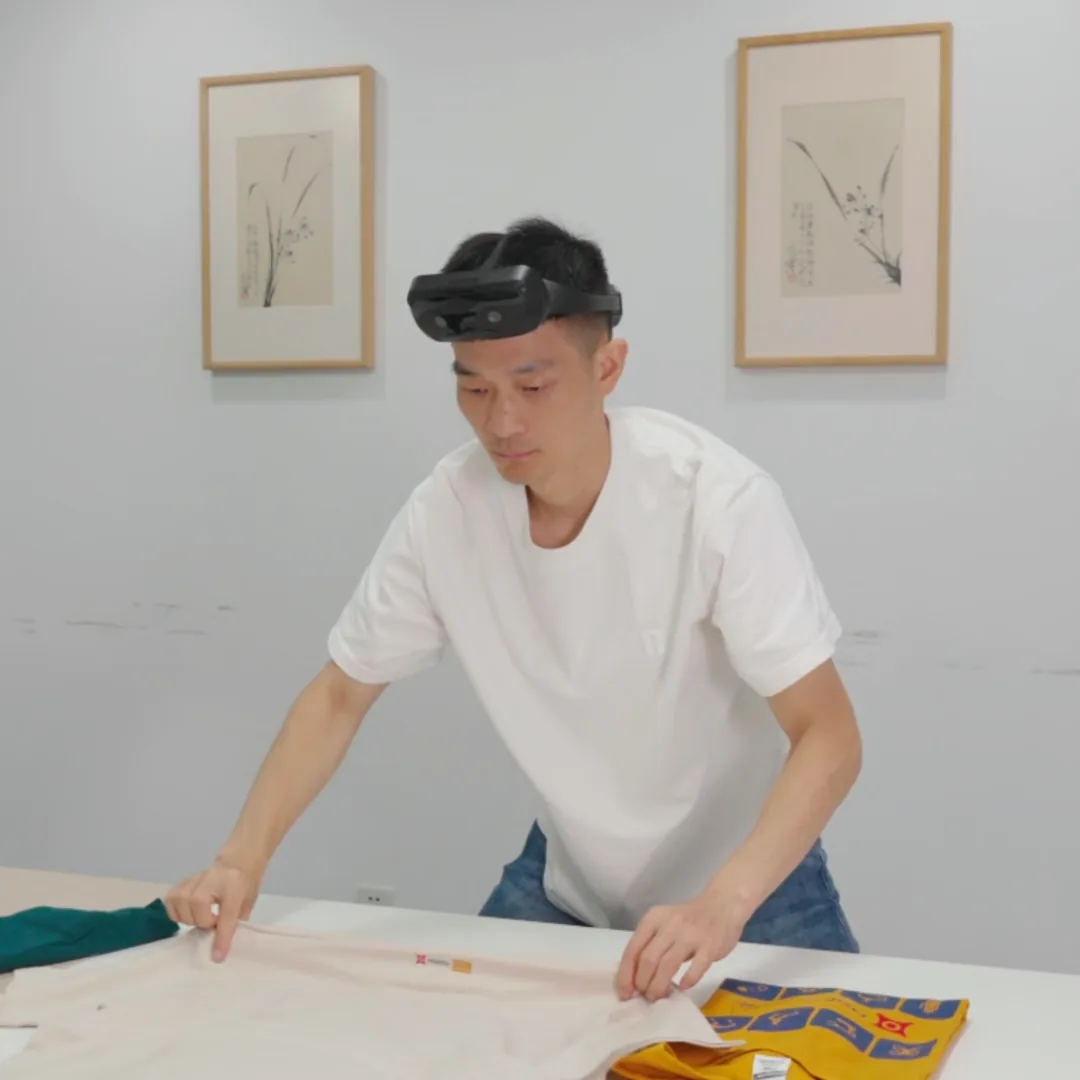
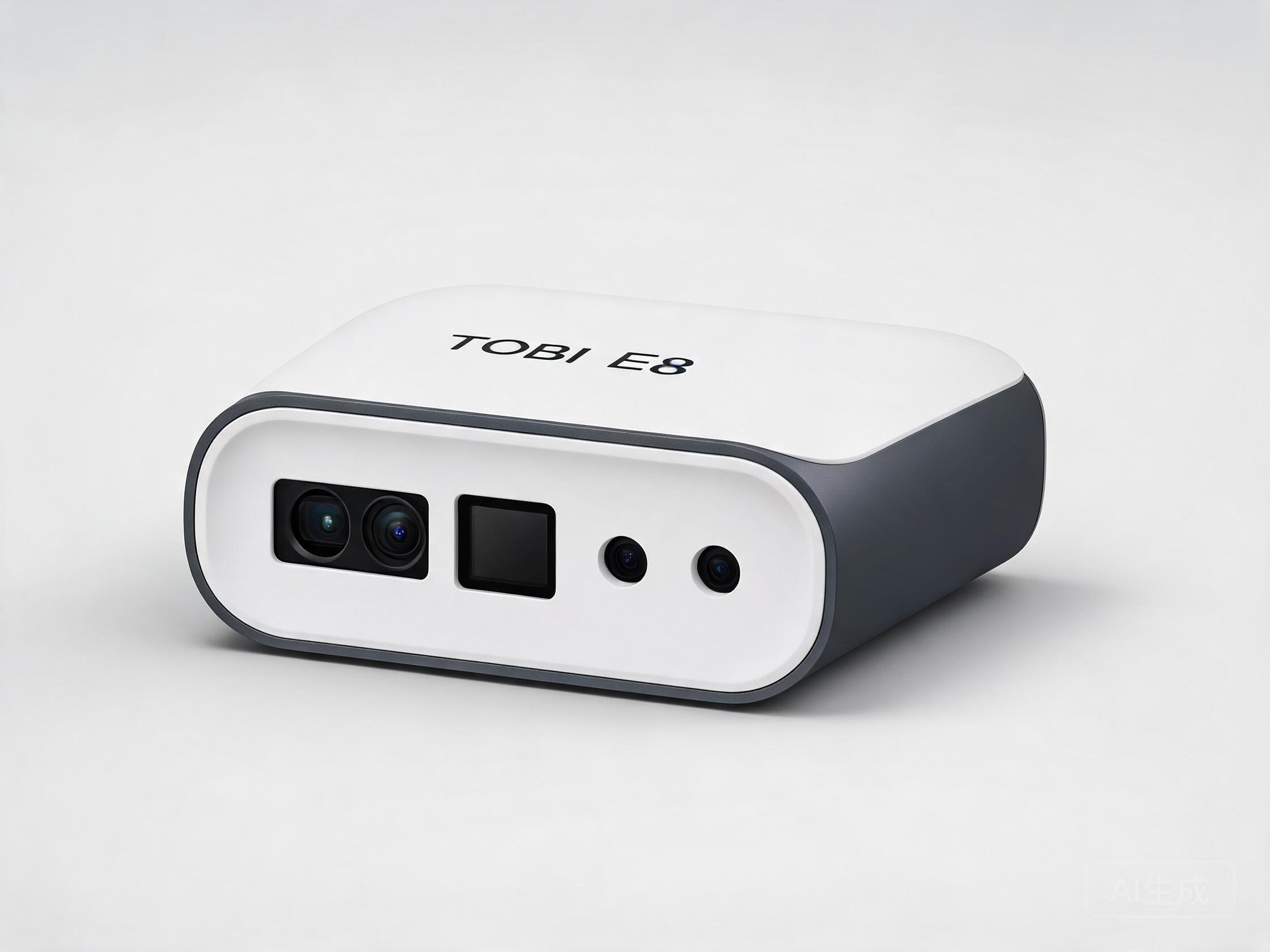
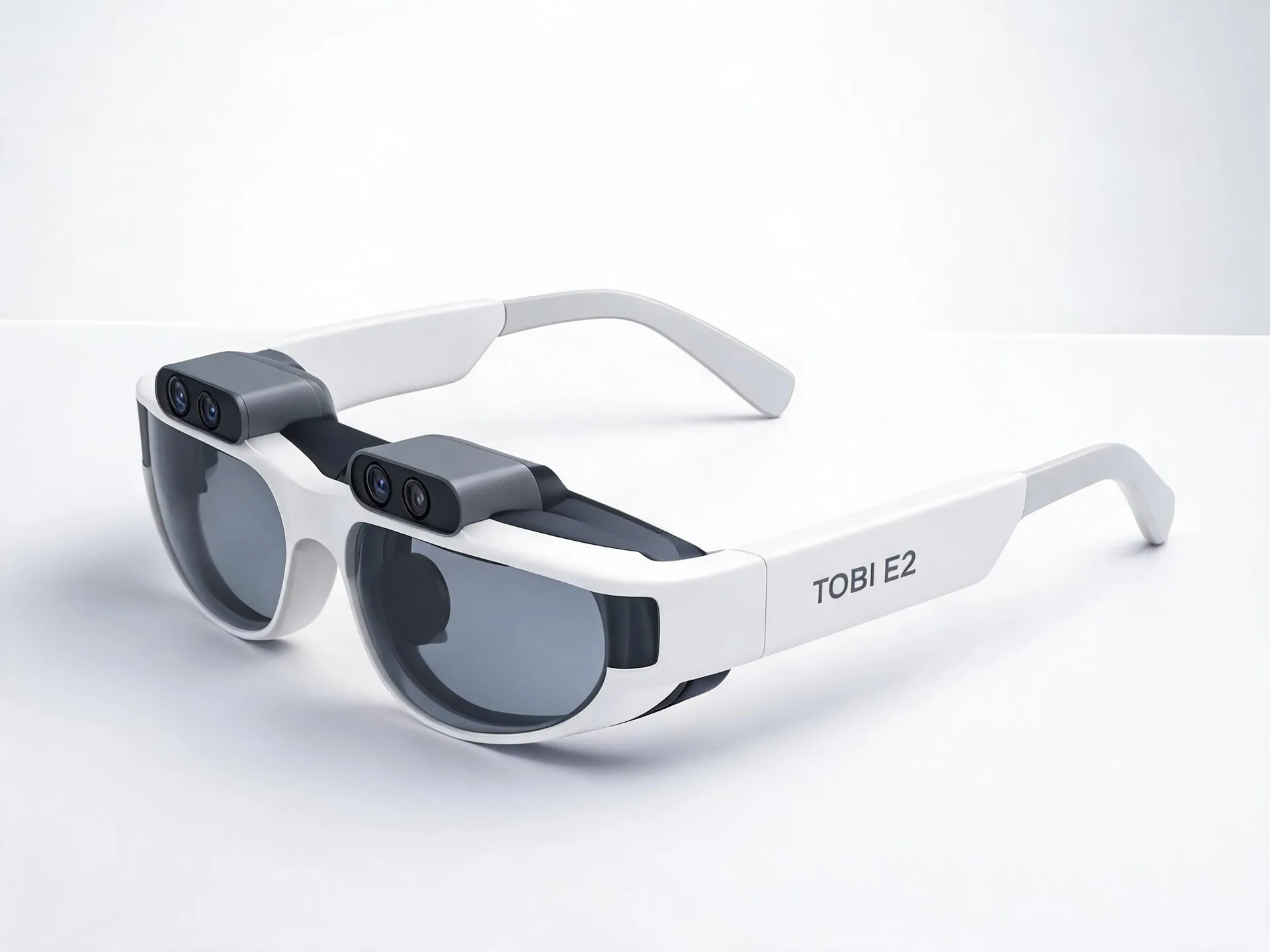
Public Ego data trends (in the context of EgoDex and similar) emphasize the value of first-person perspectives for everyday and dexterous tasks, but teams must still ask themselves: does the first-person perspective cover the contact scale? If only head-mounted and no wrist-mounted views are available, the dexterity ceiling will be jointly locked by occlusion and resolution. TOBI treats the wrist camera as a modality of equal importance to the E2/E6/E8 hosts, not as an accessory.
Wrist Camera: Turning the “Palm World” into Trainable Observations
The value of the wrist camera is not an additional video stream, but a change in the observation distribution: the relative geometry of hand and object stably appears in the center of the frame, and micro-changes before and after contact can be recorded with temporal alignment. For diffusion action heads and high-frequency control, this local observation can significantly reduce the policy's spurious dependence on global background. The prerequisite remains hard synchronization: if the wrist and head-mounted views differ by tens of milliseconds, contact learning will be contaminated by phase noise.
From an engineering standpoint, attention must be paid to mounting rigidity, cable management, self-occlusion interference, and calibration maintenance. The collection SOP should specify daily extrinsic checks, rejection of dirty lenses, and coordination with the head-mounted exposure strategy. The data card should specify wrist resolution, field of view, extrinsics relative to the hand coordinate frame, and synchronization domain assignment. Without these, the algorithm side cannot correctly perform hand-eye transformation or conditioning.
From the chief scientist's perspective, the wrist camera also changes the data flywheel: failures can be localized to "unable to see contact" or "saw it but the action was wrong." The former requires additional sensing, the latter requires additional policy and negative samples. Without a wrist camera, these two types of failures are mixed together, and iteration would be very slow.
Failure Samples: High-Value Negative Supervision for Dexterous Policies
Collecting only successful demonstrations is equivalent to telling the model that the world always goes smoothly. Real deployment is full of near-success failures: almost grasping securely, inserting one millimeter off, pulling with brute force after a cable gets stuck. These segments are crucial for contrastive learning, recovery policies, and risk awareness. After public works such as RoboMIND brought failure labels into mainstream discussion, the procurement side should also write failure proportions into hard requirements.
High-quality failure samples are not random failures. They require: a distribution close to success, clear failure mode labels, complete time windows before and after contact, and optional human recovery demonstrations. When mixed with successful samples for training, attention must be paid to proportion and curriculum—too much failure too early will make the policy overly conservative. The data card should provide a failure taxonomy and recommended proportion ranges.
TOBI emphasizes "purchasable failure structures" in dataset productization: not packaging discarded footage for sale, but organizing negative-supervision assets by contact events and task phases. Paired with a unified timeline from the wrist camera and the Ego host, failure replay can actually be used by algorithms.
Procurement Checklist: How to Accept Dexterous Data
The checklist recommended for joint sign-off by procurement and algorithm teams includes: whether the wrist camera is in the same synchronization domain; whether contact events have labels or automatically detectable proxies; failure sample proportions and classification; hand-object set and material coverage; calibration and contamination quality checks; and an example training baseline (even a small model) proving the data is learnable. For confidential production lines, face/badge de-identification and authorization scope must also be clarified.
Strategically, dexterity is the premium zone for embodied deployment and also the zone with the deepest data moat. Public trends offer a vision for first-person data; production-grade vendors provide repeatable contact-level data capacity. TOBI uses a dual-wheel approach of devices (E2/E6/E8 + wrist camera) and purchasable datasets to help teams upgrade dexterity demos that "occasionally work" into contact data assets that are "trainable, scalable, and acceptable."
Contact Distribution Engineering: From “How Many Times It Can Grasp” to “Which Failure Modes Are Covered”
The core product metric for dexterous data should not be the number of successes, but rather contact-distribution coverage: whether modalities such as sliding, deflection, re-grasping, two-finger coordination, tool switching, and flexible deformation are systematically captured. This can be managed with a modality matrix: rows are objects/materials, columns are contact modalities, and cells record minutes and failure ratios. Sparse areas of the matrix should be prioritized for additional capture. This improves deployment robustness far more effectively than blindly increasing duration.
The learning usage of wrist cameras is also evolving. Early usage was mostly simple channel concatenation; now it is more common to use them as conditioning inputs, auxiliary losses, or high-resolution expert observations enabled only during the contact phase. Regardless of usage, the source data must ensure phase readability and temporal alignment. TOBI includes the wrist camera in the same clock domain at the acquisition end, precisely to give the algorithm side the freedom of choice, rather than being forced into a compromised architecture by dirty alignment.
The ethics and safety of failure samples must also be written into the protocol. Deliberately creating dangerous failures is not advisable; near-failures should be collected under controlled conditions with clearly prohibited actions. For tasks involving sharp objects, high temperatures, or chemicals, simulation or isolated fixtures should be prioritized to supplement negative samples, with real hardware only collecting low-risk near-failures. A data marketplace needs responsible boundaries to sustain long-term enterprise business. In its consulting, TOBI will proactively inquire about task risk levels, avoiding the encouragement of unsafe acquisition for the sake of “appearing comprehensive.”
When fusing force/tactile sensing, do not assume the customer already has a complete force-control stack. You can first deliver visual contact events and wrist video, then add torque at sites where conditions allow. Modalities can evolve, but the timeline and task graph must be correct from day one. Many failed multimodal projects pile expensive sensors onto a wrong timeline. Hard synchronization and wrist first, then force sensing, is the more stable capital expenditure order.
For content and leads, the dexterous theme is naturally suited to showcasing “before-and-after comparisons”: replay with and without a wrist camera, contrast between success and near-failure, and examples of dirty frames rejected by quality checks. This type of content can simultaneously serve algorithmic curiosity and procurement risk control. Linking the comparison page to product specifications and dataset consultation entry points creates a short and clear conversion path. Thought leadership is therefore not just about publishing long articles, but about providing verifiable judgment criteria.
One more reminder: dexterous policy evaluation itself must guard against leakage. If the test objects and training objects overlap heavily, high scores may come from memorization rather than contact capability. The data card should distinguish training/test objects, and procurement may require a reserved blind test set. TOBI supports protocol-based split delivery, helping customers establish more credible internal evaluation governance and avoid being deceived by their own data flywheel.
In short, dexterity is an industry of details. The winner will not be the one who tells the best "general-purpose robot" story, but the one who can most reliably produce contact-level supervision. E2 handles flexible ramp-up, E6/E8 handle multi-view and long-horizon capture, the wrist camera handles the world in the palm, and failure samples teach the model that the world is not perfect. Only when these four combine into purchasable assets do VLA teams have a chance to scale the dexterous moments in the lab into repeatable skills on the production line.
Evaluation Protocol: Making Dexterous Scores Self-Deception-Free
It is recommended to split dexterous evaluation into four items: visible contact success rate, near-failure recovery rate, object-change degradation, and background-change degradation. Reporting only the first item makes it easy for shortcut policies to inflate scores. The near-failure recovery rate directly tests whether failure samples have been learned; the two degradation metrics test for overfitting to the training distribution. Once the protocol is public to suppliers, data competition will shift toward genuinely useful coverage rather than piling up successful demonstrations.
The blind test set should be sealed at project kickoff and held by someone outside the acquisition team. If the same people who perform acquisition and evaluation decide on test objects on the fly, leakage is almost inevitable. TOBI can deliver training and held-out sets in separate warehouses per protocol, but final governance remains with the client internally. Writing governance into the project charter is healthier than arguing about scores after the fact.
For metrics that need to be presented to management, the "contact-level unit cost" can be used: the effective wrist hours and annotation cost required to achieve a given recovery rate. This metric can place device investment, annotation investment, and model gains on a single chart. If thought-leadership content can provide this kind of management-level language, conversations during lead conversion will go much more smoothly, because procurement understands it and the algorithm team agrees with it.
If the task involves highly deformable objects such as cables or fabric, a separate sub-project should be opened rather than mixed into the same skill package pricing as rigid grasping. Deformable objects require different event definitions and more failure structure; mixing prices will only dissatisfy both parties. Clear task-family division is one of the signs of a mature data marketplace.
The annotation economics of contact data
Contact annotation budgets should be concentrated on event boundaries and failure classification, rather than averaged into per-frame bounding boxes. Segments with high event density should be prioritized; static waiting segments can be downsampled. With the economics done right, the same budget can buy a steeper learning curve.
Pipelines combining automatic candidate generation with human confirmation must compute precision and recall, and disclose them in the data card. If automatic detection is biased toward a particular material, the failure structure will be distorted. Periodically calibrating the detector with fully manual small samples is an underrated quality-check action.
For dexterous hands and two-finger grippers, the failure taxonomy should not be forcibly shared. Grippers more commonly exhibit slip and pose errors, while dexterous hands additionally have inter-finger coordination failures. Skill packages and evaluation protocols should be separated by family to avoid incomparable metrics.
Samples shown to clients should include wrist close-ups and time-aligned head-mounted footage, proving synchronization and visibility, rather than just pretty photos of successful outcomes. Engineering clients pay for evidence.
TOBI will continue to treat wrist cameras as a first-class modality, bound to the same time base as the E2/E6/E8 hosts, so that annotation economics are built on clean signals. If the signal is dirty, saving on annotation is wasted effort.
One more piece of engineering experience: the naming and directory structure of dexterous datasets should allow training scripts to find the wrist stream, contact event table, and failure labels with “zero guessing.” Many teams scatter these files across different archives, resulting in the high-value modality never being used in actual training. TOBI emphasizes directory conventions and sample loading scripts in its delivery specifications precisely to plug this last-mile leakage. During procurement acceptance, a loading run should be performed on-site, not just a check that files exist.
If your evaluation still stops at "pick up the cup and put it down", upgrade as soon as possible to a protocol that includes sliding perturbations, slight target displacement, and lighting changes. Only under these perturbations will the value of the wrist camera and failure samples be proven by numbers. Turning that proof into a one-pager can simultaneously serve algorithm iteration, procurement renewal, and external content. This is the shortest bridge between a technical frontier article and lead conversion.
Next step: turn timeline capabilities into purchasable assets
If your team is evaluating multi-camera Ego acquisition pipelines, wrist camera solutions, or wishes to directly purchase verifiable, high-quality Ego / robot datasets, you can start with product specs and scenario solutions, then align with the data delivery team on task coverage, sync metrics, and compliance boundaries.
View TOBI product line (E2 / E6 / E8 and wrist camera)to learn about Solutions from acquisition to dataset delivery, or directly Inquire about high-quality Ego dataset procurement.
Notes
The public datasets and research trend names in this article are provided solely as industry context; the specific SKUs, proportions, and specifications of failure samples and wrist cameras are subject to TOBI data cards and contract appendices. No unverified certification claims are involved.
Appendix Perspective: Contact Event Detection and Weak Supervision
Not all projects can afford frame-by-frame manual contact annotation. Weak supervision approaches include: event candidates based on wrist optical flow discontinuities, depth changes, audio collisions, and torque thresholds, followed by human confirmation of boundaries. This concentrates annotation cost at decision-critical points rather than diluting it evenly across every frame. The event detection itself should be versioned, and the algorithm and thresholds declared in the data card to prevent drift in event definitions across batches. For failure samples, event boundaries determine the contrastive learning window; if the window is wrong, negative supervision becomes noise. TOBI encourages clients to solidify event definitions early and to use automatic detection as a quality-check aid rather than an unauditable black-box label source.
Material and friction diversity is another axis of dexterous generalization. Piling up success counts on the same object on the same tabletop will lead to false high scores. Procurement should require the object list to cover categories such as rigid, mildly flexible, reflective, and transparent (if the task requires it), and declare unsupported materials. Honest capability boundaries are more conducive to long-term cooperation than false full coverage. On the algorithm side, material labels can be used for conditioning or difficulty stratification. Wrist cameras also fail under reflective and transparent conditions; in such cases, rejection or switching to other modalities should be triggered rather than forcing data into the repository. Writing these rules into the SOP will steadily increase the unit value of dexterous data, allowing the flywheel to turn.
During the device onboarding period, it is recommended to first freeze a minimum viable collection topology before expanding the number of camera channels, to avoid pursuing sensor stacking before the timeline has stabilized.
For algorithm review, turning the four metrics—sync health score, occlusion rate, contact-event density, and failure ratio—into a fixed dashboard is more effective at flagging data problems than looking at the loss curve alone.
For procurement review, requiring suppliers to provide reproducible QC scripts and sample visualizations is essential; without both, it is difficult to enter the shortlist.
When mixing public trend data with private data, the ratio and domain labels should be explicitly recorded to prevent evaluation from being confounded by data source.
Wrist camera contamination, loose cables, and extrinsic drift are common on-site issues. Pre-shift checks in the SOP can significantly increase the proportion of usable hours.
Long-duration projects must plan for operator rotation; overly uniform motion style harms cross-operator generalization.
Cross-embodiation adaptation packages should declare target gripper and camera layout assumptions, to avoid discovering during integration that the demonstration is not executable.
For content acquisition, using acceptance checklists and controlled-experiment narratives is more likely to earn shares from engineering leads and spark project discussions than vague leadership claims.
Within thirty days after dataset delivery, keep a rapid supplementary capture channel open to fill modality gaps exposed by evaluation, which is faster than re-tendering.