Introduction
Short trajectories can demonstrate "can grasp," but they struggle to demonstrate "can complete." Housekeeping, inspection, production-line changeovers, and multi-step assembly all require policies to maintain goal consistency, recoverable state, and resumable failures over tens of minutes or even hours. Long-duration embodied capture has therefore moved from a research interest to a procurement necessity: it is not merely about recording video for longer, but about solving three major engineering problems—state persistence, task-graph structuring, and sustainable wearability of equipment. This article is aimed at VLA and embodied teams, breaking down the true cost structure of hour-scale trajectories and how TOBI supports long-duration data assets with a production-grade Ego pipeline.
The Short-Trajectory Trap: How High Success Rates Mask Weak Generalization
Common laboratory evaluations are 10–30 second atomic skills: grasping, placing, opening a drawer. These tasks are sensitive to synchronization and contact quality, making them suitable for validating perception and low-level control, yet they systematically underestimate long-horizon failure modes: target forgetting, phase skipping, tool-switching loss, and inability to recover after mid-task interference. A model's impressive success rate on short trajectories may collapse rapidly when transferred to real shift lengths.
From an algorithmic perspective, long-horizon tasks require hierarchical policies: a high level handles the task graph and subgoals, while a low level handles contact and trajectory tracking; a memory/retrieval mechanism is also needed to bring past stage states into current decisions. These structures all depend on the data explicitly containing "stage boundaries, state variables, and recovery segments." If data collection only produces unsegmented flat video, even the strongest model can only perform weak implicit segmentation.
From a procurement perspective, pricing by duration without structural acceptance criteria means purchasing many hours that "look long but are hollow to learn from." A qualified long-duration data package should be able to answer: What is the task graph? Which states are persistently recorded? How are interruptions and recoveries annotated? How are synchronization and dropped frames governed in long recordings?

Hour-Scale Engineering: Battery, Storage, Thermal, Clock, and Human Factors
The first enemy of long-duration capture is not algorithms but engineering degradation. Battery and heat alter sensor noise; full storage induces dropped frames; clock drift accumulates to non-negligible offsets after an hour; operator fatigue changes the action distribution, making the first and second halves two different domains. Production-grade capture must turn these degradations into monitorable metrics rather than post-hoc surprises.
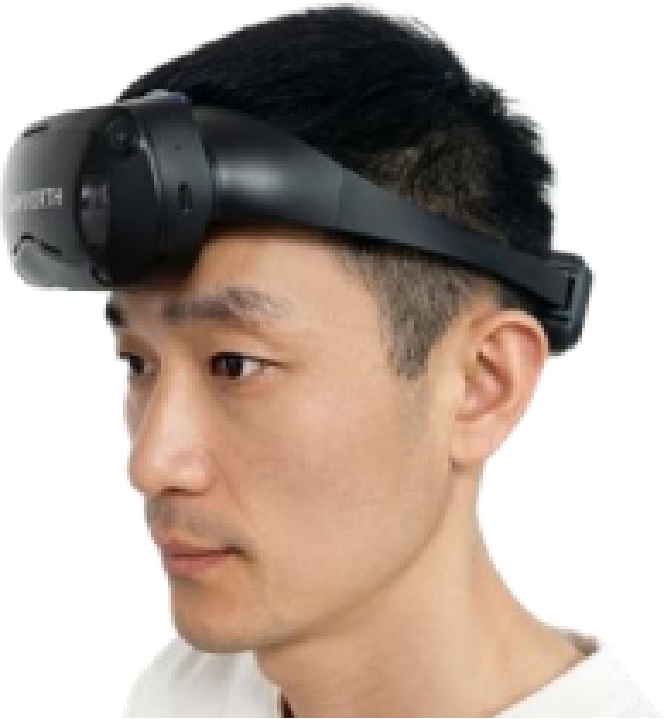
TOBI distinguishes task duration and sensing density across its device lineup: E2 is suited to short- and medium-duration validation and lightweight deployment; E6, as the multi-camera workhorse, balances coverage and wearability; E8 targets higher density and more demanding scenarios. Wrist cameras are especially critical in long-duration capture—they continuously provide local hand-object evidence, mitigating head-mounted occlusion and attention drift. Regardless of model selection, long-recording SOPs should include segmentation strategy, health heartbeats, automatic anomaly tagging, and mandatory rest/battery-swap checkpoints.
Algorithm engineers should require a "long-recording health report": dropped-frame rate curves, synchronization jitter over time, temperature/battery logs, and operator changeover points. These seemingly operational data are in fact domain labels for training—you can use them for curriculum learning, training on stable segments first before exposing the model to difficult segments.
State Persistence and Task Graphs: Making Trajectories "Retrievable and Resumable"
State persistence means: at any moment, it is possible to reconstruct from the data "how far the task has progressed, what is being held, and which environmental constraints remain in effect." The implementation can be structured annotation (phase IDs, object state machines) or a queryable memory segment index. Without state persistence, a long trajectory is just a longer pixel stream; with state persistence, a long trajectory can support hierarchical policies and experience retrieval.
Task graphs translate natural-language goals into executable topologies: nodes are sub-goals, edges are transition conditions, and failure edges point to recovery policies. Organizing demonstrations by task graph during capture is more expensive than "recording an hour of free-form activity," but the training value per hour is significantly higher. In public trends, dataset discussions around Ego daily activities and long-horizon manipulation (as in the context of EgoLive, MobileEgo, and similar) are also pushing toward stronger temporal structure—the industry is shifting from "how long" to "how clearly structured."
TOBI's data delivery proposition packages task graphs together with timelines: phase labels, key events (contact, release, tool switching), failure and recovery segments, dual-view / wrist segment indexes. This way, what the buyer purchases is not vague hour counts, but semi-finished skills that can be mapped onto their own production line or laboratory task graphs.

From Research Narrative to Procurable Asset
At the thought-leadership level, long-duration data is the bridge for VLA to move from "demonstration intelligence" to "shift intelligence." Teams that optimize only short evaluations will look good at launch events but struggle at customer sites. Allocating part of the budget to hour-scale data with task graphs is a strategy closer to deployment.
At the execution level, three steps are recommended. First, use TOBI equipment to establish a 30–60 minute sample pipeline in the target scenario, validating synchronization, wearability, and annotation costs. Second, train hierarchical policies or retrieval-augmented baselines with a small-scale long-duration package. Third, scale up to a procurable batch according to the task graph, while retaining failure-recovery ratios. Throughout the process, algorithm, capture, and procurement teams should share the same data card template to avoid "record first, figure it out later."
TOBI does not build trust through exaggerated certifications; it speaks through verifiable specifications and acceptable deliverables. Production-grade ego capture keeps long-horizon physical processes stable, and the dataset marketplace entry point turns those stabilized processes into trainable, auditable assets. For teams that need shift-level capability, this is closer to the objective function than simply piling up short trajectories.
Shift-Level Evaluation: Replacing the Lab Stopwatch with the Business Clock
The lab stopwatch likes to count "whether a single attempt succeeds." The business clock cares about "how many qualified units a shift can stably complete, whether it can recover after interruptions, and whether the number of manual interventions is acceptable." Long-duration data design should align with the business clock: actively introduce reasonable disturbances, tool switches, brief departures from the field of view and returns during capture, and annotate the recovery strategies. Without these, the model will be overconfident within a greenhouse distribution.
State persistence can start with lightweight structured fields; there is no need to deploy complex world-model labels from day one. For example: current sub-goal ID, held object category, container open/closed state, and whether awaiting confirmation. Fewer fields make quality control easier and alignment with task-graph nodes simpler. Fields can be densified as capability improves. Many projects do the opposite—designing hundreds of state dimensions on day one, resulting in annotation collapse, large numbers of null field values, and the long-duration advantage being negated by their own design.
Storage and transcoding strategy directly affect long-horizon usability. Excessive compression to save space destroys wrist contact detail; no compression to preserve detail makes hour-level storage and transmission costs unmanageable. Tiered bitrates are the pragmatic solution: head-mounted and Exo can use scenario-level bitrates, while the wrist raises the bitrate during contact segments or retains lossless keyframes. The data card should specify the bitrate strategy; otherwise algorithms will waste weeks on invisible compression artifacts.
For humanoid and mobile manipulation, long-duration operation also involves localization drift and scene revisitation. The collection protocol may require scene anchor confirmation at key waypoints or alignment with an external localization system. TOBI does not claim any single localization approach is the only correct solution, but insists: long trajectories must carry auditable pose/anchor metadata, otherwise "returning to the same workstation to continue" cannot be verified. This is especially critical for cross-day skill packages.
From a marketing and sales conversion perspective, long-duration content is well suited to a "a day at work" narrative rather than "another grasping video." Decision-makers more easily understand shifts than frame rates. String together device donning, rest and battery swap, task graph execution, and the QC dashboard into a single storyline, then lead into product and dataset inquiries; lead intent will be clearer. TOBI's website path is designed exactly for this: first understand the solution, then select the device, then discuss data procurement.
Incentives within algorithm organizations must also change. If KPIs only reward short-evaluation benchmark improvements, long-duration data will be starved as a "slow asset." It is recommended to bind a portion of quarterly targets to multi-step task completion rates and recovery success rates, and to allow retrieval-augmented or hierarchical-policy approaches to meet them. Only when data, algorithm, and product teams align on the objective function can the budget for hour-scale capture be defended.
In the context of public trends, there is growing discussion of datasets targeting daily activities and mobile Ego, indicating that the industry has recognized the strategic significance of time span. What enterprises should pursue is not names but structure: task graphs, state fields, health logs, and failure recovery. TOBI helps customers translate trends into acceptable assets with production-grade front-end devices such as E6/E8 and a procurable data backend, rather than remaining in the comfort zone of minute-scale demonstrations.
Cost model: effective hours, structural density, and rework coefficient
Procuring long-duration data by focusing only on raw hours underestimates rework. A more reasonable cost model is: effective hours equal raw hours multiplied by the quality-control pass rate, then weighted by structural density. Structural density can be approximated by "phase switches per hour, contact events, and recovery segments." Long videos with sparse structure may end up more expensive even at a lower unit price. Writing this model into the budget sheet allows finance and algorithm teams to speak the same language.
Rework coefficients stem from synchronization failures, annotation rework, task-graph revisions, and scene changes. High rework during the pilot phase is normal; the key is making the reduction in rework observable. TOBI recommends tracking these coefficients in monthly reports and mapping improvement actions to SOP and firmware versions. Production-grade means turning rework from an accident into a manageable process metric.
For multi-shift customers, "process packages" can also be purchased by shift: the morning shift focuses on a certain type of assembly, and the evening shift focuses on inspection and resetting. Once the data package is aligned with the real shift schedule, the impedance of migrating to the field is lower. This productization mindset is closer to customer KPIs than selling undifferentiated long video libraries. The selection of E6/E8 should also reference shift length and sensing requirements, not just the parameter table on the catalog page.
A final reminder: long duration does not mean pushing operators to their limits. Human-factor breakdown produces dangerous actions and invalid distributions. Mandatory breaks, rotation, and comfortable wearability are investments in data quality. This is precisely why TOBI emphasizes wearability in its worn-device product design—an uncomfortable device will punish your model at the hour scale.
From Hour-Scale Data to Operations-Grade Policies
After a long-horizon policy goes live, data collection should not stop; it should enter an operations feedback loop, where online failures automatically trigger requests for additional capture or replay annotation. The true compounding value of hour-scale assets comes from continuous updates aligned with the online error distribution. A one-time buyout mindset suits short skills, not shift-length skills.
For this reason, the data platform needs to support retrieval by task-graph node and retrieval by failure mode. TOBI emphasizes indexing and metadata at delivery precisely so that supplementary capture can be located, rather than having to re-record from scratch every time.
For multi-site deployment, long-duration data packages must declare site differences: lighting, tabletop materials, and workflow habits. Site conditioning or independent adaptation packages can be used. A "universal long-duration package" that does not declare differences often fails at the second site.
For management reporting, a curve showing "the number of manual interventions decreasing across data versions" can serve as a return-on-investment narrative. This is closer to business operations than a narrative based on model parameter count. Thought-leadership articles provide this methodology, and sales can use it to design customer success milestones.
On the device side, high-density solutions like E8 suit sensing-hungry long tasks; E6 suits most production capture; E2 suits rapid validation of new processes. Selecting by process lifecycle avoids over-investment in the early stages.
In terms of safety, long-duration capture must have emergency-stop and privacy-isolation procedures, especially in environments with passersby and confidential tooling. Compliance is not an optional extra but the ticket to scaling to additional sites.
Additional implementation reminder: convert this article's checklist into a one-page internal scorecard and score each item at the next vendor meeting. Publishing scores to both algorithm and procurement teams significantly reduces vague "feels about the same" decisions. TOBI welcomes using these checklists as a starting point for conversation — matching device bundles and dataset samples rather than starting with abstract total-hour figures.
Next step: turn timeline capabilities into purchasable assets
If your team is evaluating multi-camera Ego acquisition pipelines, wrist camera solutions, or wishes to directly purchase verifiable, high-quality Ego / robot datasets, you can start with product specs and scenario solutions, then align with the data delivery team on task coverage, sync metrics, and compliance boundaries.
View TOBI product line (E2 / E6 / E8 and wrist camera)to learn about Solutions from acquisition to dataset delivery, or directly Inquire about high-quality Ego dataset procurement.
Notes
Names of publicly available long-duration projects and datasets are provided solely as trend context; TOBI makes no claim regarding their ownership. Actual recordable duration, sensor combinations, and dataset catalogs are subject to product documentation and commercial confirmation.
Appendix Perspective: Curriculum Learning and Segmentation Strategies for Long-Duration Data
Even with hour-level trajectories, direct end-to-end hard training is often unstable. A more reliable approach is curriculum learning: start with short stages, then chain multiple stages, and finally introduce disturbances and recovery. On the data side, composable segments should be pre-cut according to the task graph, and state vectors across segments should be retained, so that the curriculum does not artificially break long-range capability but exposes complexity in a controlled way. Cutting segments too finely loses persistent dependencies; cutting them too long makes batch statistics uncontrollable. In practice, cutting at sub-goal boundaries and ensuring each segment contains sufficient contact and decision density works well. The retrieval-augmented route requires segment indexing and similarity features so that a long-horizon library can be effectively queried at inference time. TOBI recommends providing both "continuous long trajectories" and "composable segments" views in the data card to serve different algorithm preferences. For procurement, this means the same batch of hours can support multiple technical routes, improving asset reuse rate and reducing sunk cost risk.
Human-factors design is itself part of the long-duration algorithm problem. Operator rotation policies affect the distribution of motion styles; insufficient rest increases the proportion of hazardous actions. Writing operator ID, shift, and fatigue proxy indicators into metadata allows normalization or stratification during training. Ignoring human factors, the model will treat fatigue noise as task physics. Field management and model training must therefore share a dashboard. A production-grade data acquisition company that can provide such metadata is inherently differentiated. TOBI will continue to strengthen long-duration observability in its hardware and data products, helping customers turn “recording for a long time” into “using it deeply.”
During the device onboarding period, it is recommended to first freeze a minimum viable collection topology before expanding the number of camera channels, to avoid pursuing sensor stacking before the timeline has stabilized.
For algorithm review, turning the four metrics—sync health score, occlusion rate, contact-event density, and failure ratio—into a fixed dashboard is more effective at flagging data problems than looking at the loss curve alone.
For procurement review, requiring suppliers to provide reproducible QC scripts and sample visualizations is essential; without both, it is difficult to enter the shortlist.
When mixing public trend data with private data, the ratio and domain labels should be explicitly recorded to prevent evaluation from being confounded by data source.
Wrist camera contamination, loose cables, and extrinsic drift are common on-site issues. Pre-shift checks in the SOP can significantly increase the proportion of usable hours.
Long-duration projects must plan for operator rotation; overly uniform motion style harms cross-operator generalization.