Introduction
First-person Ego demonstrations let the policy "see what the hands are doing"; third-person Exo viewpoints let the policy "know where the hands are in space." Pinning both to the same timeline is what turns human demonstrations from nice-looking video into policy material that can transfer to a robot body. In 2025–2026, data formats, alignment methods, and transfer protocols around Ego–Exo dual viewpoints are rapidly taking shape; what procurement and algorithm teams need is not slogans, but actionable viewpoint division of labor, annotation conventions, and equipment selection. This article provides TOBI's engineering-oriented interpretation.
Why Ego alone is not enough: occlusion, scale, and spatial illusions
The advantage of the Ego perspective is that it is dense with manipulation intent: finger approach, contact, sliding, and release all occur at the center of the frame, and language instructions and visual changes naturally appear on the same screen. But it also has structural blind spots. When the head-mounted camera is occluded by an arm, an object, or the edge of the scene, critical geometry can vanish instantly. Absolute scale and global localization are weak, so models easily learn relative motion that "looks right" rather than absolute poses reproducible in the robot's base coordinate frame.
A more insidious problem is viewpoint bias. Human head pose, height, and habitual standing position can lock the policy into a specific view frustum. When the robot's camera height, field of view, and mounting method differ, policies trained purely on Ego data will "understand but not execute accurately." Exo viewpoints provide stable scene-level references: table boundaries, relative object layout, and the operator's full-body kinematic profile can all serve as spatial anchors during transfer.
In public research and community discussions, directions such as EgoDex and EgoVerse repeatedly emphasize the value of first-person data for dexterity and everyday manipulation; in parallel, a growing number of teams are incorporating external cameras or scene cameras into standard capture protocols. TOBI productizes this consensus: Ego handles detail and intent, Exo handles structure and transferability — dual-view is not an option, but the default form of transfer-friendly data.
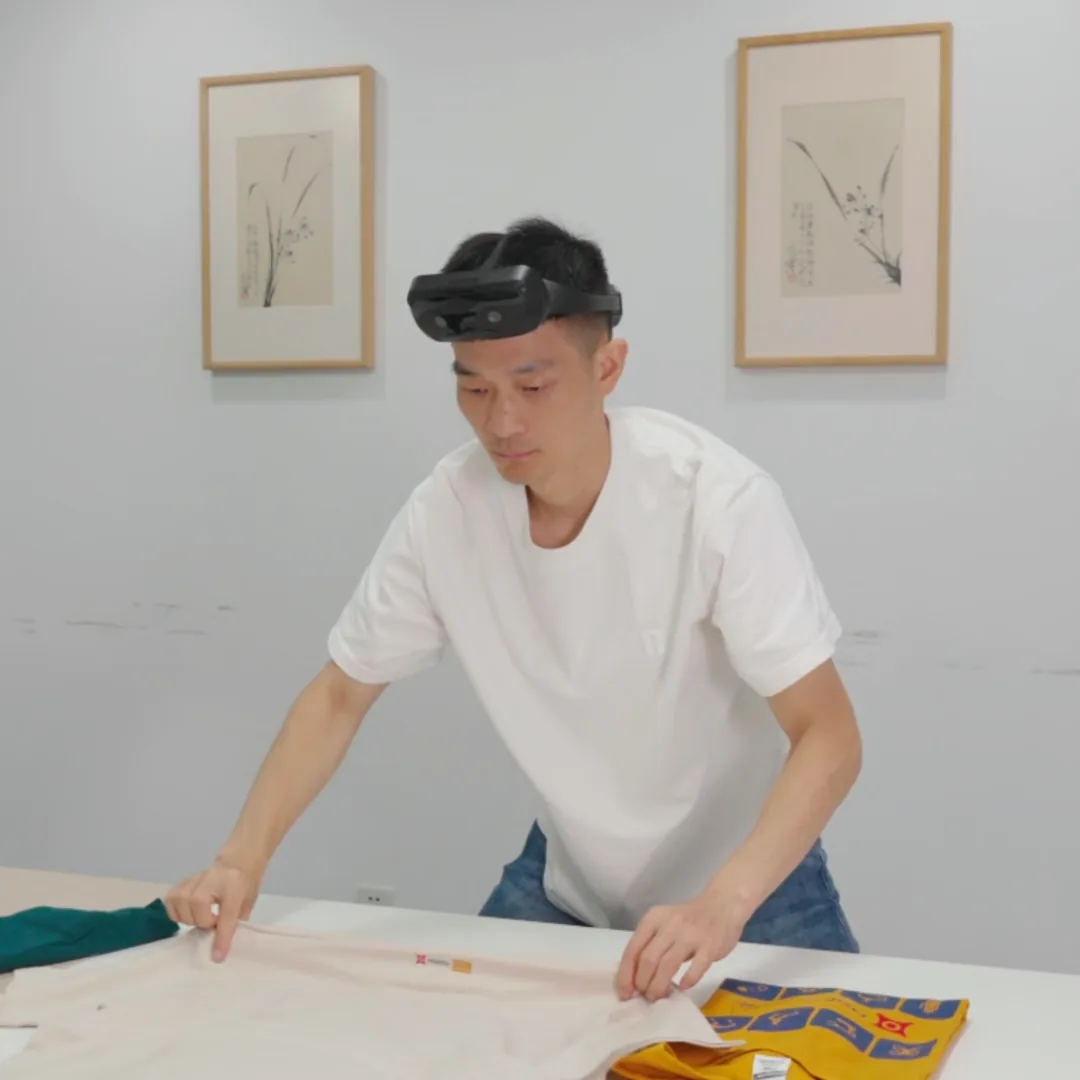
Dual-view alignment: from "same-scene capture" to "same-semantics supervision"
Many projects assume that mounting an external camera is enough for Ego–Exo. The real difficulty is semantic alignment: whether the same moment, the same event, and the same object instance can be cross-retrieved across the two viewpoints. This requires hardware synchronization (or equivalent verifiable temporal alignment), unified calibration, consistent object naming, and phase labels. Without these, dual viewpoints are merely two independent video streams, unable to form joint losses or retrieval augmentation.
The algorithmic approaches fall roughly into three categories. The first is early fusion: concatenating multi-view features into a single backbone, relying on the network to discover correspondences on its own — this demands substantial data and is sensitive to synchronization. The second is late fusion / conditioning: using Ego as the primary policy input, with Exo providing scene conditioning or auxiliary losses — more robust in engineering practice. The third is retrieval augmentation: at inference time, retrieving historical Ego–Exo segments from the current observation, turning dual-view experience into reusable memory. Regardless of the path taken, the timeline and calibration are the foundation.
For the chief scientist, the strategic value of dual viewpoints is shortening the gap between "human video pretraining" and "robot fine-tuning." Human Ego provides intent and contact details; Exo provides geometry that can be mapped to the robot's workspace; combined with action-representation normalization, demonstrations can potentially cross body types. For procurement, acceptance should check: whether paired timestamps are provided, extrinsic-calibration versions, object trajectories or key-phase annotations, and whether a degradation strategy for missing viewpoints is declared.
From Demo to Strategy: Why Transfer Protocols Matter More Than Polished Demos
Transferable robot policies require a clear protocol layer. It is recommended to define at least four things: coordinate-frame conventions (how head-mounted, wrist, scene, and robot base frames convert to each other); action representation (joint angles, end-effector poses, or contact-event sequences); task graph (sub-goals, success criteria, allowed failure recovery); and domain-gap declaration (lighting, background, object set, operator differences). Missing any one of these, demonstration data will be hard to turn into reproducible skills.
At the solution level, TOBI emphasizes "acquisition as protocol." On the device side, synchronization and calibration of Ego / wrist / optional Exo are traceable; on the data side, trajectory packages with metadata are output, so that algorithm teams do not have to invent alignment scripts from scratch. For teams that need rapid validation, a small-scale dual-viewpoint subset can be purchased first for controlled experiments, then scaled up to hour-level long-duration and multi-scene coverage.
In marketing narrative, dual viewpoints should not be mythologized as "generalizes as soon as you mount it." The real benefits are: reducing information gaps caused by occlusion, providing spatial anchors, supporting multi-viewpoint diagnostics for failure replay, and providing geometric evidence for cross-body normalization. Writing these benefits into a proposal is more persuasive than generic "multimodal leadership" claims.
Joint checklist for procurement and algorithms
Algorithm engineers should require: a dual-view time-alignment report, an extrinsic calibration package, an example joint visualization, and export in at least one open format. Procurement should require: a scene and object inventory, the number of operators and an explanation of differences, privacy and authorization boundaries, and quality-control rejection rules. Both parties should jointly confirm whether the camera layout of the target robotic platform and the mapping assumptions of the Ego–Exo data hold — this is the implicit precondition for transfer success or failure.
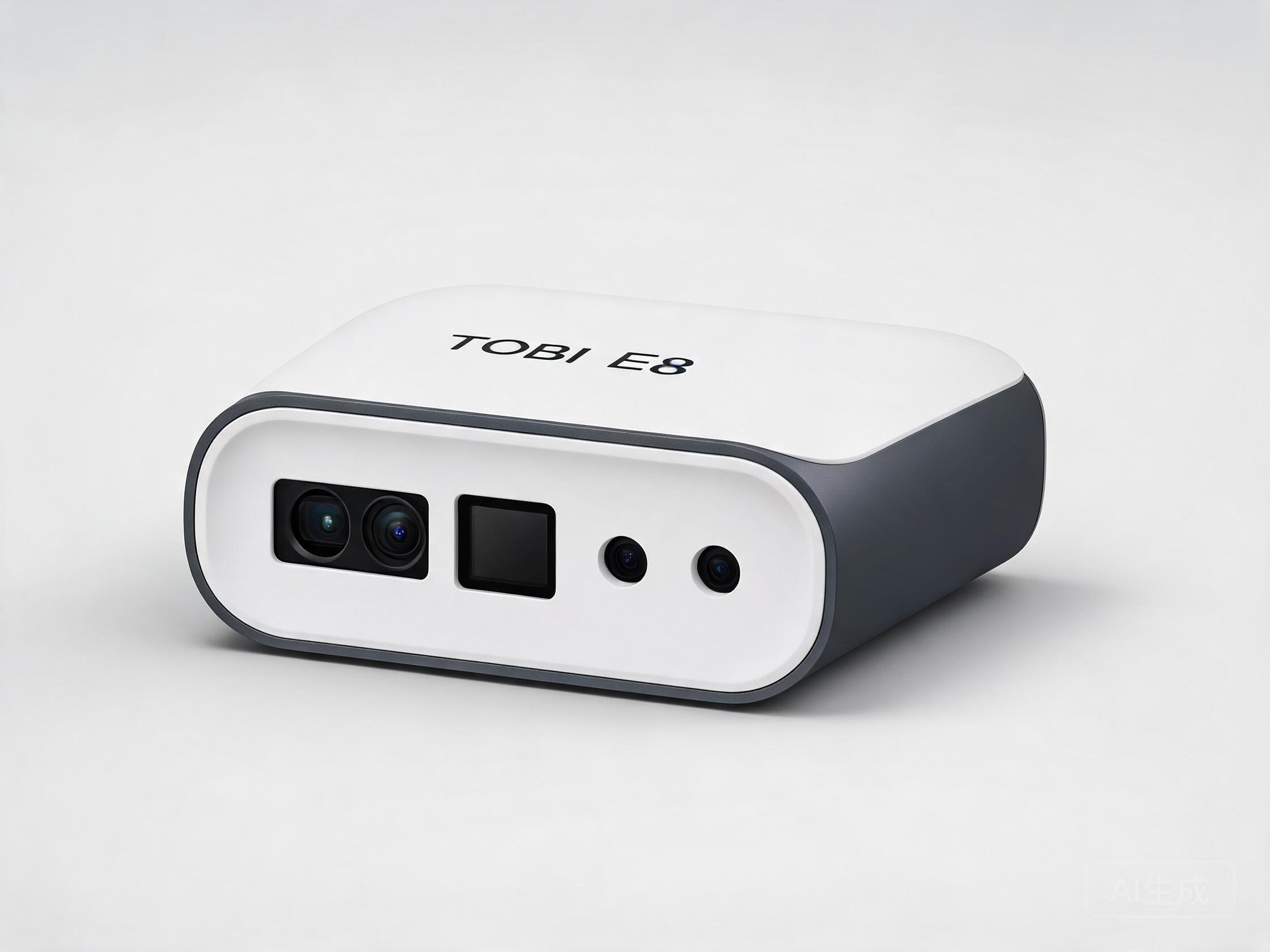
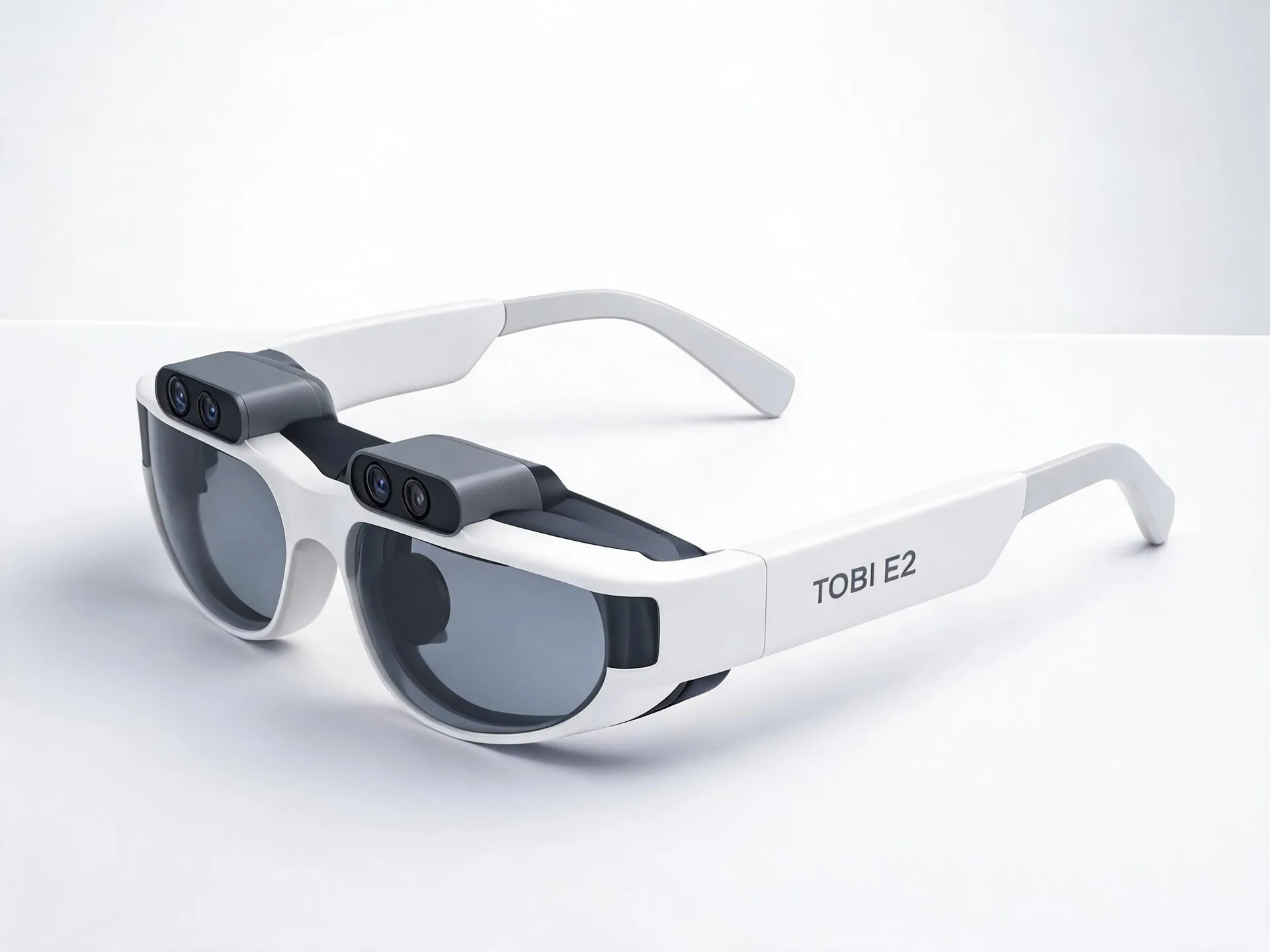
Looking ahead to the second half of 2026, dual-view capture will shift from a "research bonus" to an "industrial default." Public trends confirm that the first-person data pool is expanding; production-grade players compete on whether they can stably produce alignable, auditable, and scalable Ego–Exo assets. TOBI uses E2/E6/E8 and wrist-mounted cameras as the collection front end, and purchasable datasets as the delivery back end, helping teams turn demo videos into trainable, transferable policy material.
Transfer Experiment Design: How to Prove Dual Viewpoints Actually Pay Off
Many dual-view projects stop at "we collected Exo" without ever proving that Exo delivers a net gain. An actionable control experiment is: under the same demonstration batch and the same annotation budget, train three small models — Ego-only, Exo-only, and Ego+Exo — and compare success rate, sample efficiency, and cross-scene degradation under a fixed real-robot protocol. If Ego+Exo does not consistently win, the problem likely lies in alignment, calibration, or the conditioning method, not in "needing more data." TOBI recommends using this control experiment as a gate for dual-view procurement to avoid paying long-term for an ineffective modality.
The placement of external cameras is itself a craft. Too high loses hand detail; too far to the side introduces strong perspective distortion; too far away makes the operator too small in the frame. The SOP should specify height, pitch angle, and horizontal distance from the center of the workbench, and fix these in the data card. When changing sites, reproduce the geometry before starting recording; otherwise nominally same-distribution data will become a multi-domain mixture. Algorithms will mistake domain shift for task difficulty, and the optimization direction will be skewed.
Ego–Exo is especially friendly for failure diagnosis. Collisions that are hard to see from the head-mounted view are often clear from the external view; fingertip slips that are hard to see from the external view are clearer from the wrist and head-mounted views. Three-way replay can initially separate "perception failure, planning failure, execution failure," shortening on-site iteration cycles. For customer success teams, this is tangible delivery value; for content marketing, it is also a demonstrable story point. If a thought-leadership article can be paired with a one-page "multi-view failure taxonomy," it will resonate more with engineering leads than a pile of model names.
In cross-body scenarios, Exo also serves as a "common coordinate-frame teacher." Humans and robots need not share the same Ego mounting, but can share external observation of the table and objects, thereby learning relative spatial relationships. This relaxes the strict requirement that "the robot must look like a human." Of course, the common coordinate-frame teacher depends on reliable extrinsics and synchronization; otherwise the teacher itself is lying. This is precisely the moat of production-grade dual viewpoints.
Procurement terms can require vendors to provide: joint visualizations of paired samples, extrinsic-reproduction scripts, occlusion-ratio statistics, and at least one third-party or client-side re-test record. A "dual-viewpoint data package" lacking these materials is more like a bundled sale of two independent streams. TOBI is willing to align on these acceptance deliverables during the consulting stage before discussing bulk hours, with the goal of reducing post-hoc disputes and spending the budget on structures that truly transfer.
Against the backdrop of public trends, discussions around EgoDex, EgoVerse, EgoLive, MobileEgo and others have raised market expectations for first-person data; enterprise private data must provide transferability proof on top of those expectations. Dual viewpoints are one path to that proof, not the endpoint. The next steps remain task graphs, failure structures, and body adaptation. TOBI's product portfolio lets customers add modalities by stage: start with E2 for volume, then add E6 / E8 with wrist and Exo, forming an upgradeable acquisition topology rather than an all-in bet.
To summarize a shareable judgment: Ego determines "whether the details can be done," Exo determines "whether they can be done in the right place." If VLA only needs semantic richness, a single viewpoint may suffice; if stable deployment is required, dual viewpoints are almost a default tax. Paying that tax at the acquisition stage is more controllable than paying it through endless model tuning. This is the consensus TOBI, as a production-grade Ego capture and data entry point, hopes to reach with its customers.
On-site implementation: running a minimal dual-view closed loop within one week
The recommended one-week cadence is as follows. Day 1: complete target task decomposition and a sketch of viewpoint placement. Day 2: complete E2 or E6 wearability adaptation and external camera mounting. Day 3: run through hard-sync self-check and sample visualization. Day 4: collect a small-scale dual-view demonstration and complete minimal annotation. Day 5: train a comparison baseline. Day 6: real-robot or semi-physical validation. Day 7: review the gains and decide whether to scale up. The cadence is tight, but sufficient to prevent the sunk cost of "let's just collect for a year first".
If the day-five comparison shows no gain from dual viewpoints, prioritize checking extrinsics, synchronization, and conditioning rather than immediately adding data. Expanding an ineffective modality only amplifies the noise bill. TOBI's solution consulting can help determine whether the issue is with the equipment or with algorithm integration, shortening the time spent at bottlenecks. For procurement, writing a "one-week closed loop" into a pilot contract is more controllable than promising vague long-term hours.
Dual-view capture also changes annotator training. Annotators need to understand the same event across both views simultaneously, and training materials should include both well-aligned examples and counterexamples of alignment failure. The quality-control sampling rate can be raised early in a project and lowered once the process stabilizes. Only by accounting for training and sampling costs in the total cost of ownership can vendor quotes be compared correctly. Judging solely by price per hour often leads to selecting supply that is "cheap but unalignable."
When teams prepare to use dual-view data for external demonstrations or papers, authorization and de-identification still require attention. Thought-leadership content can use blurred schematic diagrams and statistical curves without exposing customer production-line details. This is exactly the approach taken by TOBI's website articles: discussing methods and acceptance criteria, not fabricating unverified certifications, and building credibility on verifiable engineering narratives.
Version Management and Reuse of Dual-View Assets
Dual-view data packages should be version-managed like software: any change to capture geometry, extrinsics, or annotation protocol requires a version bump. Older versions may continue to be used for comparison, but must not be mixed with newer versions without documentation, unless domain labels are explicitly applied. Version confusion is the most common hidden debt in the later stages of dual-view projects.
On the reuse strategy, the same Exo setup can serve multiple Ego operators and multiple task families, provided the task-graph nodes are mappable. Investing first in reusable scene geometry and calibration, then in task diversity, is generally more cost-effective than the reverse.
When the target robot has its own belly or wrist cameras, human dual-view data still has value, but a "viewpoint role mapping table" must be specified: which robot camera channel the human head-mounted view corresponds to, which channel the human wrist view corresponds to, and whether the scene Exo is retained. The mapping table is the one-page core of the transfer protocol.
Content marketing can publish de-identified mapping-table templates as thought-leadership material while guiding readers to product pages and dataset consultations. The more specific the template, the stronger the lead intent.
TOBI recommends that customers produce three deliverables at the end of a pilot: a gain curve, a versioned data card, and a draft mapping table. With these three items, the scale-up decision has a basis, and it is harder for cross-departmental discussions to be swayed by slogans.
If the pilot fails, the reasons for failure should still be documented in the knowledge base: was it a capture setup issue, a synchronization issue, an annotation issue, or a modeling issue? Learnable failure is part of building dual-view capability.
Additional implementation reminder: convert this article's checklist into a one-page internal scorecard and score each item at the next vendor meeting. Publishing scores to both algorithm and procurement teams significantly reduces vague "feels about the same" decisions. TOBI welcomes using these checklists as a starting point for conversation — matching device bundles and dataset samples rather than starting with abstract total-hour figures.
Next step: turn timeline capabilities into purchasable assets
If your team is evaluating multi-camera Ego acquisition pipelines, wrist camera solutions, or wishes to directly purchase verifiable, high-quality Ego / robot datasets, you can start with product specs and scenario solutions, then align with the data delivery team on task coverage, sync metrics, and compliance boundaries.
View TOBI product line (E2 / E6 / E8 and wrist camera)to learn about Solutions from acquisition to dataset delivery, or directly Inquire about high-quality Ego dataset procurement.
Notes
The public datasets and research project names mentioned in this text are for industry context reference only and do not represent TOBI ownership or official partnership endorsement. Specific dual-view configuration, calibration, and dataset SKUs are subject to commercial confirmation and the data card.
Appendix Perspective: Minimum Viable Standards for Dual-View Annotation
Dual-view projects are most prone to losing control at the annotation layer. A minimum viable standard should include: unified object IDs, phase start/end boundaries, left/right hand roles, tool occupancy state, and occlusion flags. Occlusion flags are especially critical — they tell the model when it should not blindly trust a given viewpoint. Without occlusion labels, the network learns to hallucinate where information is missing. QC can use cross-view consistency sampling: does an object visible in the Exo view appear in the Ego view within a reasonable time window? Are contact events aligned across the two views' timestamps? Segments that fail should be rejected or down-weighted rather than entering a gray zone of "good enough." For procurement, writing these standards into an attachment significantly reduces delivery disputes. For algorithms, the standards provide a stable supervision interface. TOBI assists clients during solution consulting to converge loose research-phase conventions into executable annotation protocols and sampling ratios. As Ego–Exo becomes the default, annotation protocols — like sync specifications — will become a key factor in market price tiering for data.
In addition, the alignment of language instructions with dual-view data must not be overlooked. Instruction start and end times should fall on a unified timeline and be labeled with the primary phase node they serve. Ambiguous instructions cause policies to "fight themselves" on dual-view features. It is recommended to use structured phrasing or interface-triggered instruction events at the capture site to reduce post-hoc guessing. When instructions come from post-hoc annotation, annotator confidence must be preserved. Low-confidence instructions should be quarantined to avoid contaminating visual-language alignment. These governance costs are reflected in unit pricing but are recouped in training stability. For teams serious about transfer, this is a premium worth paying. Ultimately, the moat of dual-view is not the number of cameras but the thickness of the protocol: only when all five layers—timing, calibration, annotation, instructions, and quality control—are thick does the data become thick.
During the device onboarding period, it is recommended to first freeze a minimum viable collection topology before expanding the number of camera channels, to avoid pursuing sensor stacking before the timeline has stabilized.
For algorithm review, turning the four metrics—sync health score, occlusion rate, contact-event density, and failure ratio—into a fixed dashboard is more effective at flagging data problems than looking at the loss curve alone.