Introduction
In discussions about deploying vision-language-action (VLA) models, attention tends to focus on backbone scale, action head architecture, and instruction-following capability. What truly determines the policy ceiling is often something more fundamental and less likely to appear in paper abstracts: whether multi-camera Ego timelines can be aligned at the microsecond level. When head-mounted views, wrist views, and external Exo views drift inexplicably along the time axis, the model learns coincidental correlations rather than contact causality. This article explains, from the perspectives of algorithms, engineering, and procurement, how hard synchronization becomes a hard threshold for production-grade Ego data, and how TOBI productizes this capability.
The Illusion of Soft Synchronization: Why "Looking Aligned" Still Destroys Policies
Many lab collection pipelines rely on software timestamps: each camera is tagged using the host clock or Network Time Protocol (NTP), and frames are aligned afterward using nearest-neighbor or interpolation. This approach is often "good enough" for desktop single-arm, low-frequency control, and weak-contact tasks, but it fails systematically on dexterous manipulation and long-horizon tasks. The reason is not insufficient effort from software engineers, but rather that the physical world imposes stricter constraints: camera exposure, USB/Ethernet jitter, operating system scheduling, encoding buffers, and storage writes all split what is nominally the same frame into an uncertainty window of tens to hundreds of milliseconds.
For algorithm engineers, this is not simply a matter of "unclean annotation." Both behavior cloning and diffusion action heads assume that observations and actions fall within the same causal slice. If the wrist camera captures the fingers already touching the object while the head-mounted camera is still on the frame before contact, the loss function binds "pre-contact visuals" with "already-applied force actions." The training curve may still be decreasing, but deployment success rate will plummet at the moment of contact—this kind of failure is difficult to remedy with a larger model because the supervision itself is wrong.
When the industry publicly discusses first-person/embodied data trends such as EgoDex, EgoVerse, EgoLive, and MobileEgo, it often emphasizes scale, task diversity, and scene coverage. These directions are important, but they assume a premise: the timeline is trustworthy. TOBI does not claim to own the above public datasets, but instead productizes the same class of engineering problems: enabling teams to first clarify the synchronization mechanism when building or procuring data, before discussing hours and trajectory counts.
The timeline is the policy boundary: what microsecond-level alignment changes
"Microsecond-level hard synchronization" sounds like a line of parameters on a hardware specification sheet, but for a VLA team it means a verifiable causal window. When the headset, wrist, external viewpoints, and the optional inertial measurement unit (IMU) and hand pose stream share the same hardware trigger or the same high-precision clock domain, every frame of observation can be mapped to the same instant on a unified timeline. Action labels, contact events, and the start and end points of language instructions can then be reliably attached to the same timeline.
From the chief scientist's perspective, hard synchronization transforms "multimodal fusion" from heuristic engineering into reproducible science. Multi-view geometry requires ray bundles from the same instant; contact estimation requires visual changes and force/pose changes to be in phase; failure replay requires precise knowledge of which frame first deviates from the nominal trajectory. Without hard synchronization, so-called Ego-Exo joint training, wrist-camera-conditioned policies, and contrastive learning on failure samples all degenerate into fitting noise.
From a marketing and procurement perspective, hard synchronization is a differentiated delivery capability. Customers do not just buy "the number of cameras"; they buy "verifiable timeline quality." A qualified data card should specify: synchronization method (hardware trigger / shared clock / post-hoc soft alignment), target jitter upper bound, measured jitter distribution, dropped-frame and re-synchronization strategy, and clock drift handling across multi-day collection. Datasets lacking these fields, regardless of scale, will struggle to enter serious training budget reviews.
Multi-Camera Geometry and Temporal Coupling: Why More Cameras Are More Dangerous
Increasing the number of camera channels is often treated as a shortcut to better coverage: head-mounted solves operational intent, wrist-mounted solves hand-object details, and Exo solves spatial positioning and occlusion. But the more cameras there are, the worse the combinatorial explosion of temporal mismatches becomes. If two cameras each drift by 20 milliseconds, three-camera combinations may exhibit more complex phase differences; adding different exposure times and rolling shutter differences further systematically destroys multi-view consistency at the moment of contact.
A common algorithmic remedy is "post-hoc alignment using optical flow / feature matching." This works for slow motions and strongly textured scenes but is fragile for fast grasps, reflective metal, and weakly textured tabletops. More critically: post-hoc alignment hides uncertainty into pseudo-labels rather than exposing it to the training pipeline. The model appears to consume "well-aligned multi-view data" but actually consumes invisible interpolation errors. The production-grade approach is to compress uncertainty at the hardware layer, letting software only perform quality checks and rejection rather than silently patching.
Engineering Implementation: The Acceptance Loop from Device Selection to Data Pipeline
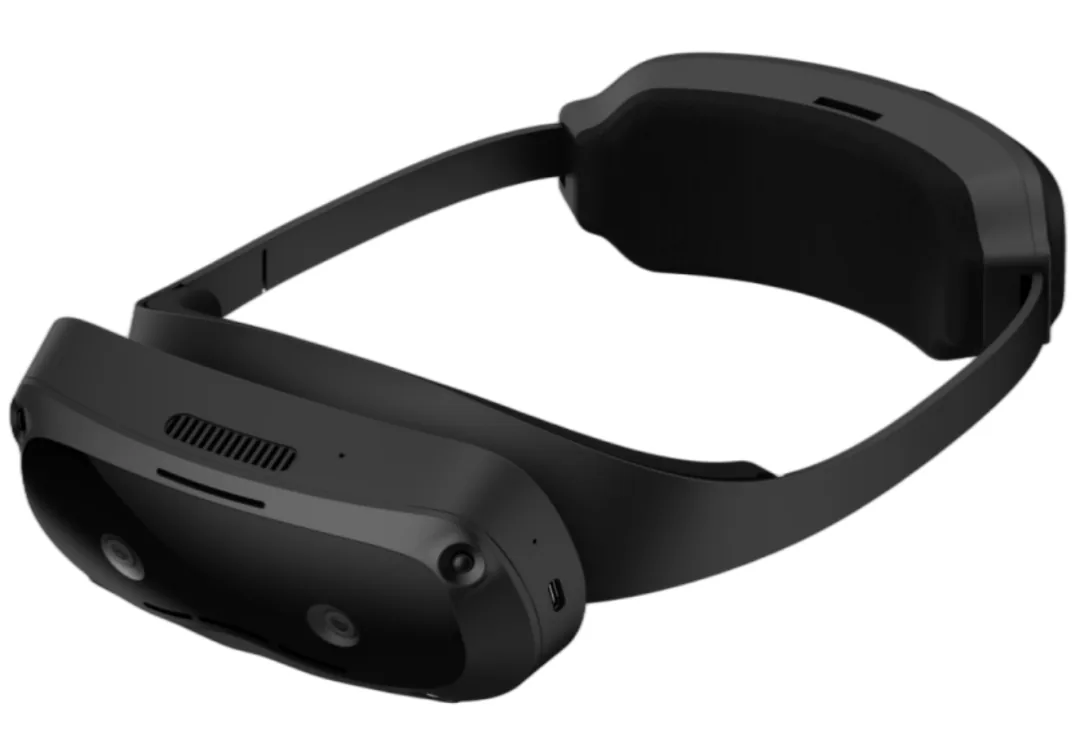
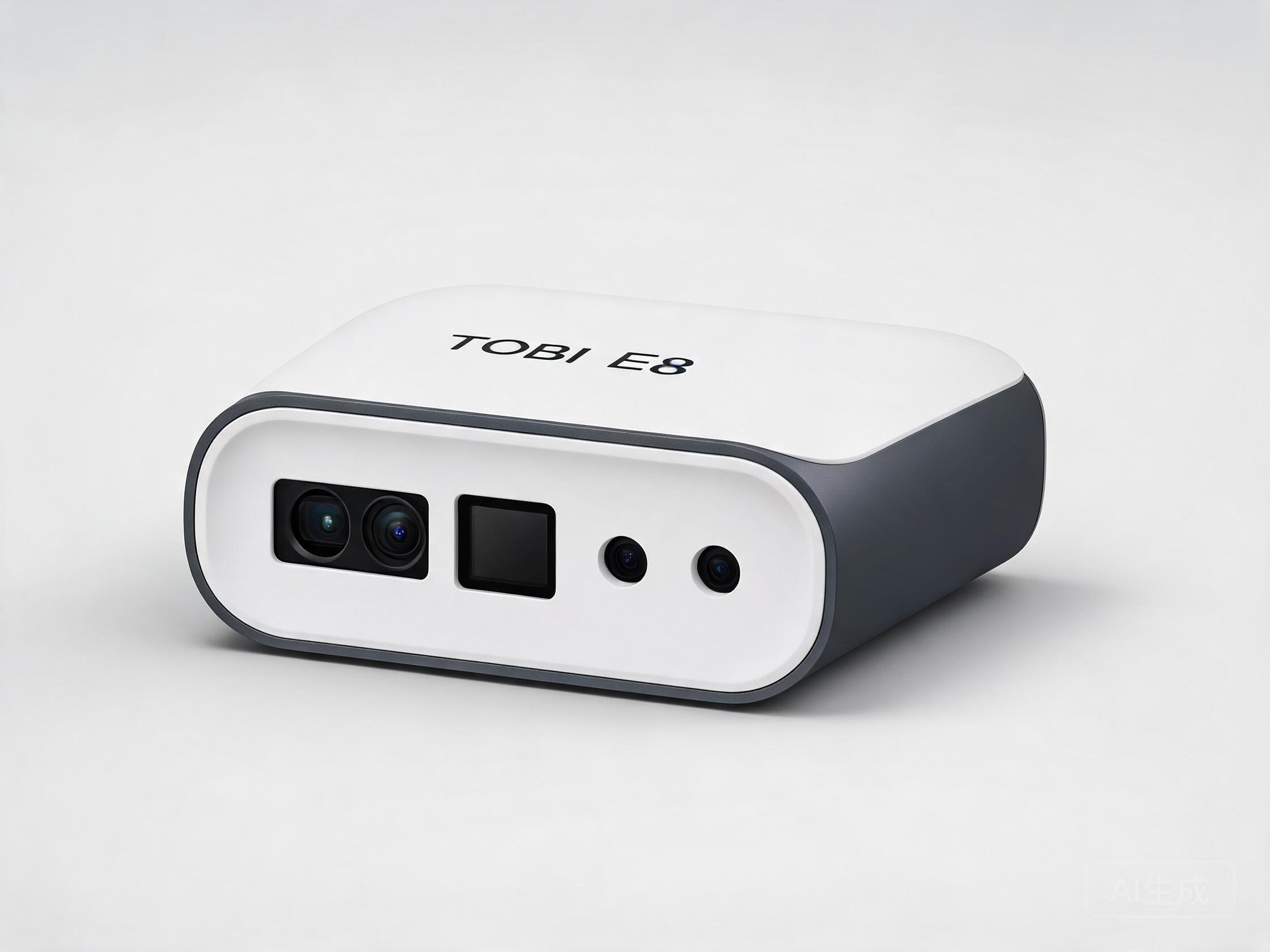
TOBI's product path treats hardware synchronization as a first-class citizen of the capture stack. Across different budgets and task densities, E2 focuses on lightweight binocular Ego entry-level use with verifiable specifications; E6 targets multi-camera, multi-modal production-grade capture; and E8 covers higher-density sensing and longer-horizon scenarios. As a critical complement for contact details, the wrist camera should share the same synchronization domain as the head-mounted view, rather than being "an add-on consumer camera stitched together after the fact."
The recommended acceptance loop consists of four steps. Step one is bench testing: measure cross-camera time offsets in a fixed scene using high-speed events (such as LED flashing or mechanical triggers). Step two is worn-state spot-checking: sample multi-view consistency of contact frames during real operation. Step three is ingestion quality control: output a synchronization health score, dropped-frame flags, and anomaly segments for each trajectory. Step four is training-side feedback: use small-scale controlled experiments to compare success rate differences on contact tasks between "hard-synchronized subsets" and "soft-aligned subsets," and write the results into the procurement retrospective.
Algorithm engineers should also pay attention to the storage and format layer. A unified timeline must be captured in machine-readable metadata: per-frame timestamps, trigger source, calibration version, and coordinate frame definitions. Open formats (such as common trajectory containers and robot-learning community formats) benefit the ecosystem, but high-precision time fields must not be truncated during conversion. TOBI's data delivery principle: formats are convertible, time semantics are not.
An Actionable Checklist for VLA Teams
If you are building or procuring Ego data, it is recommended to write the following questions into the requirements document: Is synchronization hard-triggered or soft-aligned? How is the jitter upper bound measured and reported? Is the wrist camera in the same clock domain? How are drift and segmentation handled during long-horizon collection? Are precise time windows before and after contact preserved for failure samples? Does the data card include calibration and temporal metadata? Can the supplier provide reproducible quality-check scripts?
From a thought leadership perspective, the competitive narrative for 2026 should be rewritten: no longer comparing "who has more hours," but "whose timeline is more trustworthy and whose contact causality is cleaner." The Ego dataset wave in public trends proves the strategic value of first-person data; the value of production-grade suppliers lies in turning trends into verifiable, re-trainable, and auditable deliverables. TOBI is positioned as the market entry point for production-grade Ego collection devices and high-quality datasets: the devices compress the physical world into clean timelines, and the datasets turn timelines into trainable assets.
Case-based thinking: the three-frame window at the moment of contact
To ground the discussion in an imaginable window: 100 milliseconds before and after grasping contact. If the control frequency is 50 Hz, this corresponds to roughly ten action frames; if the camera is 30 Hz, it corresponds to roughly six visual frames. The significance of hard synchronization is making these six to ten frames point to the same physical process across multiple camera views. If soft alignment introduces 40 milliseconds of uncertainty, one to two frames within the window will be mismatched—precisely covering the phase transition from "about to contact" to "already in contact." For dexterous tasks, mismatching the phase transition frames is enough to make the policy learn reversed forces or premature closure.
Algorithm engineers can prove this with a cheap experiment: on the same batch of demonstrations, artificially shift the wrist stream by 0, 20, 40, and 80 milliseconds, then train small policies and observe the success rate curves for insertion or bottle-cap screwing. Most teams will see non-monotonic or even cliff-like changes. This experiment requires no new hardware but can convince the budget committee: synchronization is not parameter pedantry but part of the training objective function. TOBI recommends writing this type of sensitivity test into the supplier onboarding process as a threshold parallel to accuracy metrics.
From a marketing-strategy perspective, a vendor that can publicly demonstrate "how a few milliseconds of misalignment destroys contact" is more credible than one that only shows flashy multi-camera renders. Thought leadership comes from reproducible causal stories. What customers remember is not adjectives, but the curve showing how success rate varies with offset. Turn that curve into a content asset, then route it to product pages and dataset inquiries, and lead quality will be significantly higher than generic "supports VLA" claims.
On the data-market side, hardware synchronization also changes pricing logic. For the same hour of data, subsets with narrower jitter distributions and cleaner contact windows should command a premium; commodity data with unknown jitter should be discounted or used only as coarse pretraining corpus. If procurement still compares only on price per hour, it will systematically select low-quality supply. TOBI advocates listing "effective contact hours" alongside "raw recorded hours" on quotes, so that quality enters the pricing language.
The chief scientist also needs to pay attention to clock strategies across days and across sites. If the lab's first day and the production line's second day use different startup procedures, segmented clocks or incorrect epochs may be introduced. Unified power-on self-tests, trigger self-tests, and time-metadata writing can prevent "perfect on a single day, broken across days." The hallmark of production-grade acquisition is automating these self-tests and logging the results, rather than relying on the experience of veteran technicians passed down by word of mouth.
Finally, hardware synchronization and privacy compliance are not in conflict. Timestamps and trigger logs can be retained after de-identification; faces and badges can be processed before ingestion, but temporal semantics should not be discarded in the name of "convenience." Many teams re-encode video in their de-identification pipelines and end up losing the precise timeline. The correct approach is for de-identification and transcoding pipelines to explicitly preserve time, with quality control gated by a synchronization health score. TOBI flags this hidden risk in delivery consulting because it only surfaces after legal approval and before training begins, at a very high cost.
In summary, microsecond-level hard synchronization is not a single-point technology, but a governance system that runs through device firmware, capture SOPs, data cards, training diagnostics, and procurement terms. E2, E6, E8, and wrist cameras provide front-ends of different densities; what truly forms a moat is whether the team treats the timeline as a first-class asset to manage. For organizations still relying mainly on soft alignment, the most cost-effective upgrade in 2026 is often not switching to a larger model, but first getting the clock domain of multi-camera Ego right.
Procurement Clause Example: Writing Synchronization as an Actionable Annex
An actionable procurement annex should contain at least: a definition of the synchronization method, the measurement method, the pass threshold, the sampling frequency, the disposition of non-conforming items, and the responsibility for re-collection. The threshold need not chase laboratory extremes, but it must be reproducible: for example, on a standard flicker rig, the 95th percentile of cross-camera time offset does not exceed the agreed upper bound. For worn-state sampling, extract contact-task segments and check, manually or semi-automatically, whether the multi-view event ordering is plausible. Batches that fail to meet the threshold must not be counted toward valid-hour settlement.
Contract language must also cover firmware and driver changes. If a vendor upgrades the acquisition stack, it should provide advance notice and a regression report; the client has the right to request version freezes for critical projects. This may seem strict, but it actually protects both parties: it prevents silent model degradation caused by "same SKU, different timeline semantics." TOBI is willing to discuss these terms clearly during the commercial stage, because production-grade delivery should withstand attachment-level constraints.
For teams that already own some consumer-grade camera inventory, there is no need to replace everything immediately. TOBI hosts and wrist links can serve as the "temporal gold standard," while legacy devices are demoted to non-critical viewpoints or used only for coarse semantic pretraining. A hybrid architecture can also work, provided that critical contact supervision comes from the hardware-synchronized subset. Phased capital expenditure is often easier to get through internal approval than a one-time teardown and rebuild.
From a talent and role perspective, it is recommended to designate a "timeline owner": this can be a hardware engineer in a dual role, but they must have dashboard access and veto power. Without an owner, synchronization quality will be sacrificed during busy project periods. Tying this role to data-card sign-off authority is what makes a quality culture stick. This is also an organizational signal that a company is moving from workshop-style acquisition to production-grade acquisition.
Embed synchronization governance into continuous delivery
When acquisition firmware, annotation tools, and training code live in different repositories, temporal semantics are most easily lost at the interfaces. It is recommended to establish cross-repository "temporal contract" tests: using the same golden sample, assert at three points—acquisition export, transcoding, and training read—that timestamps are monotonic, units are consistent, and cross-camera offsets are within threshold. A contract failure blocks the release.
For teams using simulation-hybrid training, the real jitter distribution must also be treated as a domain-randomization parameter, rather than assuming perfect synchronization in simulation. Otherwise, the policy will be fragile at the contact phase on real hardware. The jitter histogram in the data card is therefore not just a quality-control attachment, but also an input to the simulation configuration.
If an organization purchases Ego data from multiple vendors simultaneously, use vendor IDs and synchronization levels for bucketed training or reweighting, to avoid a high-quality hard-synchronized subset being diluted by a low-quality soft-aligned subset. Mixing is not the problem; mixing without the right to mix is the problem.
The value of TOBI's products and consulting lies in helping customers first establish this contract and bucketing language, then scale up devices and hours. Reverse the order, and the budget becomes inexplicable experimental noise.
For the competitive landscape of 2026, teams that can clearly explain externally "how our timeline is measured and gated" will more easily pass large-customer due diligence. Hardware synchronization is therefore also a sales asset, not merely an engineering detail.
Next step: turn timeline capabilities into purchasable assets
If your team is evaluating multi-camera Ego acquisition pipelines, wrist camera solutions, or wishes to directly purchase verifiable, high-quality Ego / robot datasets, you can start with product specs and scenario solutions, then align with the data delivery team on task coverage, sync metrics, and compliance boundaries.
View TOBI product line (E2 / E6 / E8 and wrist camera)to learn about Solutions from acquisition to dataset delivery, or directly Inquire about high-quality Ego dataset procurement.
Notes
Names such as EgoDex, EgoVerse, EgoLive, and MobileEgo mentioned in this article are used to describe publicly discussed industry trends and research contexts around first-person / embodied data, and do not indicate that TOBI owns or exclusively operates these datasets. Specific product specifications, synchronization metrics, and dataset catalogs are subject to the official website and the commercially confirmed version.
Appendix Perspective: How Synchronization Quality Enters Training Diagnostics
Elevating synchronization from a hardware metric to a training diagnostic requires three curves to coexist over the long term: contact-task success rate, synchronization health score, and frame-drop rate. When success rate drops, first check whether the latter two have degraded, then decide whether to change the model or the acquisition. Many teams do this in reverse, wasting compute on dirty timelines. It is recommended to add "small-set synchronization regression" to continuous integration: after every firmware or driver change, re-measure the jitter distribution using a standard flicker test rig, and do not allow ingestion if it fails. For teams training on mixed data from multiple vendors, synchronization fields should be elevated to bucketing conditions, to avoid averaging data with different jitter distributions without weighting. TOBI encourages customers to write such diagnostics into acceptance criteria, so that both equipment and data deliveries can be measured by the same language. Over the long term, timeline governance will become an infrastructure-level responsibility for embodied-AI teams—like feature stores in machine learning—rather than a temporary task for hardware engineers. Whoever productizes synchronization diagnostics first will build reproducible trust in the multi-camera Ego competition. This is also the concrete mechanism by which thought leadership converts into leads: win over algorithm leads with actionable checklists, and win over procurement leads with acceptable acceptance criteria.
Another practice is to establish a "synchronization incident" retrospective template: phenomenon, affected trajectory IDs, root cause (trigger / driver / cable / temperature), fix, and whether re-acquisition is needed. The template forces teams to distinguish between sporadic and systemic issues. Systemic issues must feed back into firmware and SOPs, rather than relying on annotators to manually cut out bad segments. For dataset buyers, requiring vendors to provide a summary of synchronization incidents over the past three months is a quick probe for identifying production maturity. If a vendor cannot provide one, it often means acquisition is still at the workshop stage. One hallmark of production-grade Ego is treating synchronization incidents as first-class quality-management objects. When mixing with simulation data, the real timeline jitter distribution must also be explicitly declared, to avoid an implicit domain gap between perfect simulation synchronization and real residual jitter. These details determine the stability of VLA at the moment of contact, and also determine whether customers are willing to continue investing next quarter's budget in the same vendor.