
World models aim to predict how actions may change observations or the environment. Training and evaluating them requires suitable data as well as model architecture and compute. Real-world capture provides evidence about motion, interactions and failure conditions that must be represented in the evaluation protocol.
World Models: The Prefrontal Cortex of Embodied Intelligence
In neuroscience, the prefrontal cortex is responsible for planning, prediction, and decision-making. It allows us to mentally rehearse courses of action, evaluate the likely consequences of different choices, and thereby make better decisions. World models play a similar role for embodied intelligence. They do not simply perceive the current state; they understand the dynamic laws of the environment: If I push this box, where will it slide? If I release my fingers, how will the object fall? If I go around this obstacle, will the path be feasible?
This intrinsic ability to model physical laws is the key for robots to move from 'executing fixed programs' to 'autonomously adapting to the environment.' Traditional robotic systems rely on precise environmental modeling and handcrafted rules, making it difficult to cope with the complexity and uncertainty of the real world. World models, by contrast, attempt to let robots accumulate experience through interaction with the world and build an internal model that is both inferable and predictive.
However, the capability boundary of a world model is directly constrained by the quality and scale of its training data. A world model that has only seen data of clean laboratory tabletops cannot understand oil stains on factory floors, crowded warehouse shelves, or cluttered home environments. The generalization capability of physical AI essentially depends on how much diversity of real physical scenarios it has encountered during training.
Why High-Quality Data Is the 'Oil' of Physical AI
The value of oil does not lie in the crude itself, but in its ability to be refined into the energy that drives modern industry. Likewise, raw video footage alone is insufficient to train an outstanding world model. What truly matters is data that has been carefully designed, captured, aligned, and annotated—data that is authentic, diverse, temporally consistent, richly modal, and covers enough physical interaction scenarios.
High-quality embodied data has the following characteristics. First, authenticity. Data must come from real physical environments rather than purely simulated generation. While synthetic data is lower in cost, it has an unbridgeable gap with the real world in terms of physical details, material response, and lighting variation. Second, diversity. Data needs to cover different scenarios, tasks, operators, and objects to prevent the model from overfitting to a specific environment. Third, temporal consistency. World models learn state transitions, so data timestamps must be precisely aligned and the causal relationship between actions and outcomes must be clearly traceable. Fourth, multi-modality. The fusion of vision, depth, inertia, force/touch, audio, and other modalities enables world models to build more robust physical understanding.
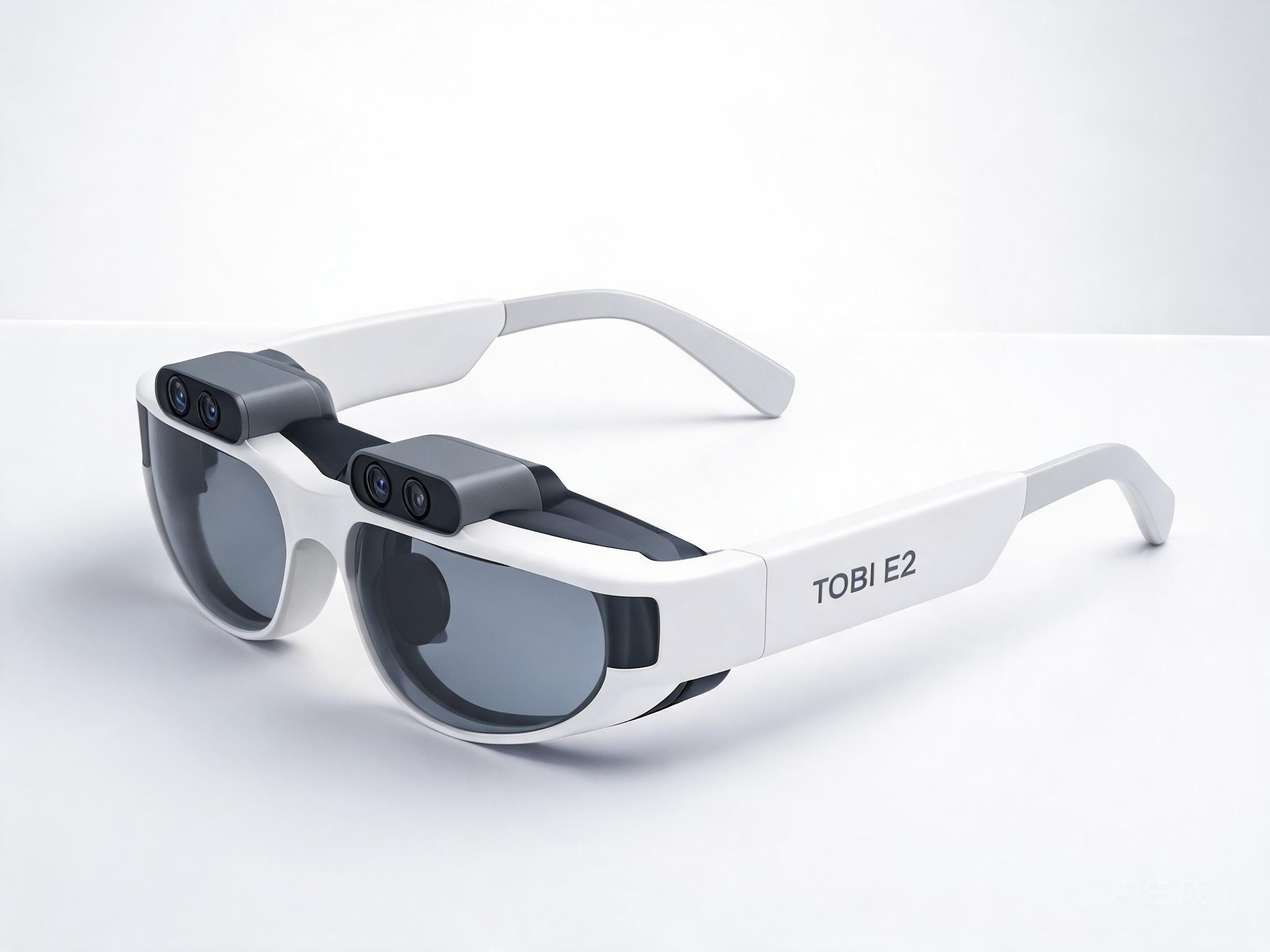
From 'Having Data' to 'Having Good Data': The TOBI Methodology
Data quality must be designed into the capture process. For E2, the current published camera specification is 1600×1200 at up to 30 FPS. Retain source video, time information and calibration records. Validate any external-camera synchronization separately; the internal binocular synchronization figure does not establish the accuracy of a multi-device setup.
More importantly, TOBI emphasizes the authenticity of capture tasks. We require operators to perform real industrial tasks, not 'performative actions' designed solely for data collection. Natural whole-body motion, real operational rhythm, and real environmental disturbances—these seemingly 'imperfect' factors are precisely what world models need to understand the real world. A model trained only under ideal conditions will fail in real deployment because it has never seen 'imperfection.'
TOBI's data collection methodology can be summarized in six keywords: real tasks, natural motion, Ego+Exo multi-view, 1600×1200 at up to 30 FPS, no stabilization, and time synchronization. These six keywords jointly define the standard of 'good data' and are the baseline TOBI consistently upholds when collaborating with world-model researchers.
Scale: The Inescapable Question in World-Model Training
Training world models requires massive amounts of data. Xiaomi's recent validation of a 100,000-hour real-data Scaling Law in robotics R&D shows a clear correlation between data scale and model performance: once data volume crosses a certain threshold, the model shows significant improvement in generalization, long-horizon planning, and error recovery. This finding echoes the research conclusions on embodied intelligence Scaling Law presented at RSS 2026 and EIRCS 2026.
However, scale does not mean blind accumulation. Scaling without quality assurance only amplifies data noise and lets the model learn incorrect physical laws. Therefore, the world-model era places higher demands on data infrastructure: it must support large-scale capture and full-process quality control; it must support multi-modal synchronization and efficient management and annotation.
Through the EGO Data Operations Platform and the EGO Embodied Intelligence Data Annotation Platform, TOBI has built end-to-end capabilities covering capture, upload, quality inspection, annotation, and delivery. Capture tasks can be managed as projects on the platform, device status can be monitored in real time, data quality can be automatically detected, and annotation results can be version-controlled. This infrastructure capability is the prerequisite for supporting data scaling at the level of hundreds of thousands of hours.

From Data Infrastructure to Industrial Competitiveness
In the era of world models, data infrastructure will become one of the core moats of embodied intelligence enterprises. Companies with autonomous, controllable data capture capabilities can iterate models at lower cost and faster speed; companies that rely on external data procurement will be constrained by data costs, data rights, and data quality. More importantly, data infrastructure determines whether a company can continuously accumulate differentiated data assets and form hard-to-replicate competitive advantages.
For Chinese enterprises, building autonomous data infrastructure also has strategic significance. China has the complete manufacturing system, rich application scenarios, and a large robotics market—these are uniquely favorable conditions for building high-level embodied datasets. But advantages do not automatically translate into competitiveness; they must be systematically captured, governed, and opened up to truly release their value.
World-model predictions need to be tested against real observations. Reliable data infrastructure makes those observations traceable, comparable and reusable.
Conclusion: Laying the Data Foundation for World Models
World models are an active direction in embodied AI research. TOBI supports capture, data operations and annotation workflows that can supply traceable observations for project-specific training and evaluation. Dataset suitability and model performance require independent validation.
As more and more world models are trained on high-quality physical data, robots will not only be able to see the world, but also understand it, predict it, and interact with it in harmony. This is not only technological progress, but also the true starting point for embodied intelligence to move from the laboratory to thousands of industries.
Need a Custom Data Capture Plan for Your World-Model Project?
TOBI provides multi-modal, long-horizon, real-scenario data capture services for world-model training, supporting full-process collaboration from task design and device deployment to data alignment and annotation delivery.
