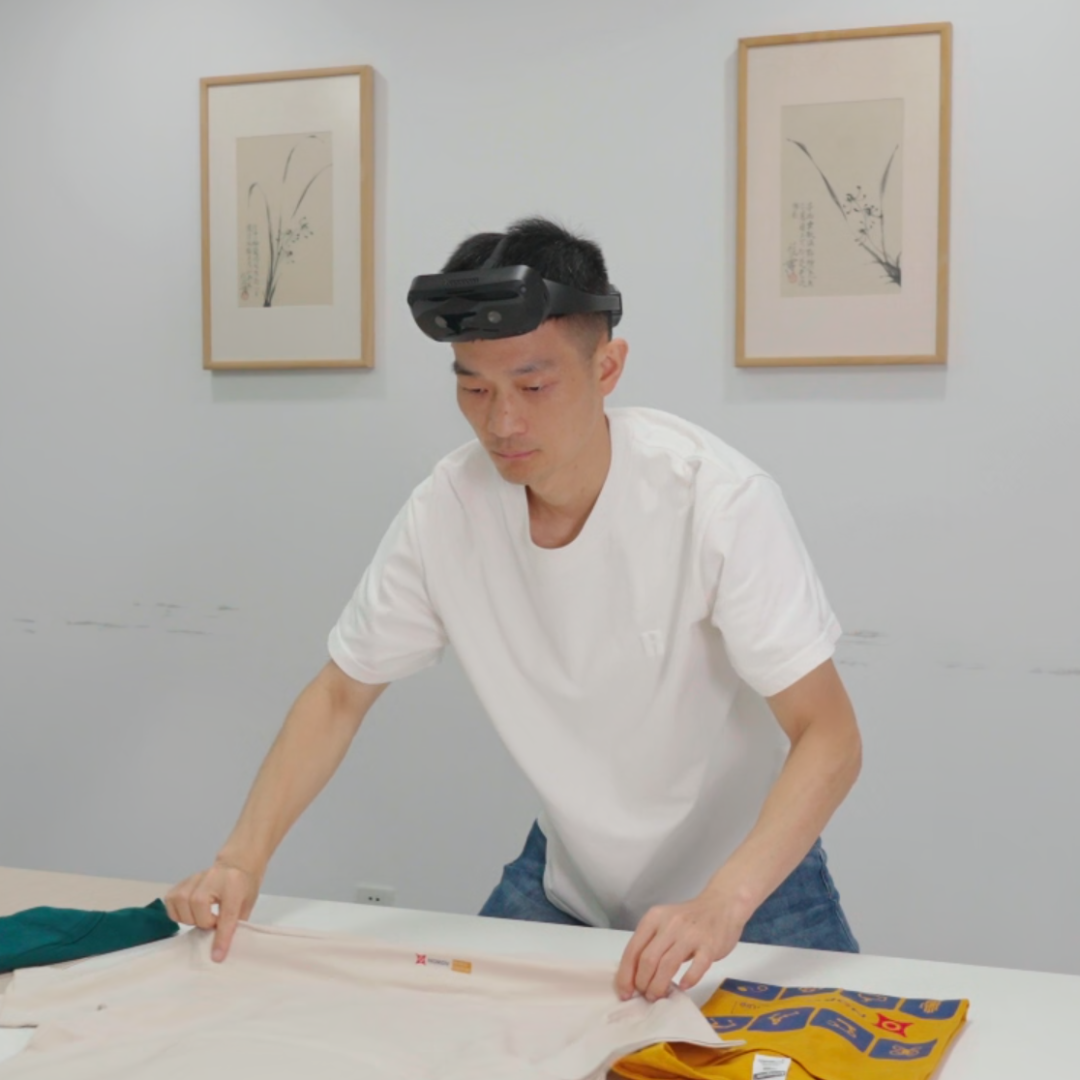
In 2026, the embodied intelligence industry stands at a historic inflection point. On one hand, Scaling Law is increasingly validated in robotics, and industry consensus is forming: training truly usable embodied models requires millions of hours of real-world data. On the other hand, VLA (Vision-Language-Action) models are evolving rapidly, unifying visual understanding, language instruction, and action generation into a single framework, placing higher demands on data diversity and annotation quality. At the same time, humanoid robots are moving from laboratory prototypes to small-batch production, and data requirements are shifting from R&D-grade to industrial-grade.
Scaling Law: The Exponential Rise in Data Volume
Scaling Law has already transformed natural language processing and computer vision. Now it is advancing embodied intelligence. Unlike text and images, scaling embodied data faces greater challenges: every hour of data requires a real human operator collecting in a real scenario, at a cost far exceeding that of internet data. But the returns are equally significant. Xiaomi's recent validation of a Scaling Law with 100,000 hours of real data shows that when data volume crosses a certain threshold, the model makes qualitative leaps in long-horizon task planning, complex-environment generalization, and error recovery.
Competition in embodied AI depends in part on producing useful data consistently at an affordable cost. This is an organizational and engineering challenge as well as a modeling challenge: equipment, operators, environments, data management and quality assurance must work together. TOBI combines E2 binocular capture hardware with data operations and annotation workflows. Capacity and delivery commitments should be established through a project-specific pilot.
VLA Models: Unification and Upgrade of Data Paradigms
The emergence of VLA models marks the transition of embodied intelligence from single imitation learning to unified multi-modal modeling. Under the VLA framework, the model receives visual input and language instructions simultaneously and outputs action policies. This unified architecture imposes new requirements on data: data must contain not only action trajectories, but also corresponding language descriptions and environmental visual context.
Specifically, VLA training data needs to contain three core elements. First, visual observation—the environmental state seen by the robot during task execution. Second, language instruction—natural language describing the task goal, such as 'put the red part in the left box.' Third, action labels—the action sequence that should be executed under the given instruction and environment. The precise alignment of these three is the prerequisite for successful VLA model training.
TOBI capture workflows can combine first-person RGB video with external views, recorded instructions and optional wrist-camera or glove signals. The integration must establish a shared time reference, document calibration and validate the exported schema against the target VLA training pipeline.

Humanoid Robot Mass Production: From R&D Data to Production Data
2026 is seen as a pivotal year for humanoid robots moving from small-batch validation to scaled production. As mass production approaches, robotics companies' demand for data is undergoing a qualitative change. In the past, R&D teams focused on 'whether we have data to train the model'; now, production teams are beginning to care about 'how to continuously, stably, and cost-effectively provide data for product iteration.'
This shift requires data collection to be compliant, standardized, and engineered. Compliance means data collection must meet data security, privacy protection, and labor regulations. Standardization means data collected from different batches, factories, and teams must follow unified specifications before it can be used by the same model. Engineering means data collection itself must be manageable, traceable, and optimizable, like a production line.
Scaling a data program requires device deployment, multi-project operations, quality monitoring, annotation and version control. TOBI can discuss a private collection workflow or a shared data specification; the available configuration, rights and delivery scope are confirmed for each project.
The Next Generation of Capture Paradigms: From Passive Recording to Active Closed-Loop
Looking ahead, embodied data capture will evolve from passive recording to active closed-loop. The traditional capture mode is: a human operates once, the device records once, and the model trains once. The next-generation paradigm emphasizes two-way interaction between data and models: after training, the model identifies its own weak points and guides the capture team to supplement data for specific scenarios; the capture system automatically adjusts task distribution based on model feedback, prioritizing 'high-value' samples.
This active closed-loop capture can significantly improve data efficiency. It avoids wasting resources on scenarios the model has already mastered and concentrates capture budgets on boundary cases that can truly improve model capability. TOBI is integrating this concept into product planning, helping customers identify data distribution gaps and formulate more precise capture strategies through the analytics module of the EGO Data Operations Platform.

China's Opportunity: Scenario Advantages and Data Infrastructure
In the 2026 embodied data race, China has unique advantages. Its complete manufacturing system provides rich industrial scenarios, its vast consumer market provides diverse service scenarios, and its rapidly developing robotics industry provides a direct outlet for data applications. But to translate these advantages into competitiveness, data infrastructure construction must be accelerated.
TOBI calls on the industry to work together to promote the establishment of embodied data collection standards, data format specifications, quality assessment systems, and data sharing mechanisms. We believe that only when data becomes infrastructure like electricity and networks can embodied intelligence truly achieve large-scale deployment.
For embodied AI, progress depends on reliable data infrastructure as well as model development. The quality and repeatability of collection matter more than volume alone.
Conclusion: Moving Forward with the Times
Scaling Law reveals the power of data scale, VLA models define the direction of data unification, and humanoid robot mass production has created demand for data engineering. These three forces converge in 2026, shaping the next generation of embodied data capture paradigms.
TOBI works with partners on E2 capture hardware, data operations, annotation and multimodal collection workflows. A practical starting point is a pilot with clear task coverage, measurable quality criteria and an agreed delivery format.
Planning Your 2026 Embodied Data Strategy?
Whether you are pursuing large-scale data capture for Scaling Law or multi-modal data alignment for VLA models, TOBI provides a one-stop solution from devices to platforms, from capture to annotation.
